Vitamix Exploration Blender: Practical Guide for Home Cooks
Learn how to evaluate, use, and care for the Vitamix Exploration Blender with practical steps, safety tips, and buying guidance from BlendHowTo.


With this guide, you’ll explore the Vitamix Exploration Blender, including its core capabilities, ideal use cases, and how to get optimal results. You’ll learn setup, basic operation, and care tips to help you decide if this model fits your kitchen goals. From feature highlights to practical recipes, the quick answer summarizes speed selection, loading strategies for thick blends, safety practices, and maintenance routines, so you can plan your next blend confidently.
What is the Vitamix Exploration Blender?
The Vitamix Exploration Blender is designed to offer versatile blending with a balance of power and control for everyday recipes. It typically combines a robust motor, precise speed range, and a durable container to handle smoothies, soups, nut butters, and frozen desserts. According to BlendHowTo, the Exploration model targets home cooks and hobbyists who want reliable performance without overcomplicating operations. The goal is to deliver smooth textures, even chopping, and consistent results across a wide variety of ingredients. In practice, you’ll notice how the variable speeds let you start gentle for delicate greens and escalate for tougher blends, while the pulse function helps you achieve chunkier textures when needed. The following sections unpack practical considerations, from setup and use to maintenance and troubleshooting.
Who should consider this blender?
This blender is well-suited for home cooks who want a single appliance that can tackle smoothies, hot soups, sauces, and frozen treats. It also appeals to hobbyists exploring more advanced blending techniques, such as emulsion creation or nut butter. If you value a straightforward user experience with a wide speed range and durable build, the Vitamix Exploration Blender is worth evaluating. Consider your kitchen space, typical recipes, and willingness to invest in a long-term tool. BlendHowTo notes that it aligns with users who want reliable performance and easy maintenance, rather than a specialized gadget with a steep learning curve.
Core features and design
Vitamix emphasizes durability and consistent results. The Exploration model usually features a high-torque motor, a wide-base container for stability, and a variable-speed control dial for precise texture. The design focuses on intuitive operation, easy pouring, and simple cleanup. In practice, you’ll appreciate the fast processing of dense ingredients like frozen fruit and seeds, as well as the gentle blending for smoothies. Where relevant, use the tamper (if your model supports it) to guide thick mixtures toward the blades. The goal is to give you control without making the interface feel complicated.
Performance in common tasks
For smoothies, you can create silky textures by layering liquids with greens and frozen fruit, starting on low speed and gradually increasing. For soups, blend cooked vegetables with broth in batches to achieve a creamy consistency. For nut butters, grind nuts with a touch of oil; the blender's power helps achieve a smooth paste. Ice crushing and frozen desserts are viable, but you should avoid overloading the jar and monitor motor heat. BlendHowTo's analysis notes the Exploration Blender offers robust performance across these tasks and highlights how consistent results come from proper loading and texture management.
How it compares to other Vitamix models
In the Vitamix lineup, the Exploration Blender generally sits between entry-level and premium options, offering a balance of manual control and reliable performance. It tends to be more affordable than flagship presets while delivering broader texture control than some budget models. You’ll trade some advanced automation for a larger range of manual adjustments and hands-on blending technique. For someone who wants a versatile workhorse without learning a complex interface, the Exploration Blender often stands out as a solid middle-ground choice.
How to use it effectively
Start with a simple recipe to learn the feel of the controls. Place liquids and soft ingredients first, followed by firmer items, and end with ice or frozen elements when needed. Begin on a low setting and gradually increase to the desired texture, using short pulses to check progress. If the mixture stalls, pause, scrape down the sides, and reblend. Always test texture in small batches before committing a large portion to avoid over-processing. Blending technique matters as much as the hardware, so practice with different ingredient order and liquid ratios.
Care, cleaning, and safety
After blending, unplug the unit and rinse the container with warm water to remove residue. Use a mild dish soap and a soft sponge to clean the jar walls; avoid abrasive pads that could scratch the container. Wipe the base with a damp cloth and ensure the cord is dry before storage. For safety, never place hands near the blades while the jar is attached to the base, and avoid detaching the blade assembly while it’s still hot. Regular maintenance—checking seals and replacing worn components—extends the blender’s life.
Troubleshooting common issues
If the blender won’t start, check the lid is securely in place, the jar is properly seated, and the power cord isn’t damaged. A jammed motor or sluggish performance often stems from overfilling or blending very dense ingredients without enough liquid. Unusual noises may indicate blade obstruction or a loose coupling; pause blending and inspect. Persistent odors from the jar suggest thorough cleaning or a brief lemon-water run to neutralize any buildup. When in doubt, consult the manufacturer’s guidance.
Starter recipes to try
- Creamy Green Smoothie: spinach, banana, almond milk, and a touch of honey blended until smooth.
- Hearty Tomato Soup: cooked tomatoes, broth, onion, garlic, and herbs puréed into a silky soup.
- Berry Sorbet: frozen berries, a splash of water or juice, blended to a smooth, scoopable texture.
- Nut Butter: roasted almonds with a pinch of salt and a drizzle of oil; blend until creamy. These recipes help you assess texture, pourability, and flavor balance while building confidence with the blender.
Tools & Materials
- Vitamix Exploration Blender(Main blending unit with jar and lid; ensure all components are included and undamaged.)
- Measuring cups(For precise ingredient quantities and liquid additions.)
- Spatula(For scraping down sides and guiding ingredients toward the blades.)
- Dish soap and sponge(For quick cleaning of the jar after use; avoid abrasive scrubbers.)
- Tamper (optional)(Only if your model supports it; use as directed to guide thick mixtures.)
- Kitchen towel(For drying the base area and spills during setup.)
Steps
Estimated time: 30-45 minutes
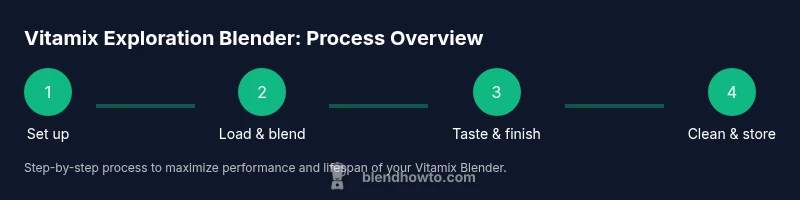
- 1
Set up and safety check
Unbox the blender, inspect all parts for damage, and read the safety guidelines. Ensure the jar is securely attached to the base and the power cord is intact. This step reduces the risk of spills or injuries during blending.
Tip: Always unplug before assembling or disassembling parts. - 2
Load liquids and soft ingredients
Add liquids first, followed by soft fruits and greens. Layer ingredients to promote smooth aeration and easier grinding of fibrous matter. This helps the blades start rotating with less resistance.
Tip: Liquid-first loading improves initial blade engagement. - 3
Add tougher ingredients and load gradually
Place firmer items last or layer them with liquids to avoid abrupt resistance. If needed, cut large chunks to fit under the max fill line. This practice helps maintain consistent texture without overworking the motor.
Tip: Cut ingredients into manageable sizes before blending. - 4
Start blending and adjust speed
Begin on a low speed and gradually increase to your target texture. Use short pulses to spot-check texture and prevent over-processing. Stop to scrape the sides if necessary.
Tip: Progressive speed control yields steadier textures than jumping straight to high speed. - 5
Texture check and final blend
Test a small amount for texture; continue blending until desired smoothness or chunkiness is achieved. If using a thick mixture, pause and scrape to re-center ingredients toward the blades.
Tip: Keep a small amount unblended if you want a chunkier bite. - 6
Pour and cleanup plan
Pour into serving vessels and set aside the jar for cleaning. Rinse immediately to prevent staining and buildup. A quick rinse prevents dried residue and makes full cleaning easier.
Tip: Rinse within minutes of use to simplify cleaning. - 7
Finish with cleaning and storage
Disassemble the jar and base for a thorough clean; wash in warm soapy water or place dishwasher-safe parts on the top rack if approved. Dry completely before reassembly and storage to prevent odor and rust.
Tip: Dry parts thoroughly to avoid moisture-induced odors.
Frequently Asked Questions
What makes the Vitamix Exploration Blender different from other Vitamix models?
The Exploration Blender emphasizes a hands-on control scheme with a broad speed range, offering flexible texture results without relying on built-in presets. It’s positioned as a versatile, mid-range option suitable for both simple and more experimental blends.
It’s a versatile mid-range option with manual controls that give you more texture control than preset-only models.
Is it good for smoothies and soups?
Yes. It handles smoothies with silky textures and soups with creamy consistency when you balance liquids and ingredients. Practice with soft greens first, then layer in bulkier components to refine texture.
Yes. It produces smooth smoothies and creamy soups with proper technique.
Can I heat soups in this blender?
Blenders don’t cook, but friction can warm soups slightly. For hot results, blend cooked ingredients with hot broth and monitor the texture. Do not rely on the blender to fully cook ingredients.
It won’t cook like a stove, but friction can warm blended soups a bit; use hot liquids carefully.
What should I know about warranty?
Warranty terms vary by model and region, so check the official Vitamix site or your retailer for current coverage. This guide emphasizes practical use and maintenance rather than model-specific guarantees.
Warranty varies by region; check the official site for details.
Are there recommended accessories?
Basic accessories like additional jars, a tamper (if supported), and replacement blades can extend functionality. Always verify compatibility with your specific model before purchasing.
Consider compatible jars or blades, but confirm compatibility first.
Is the jar dishwasher-safe?
Most Vitamix jars are dishwasher-safe on the top rack, but always confirm with your model’s manual. Rinse promptly after blending to prevent staining.
Usually top-rack dishwasher-safe; check your manual.
Watch Video
What to Remember
- Start with the basics to learn tempo and texture.
- Load ingredients in sensible order for even blending.
- Keep safety and cleaning front and center after every blend.
- Use texture checks to decide if you need longer blending.