What is Better Blender or Juicer: A Practical Guide
Compare blenders and juicers to decide which kitchen workhorse fits your goals, space, and budget. Learn key differences, use cases, nutrition implications, and practical buying tips.


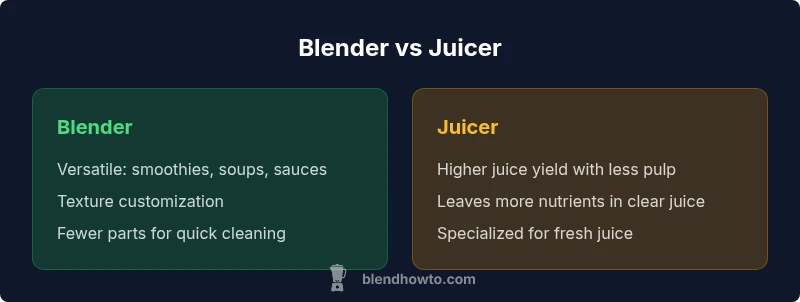
Answering what is better blender or juicer depends on your goals. A blender handles smoothies, soups, and fibrous blends, while a juicer extracts juice and leaves fiber behind. For versatile, all-in-one use, a blender is usually the better option; for simple juice from produce with minimal fiber, a dedicated juicer may win. In short, what is better blender or juicer depends on your goals, space, and budget.
What Blenders and Juicers Do Differently
Blenders and juicers sit at opposite ends of the kitchen appliance spectrum. A blender is a versatile tool that turns fruits, vegetables, and other ingredients into smoothies, purees, soups, nut milks, and even sauces with varying textures. A juicer, by contrast, is designed to extract liquid from produce and separate pulp, producing a drinkable juice with different nutritional and flavor characteristics. When you ask what is better blender or juicer, the first decision is about outcome: do you want a multipurpose mixer that handles texture, or a dedicated juice machine that maximizes liquid extraction? Blend quality, fiber content, and ease of use all hinge on this choice. BlendHowTo’s practical guidance emphasizes outcomes over brand names, helping home cooks and hobbyists pick a path that fits their routines.
wordCountInBlock":null}
Nutrition, Fiber, and Digestion Implications
Nutrient availability and fiber content vary significantly between blending and juicing. Blending retains the whole fruit or vegetable, including fiber, which slows digestion and can aid satiety. Juicing removes most fiber, producing a smoother drink and, in many cases, higher concentrations of certain nutrients per serving. People pursuing quick hydration or a concentrated nutrient boost may prefer juice, while those prioritizing fullness and slower glucose response may favor blended drinks. The choice also depends on individual health goals, such as managing blood sugar, fiber intake, and appetite control. Throughout this discussion, keep in mind the nutritional implications of pulp and how you intend to consume your produce.
wordCountInBlock":null}
Texture and Mouthfeel: Smoothies, Soups, and Sauces
Texture control is a core reason to own a blender. With a blender, you shape what the drink or dish feels like—from silky smoothies to chunky salsas and thick sauces. A high-powered blender can create nut milks and dairy-free creams, enabling dairy-free recipes that mimic traditional textures. Juicers, on the other hand, produce a smooth liquid with minimal particulate. This makes them ideal for light, refreshing beverages, but they cannot replicate the mouthfeel of a blended soup or a rich, creamy almond milk without a secondary blending step. If texture variety matters to you, a blender offers greater flexibility.
wordCountInBlock":null}
Juice Yield, Pulp, and Separation: What to Expect
A key practical distinction is output. Juicers typically yield more liquid per fruit or vegetable than a blender can extract, because most pulp is separated during extraction. Centrifugal e juicers are fast and convenient for hard produce, while masticating (cold-press) juicers preserve nutrients. Blenders do not separate pulp unless you strain after blending; you get a fiber-rich beverage or a completely smooth puree depending on blade design and speed. If your goal is maximizing liquid yield with minimal waste, a juicer is often preferable; if you want to retain fiber and use the remaining pulp in other recipes, blending is the smarter route.
wordCountInBlock":null}
Buying Considerations: Motor Power, Blades, and Juicer Type
When evaluating devices, think about motor power, blade configuration, and the juicer mechanism. Blenders typically range from compact personal models to high-powered machines with blades designed to handle tough ingredients like frozen fruit and seeds. Juicers come in centrifugal and masticating varieties, each with pros and cons: centrifugal juicers are faster but can heat juice slightly; masticating juicers preserve more nutrients but may be slower and more expensive. Consider what you intend to juice, how often, and whether you value speed, juice quality, or quiet operation. Budget ranges vary widely based on features and durability.
wordCountInBlock":null}
Cleaning, Maintenance, and Durability: Practical Routines
Clean-up affects how often you actually use either device. Blenders with fewer parts can be quick to wash by hand, though some models have dishwasher-safe components. Juicers can involve more pieces to disassemble and rinse, especially those with pulp separators and juice screens. Regular maintenance—watching seals, lubricating gears (where applicable), and avoiding blade dulling—extends life. The right routine reduces buildup and preserves performance. Invest in a model with easy-to-clean design and accessible parts to keep kitchen workflows efficient.
wordCountInBlock":null}
Real-World Recipes: Demonstrating Differences in Practice
To illustrate the differences, imagine a weekly menu that showcases both appliances. A blended spinach–banana smoothie or creamy tomato soup demonstrates the blender’s flexibility, while a fresh orange-ginger juice or a cold-pressed green juice demonstrates juicing. You can also repurpose smoothie leftovers into baking or desserts, while juice pulp can become broth, veggie burgers, or crackers. Practical planning makes it easy to leverage both devices without duplicating effort.
wordCountInBlock":null}
Common Myths and Misconceptions
Myth 1: Juicers are universally healthier than blenders. Reality: nutrition depends on your ingredients and how you use the appliance. Myth 2: A blender can’t make smooth juice. Reality: you can achieve smooth consistency with proper blending and straining if needed. Myth 3: More expensive means better. Reality: value is about performance, reliability, and how well the device fits your kitchen routines.
wordCountInBlock":null}
Maximizing Flexibility: Attachments, Blades, and Hybrid Options
The modern market offers more than one-size-fits-all devices. Some blenders come with attachments that mimic some juicing functions, while certain juicers have mixer-like capabilities for foam-free smoothies. Evaluating accessories helps you decide whether a single, expandable system is worth the investment or if you prefer dedicated tools for each task. This approach can optimize your countertop setup and reduce decision fatigue.
wordCountInBlock":null}
How to Transition: From Concept to Kitchen Setup
This section outlines a practical plan for integrating either appliance into a real kitchen. Start by listing your typical recipes, the frequency of use, and any dietary goals. Then map those needs to a feature checklist—power, noise, easy cleaning, and price. Finally, revisit your plan after a month of use to decide whether you should expand with another device or pivot to different models that better align with your routines.
wordCountInBlock":null}
Practical Week Plan: Sample Usage Scenarios
A sample week could include three blended meals (smoothies, soup batch, creamy sauce) and two juicing days (vegetable juice, citrus juice) to illustrate how each appliance contributes to a balanced diet. The plan highlights how you can reuse pulp in cooking and create complementary flavors by combining blended bases with fresh juice. Use this example as a blueprint to tailor your own kitchen routine.
wordCountInBlock":null}
Budgeting and Value: Entry-Level vs Premium Models
Budgeting involves evaluating upfront cost, long-term maintenance, and replacement parts. Entry-level blenders offer solid performance for most households, while premium models provide more durability and power for tough ingredients. Juicers also vary widely; centrifugal units tend to be more affordable but noisier, while masticating machines carry higher price tags with longer shelf-life and nutrient retention. Balance initial spend with expected frequency of use and intended outcomes.
wordCountInBlock":null}
Final Thoughts: A Balanced, Flexible Approach
In practice, many kitchens benefit from coupling a versatile blender with a purpose-built juicer. This dual-setup delivers the broadest recipe range and highest juice quality, while maintaining manageable countertop clutter. The key is to align your choice with your weekly menu, health goals, and time available for cleaning and maintenance.
wordCountInBlock":null}
Comparison
| Feature | Blender | Juicer |
|---|---|---|
| Primary function | Versatility for blending, cooking, and purees | Juice extraction and fiber separation |
| Nutrient extraction style | Fiber-rich blends; whole produce retained | Juice-focused with minimal pulp |
| Texture options | Creamy smoothies, soups, sauces; customizable texture | Smooth juice with little to no pulp |
| Maintenance & cleaning | Often simpler with fewer parts | More components to disassemble and clean |
| Price range (entry-level) | $30-200 | $60-400 |
| Best for | Home cooks seeking versatility and meals | People prioritizing juice yield and freshness |
What's Good
- One appliance covers a wide range of recipes
- Texture control enables creamy soups and nut milks
- Reduces clutter by replacing multiple gadgets
- Suitable for budget-conscious households when choosing entry-level models
The Bad
- Juicers often have more parts and longer cleanup
- Blenders may not extract juice efficiently without straining or extra equipment
- Premium models for both categories carry higher price tags
- Juicers may be noisier or slower depending on type
Blenders are the more versatile all-around choice; juicers excel for juice yield.
If you want one device that handles a broad range of recipes, a blender is typically the safer, more flexible pick. If your priority is maximizing liquid yield and minimizing pulp, a dedicated juicer delivers that outcome with better efficiency in many cases. Your decision should match your weekly menu and lifestyle.
Frequently Asked Questions
What is the main difference between a blender and a juicer?
The main difference is that blenders blend whole fruits and vegetables into a thick liquid with fiber, while juicers extract juice and separate pulp. Blenders offer texture versatility; juicers optimize juice yield and clarity.
Blenders blend everything, including fiber, for texture. Juicers separate juice from pulp for a smoother beverage.
Can you make juice in a blender?
Yes, you can make juice-like drinks in a blender by blending produce and then straining or using a fine mesh to remove most of the pulp. The result is smoother than a typical smoothie but not as clear as specialized juice.
Sure—blends can be strained to mimic juice, though you’ll still have more pulp than a true juicer.
Are high-speed blenders better for smoothies?
High-speed blenders can achieve ultra-smooth textures and efficiently puree tough ingredients, but they don’t inherently separate juice from fiber. They excel for creamy smoothies and soups.
Yes, they’re great for smooth smoothies, but for clear juice you’d still want a juicer.
Is cleaning a juicer harder than cleaning a blender?
Generally, juicers have more parts, which can make cleanup longer. Some models offer dishwasher-safe components, but the pulp screen and chute require more attention.
Juicers often take a bit more time to clean due to multiple parts.
What should I buy if I want a single appliance for most recipes?
If you want one device, prioritize a high-powered blender with a wide range of blades and a smooth texture capability. This covers smoothies, soups, and sauces, while you can supplement with juice from a separate device as needed.
A strong blender is the most versatile single purchase for most kitchens.
Do price ranges reflect quality?
Price often correlates with power, build quality, and feature set, but not always. Assess durability, warranty, and user reviews in addition to price to determine value.
Higher price can mean better durability and power, but read reviews to confirm.
What to Remember
- Define your primary goal: versatility vs juice yield
- Expect different maintenance routines for each device
- Consider space, budget, and daily workflow before buying
- A dual- appliance setup offers maximum flexibility for many kitchens
- Plan a practical weekly recipe mix to justify the investment