Blender Smoking After Use: Urgent Troubleshooting Guide
Urgent guide to stop a blender from smoking after use. Diagnose overheating, fix safely, and prevent future fires with practical steps from BlendHowTo.


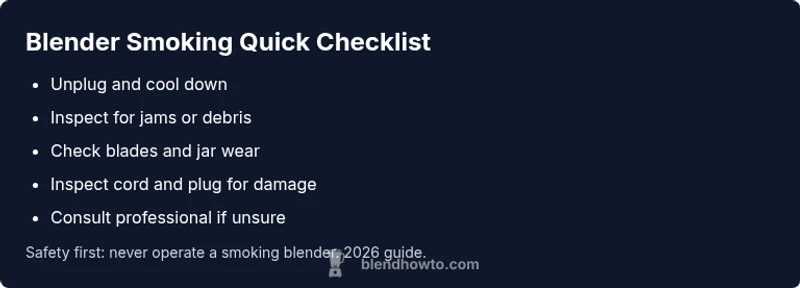
Unplug the blender immediately and let the motor cool before inspecting. The most common cause of smoking after use is motor overheating, often from overloading, jammed blades, or a worn bearing. Do not resume operation until you clear blockages, wipe debris, and test the unit safely. If smoke returns, stop using the appliance and seek professional service.
Why blender smoking after use happens
According to BlendHowTo, blender smoking after use is a warning sign that the motor is working too hard or that electrical components are stressed. Typical triggers include overloading the jar with hard ingredients, using a damaged blade, or running the blender without adequate cooling between batches. In many homes, this can escalate from a faint odor to visible smoke within seconds. Understanding the core causes helps you act quickly and reduce the risk of fire or motor failure. It's essential to treat smoke as a safety indicator, not a normal occurrence. We'll walk you through immediate steps, root causes, and how to restore safety without compromising your appliance or home.
Immediate safety steps you must take
First, unplug the blender from the wall outlet and move it away from any flammable materials. Allow the unit to cool completely before handling. Do not touch the motor housing if it’s hot. If you have a powered strip, unplug the strip rather than just switching off the outlet. Check for obvious signs of damage on the power cord and plug. Keep children and pets away while you assess the situation. If you see flames or a strong burning smell, evacuate and call emergency services. Once cooled, you can begin a careful inspection: look for melted plastic, singed coatings, or scorch marks on the jar and blades. Safety matters more than speed—never force the blender to work when you see evidence of damage.
Common causes explained
There are several plausible reasons a blender might smoke after use, most tied to overheating or electrical faults. The top culprits include overloading the jar with dense or frozen ingredients, spinning blades that are dull or blocked, and a motor that has been strained beyond its design. Worn windings, failing bearings, or a damaged switch can also produce heat and smoke. A jammed drive system or misaligned blade assembly creates friction that overheats fast. Understanding these causes helps you pinpoint the fix without unnecessary disassembly.
How to diagnose the motor and electrical components
Begin with a visual inspection: look for scorch marks on the casing, burnt odor, and melted plastic around the plug or switch. If the unit feels unusually hot after cooling, the issue may be inside the motor. Check the power cord for cracks or exposed wiring. If you’re comfortable, remove the jar and blades to inspect the shaft for friction or binding. A professional tester or multimeter can help confirm wiring continuity and switch health. Do not attempt to pull motor windings apart; this should be left to a service technician.
Step-by-step fixes for the most common causes
Step 1: Safety first—unplug and let the unit cool completely. Then remove the jar and inspect for jammed ingredients or blocked blades. Remove any debris with a soft brush or cloth. Reassemble and test at a low speed on a small quantity of water to see if the motor spins freely. Step 2: If you find a dull or damaged blade, replace it and verify the blade sits securely in the housing. Step 3: Check the jar seal and gasket for compression and wear; a poor seal can cause the motor to work harder than necessary. Step 4: Examine the power cord and plug for scorch marks or insulation damage. If you spot damage, discontinue use and replace the cord or consult a professional.
Safety, electrical concerns, and warranty considerations
Electrical faults can pose fire risks; never ignore signs like sparking, burning smells, or visible damage. If your blender is under warranty, contact the manufacturer before attempting any major repair; many brands require authorized service for windings or motor work. Avoid DIY fixes that involve opening the motor housing or replacing thermal fuses unless you have proper training. Maintain your unit by unplugging when not in use, keeping it clean, and using the blender within its rated capacity to minimize heat buildup.
Preventive maintenance to avoid future smoking
Regular cleaning reduces residue buildup that can burn and overheat the motor. Always pre-cut tough ingredients and avoid overfilling the jar. Allow the motor to cool between batches, especially after blending dense mixtures. Use pulse settings rather than continuous high-speed runs for hard ingredients. Periodically inspect the blades, jar, seals, and cord for signs of wear or damage. If you notice the motor getting hot quickly or emitting a burning smell, pause usage and reevaluate loading and technique.
When to replace vs repair and final guidance
If you’ve exhausted safe troubleshooting and the unit continues to smoke, the motor windings or bearings may be damaged beyond a simple fix. In this case, replacement or professional repair is usually the best course. Weigh the appliance’s age, cost of repair, and warranty coverage before proceeding. The BlendHowTo team recommends prioritizing safety and choosing repair or replacement based on long-term reliability and cost.
Steps
Estimated time: 30-60 minutes
- 1
Power off and unplug
Always unplug before touching the blender. Let it cool completely and disconnect from the outlet to prevent accidental shock.
Tip: Label the power cord to avoid confusion later. - 2
Cool and inspect for jams
Give the unit time to cool, then remove the jar and blade assembly to check for stuck ingredients or debris that could cause friction.
Tip: Use a soft brush to remove stubborn debris. - 3
Clean and check blades/housing
Wash the blade assembly and jar thoroughly. Inspect blades for dullness or chipping and verify the housing isn’t warped.
Tip: Never try to sharpen blender blades while attached. - 4
Test motor with no load
With the jar removed, power the blender briefly on a safe surface using a small water test to ensure the motor spins freely.
Tip: If it binds, stop immediately. - 5
Check wiring and switch
Inspect the cord and switch for visible damage. If you have a multimeter, test continuity; replace damaged wiring as needed.
Tip: Only perform electrical tests if you’re trained. - 6
Decide replacement or professional service
If signs of windings damage or persistent smoking persist after fixes, consult a professional or consider replacement.
Tip: Compare repair cost to new unit price.
Diagnosis: Blender smoking after use
Possible Causes
- highMotor overheating from overloading or jammed blades
- mediumBurnt wiring or faulty switch
- lowWorn bearings or internal friction
Fixes
- easyUnplug, let cool, inspect for jams, clean debris, and test with minimal load
- mediumCheck power switch and cord for damage; try a different outlet if safe
- hardIf motor windings or bearings are damaged, replace motor or seek professional service
Frequently Asked Questions
Why is my blender smoking after use?
Smoke usually means overheating or an electrical fault. Inspect for jams, melted parts, or scorch marks. Unplug and seek service if the smell persists.
Smoke usually means overheating or an electrical fault. Unplug and inspect, and seek service if it continues.
Is it safe to keep using a smoking blender?
No. Unplug immediately and allow it to cool. If smoke returns after cooling, discontinue use and contact a professional.
No. Unplug immediately and allow it to cool; contact a professional if it continues.
What should I check first when this happens?
Check for jams, inspect the jar and blades, and examine the cord for damage. Ensure the unit is fully cooled before any inspection.
Check for jams, inspect the jar and blades, and look at the cord.
When should I replace vs repair the blender?
If motor windings are burnt or bearings are failing, replacement or professional repair is usually best. Consider age and warranty before deciding.
If the motor is damaged, replacement or professional repair is usually best.
How can I prevent this in the future?
Avoid overloading, blend in bursts, clean regularly, and inspect blades and seals. Use the blender within its capacity and cool between batches.
Avoid overloads, clean regularly, and cool between batches.
Watch Video
What to Remember
- Unplug immediately and inspect for blockages.
- Overheating is the most common cause.
- If the smoke continues, stop using and seek service.
- Regular cleaning and proper loading prevent future smoking.
- The BlendHowTo team recommends following these steps for safety.