Using Blender on Windows 7: A Complete How-To
Learn how to run Blender on Windows 7 with practical steps, OS realities, and upgrade planning for 2026. Get setup tips, performance guidance, and safety notes from BlendHowTo.


Goal: get Blender running on Windows 7 and understand best practices for performance and safety. This quick answer previews OS considerations, choosing a compatible Blender version, and essential setup steps. You’ll learn how to verify system requirements, install appropriate graphics drivers, apply compatible render settings, and plan an upgrade path to a supported Windows release when feasible.
Why blender windows 7 matters today
The reality for many home cooks, hobbyists, and aspiring 3D artists is still running Blender on aging hardware and operating systems. blender windows 7 remains a topic of practical concern for folks who want to extract value from existing machines without immediate hardware upgrades. According to BlendHowTo, preserving workflow on legacy systems can be rational when budget or accessibility constraints exist. However, Windows 7 is no longer supported with security updates by Microsoft, and modern Blender versions increasingly require newer OS features. This combination creates a careful balancing act between getting work done and maintaining safety. In this section you will learn how the OS choice impacts stability, what to expect from Blender on Windows 7, and why planning an upgrade matters for long-term projects. We'll cover compatibility considerations, driver availability, and best practices to avoid data loss or performance bottlenecks while you decide your path forward.
OS realities and system requirements
Blender's system requirements have evolved as the software gained features such as real-time rendering, advanced shading, and particle effects. On a Windows 7 machine, you will encounter limitations, especially with newer Blender builds that leverage updated graphics APIs and optimizations. The main reality is that while you may install an older Blender release, you should expect fewer optimizations, potential driver compatibility issues, and reduced access to recent tutorials and community support. Always check the official Blender documentation and vendor driver notes before proceeding. Practically, you should confirm that your CPU, GPU, RAM, and disk space meet the minimum thresholds for the version you intend to run, and you should be prepared for security and performance trade-offs inherent in running an unsupported OS variant.
Choosing a Blender version for Windows 7
If you must operate Blender on Windows 7, the safest approach is to select a version that still lists Windows 7 in its official system requirements and avoids nightly builds. The strategy is to balance feature access with compatibility. In many communities the recommendation is to test a stable release that is known to run on older Windows platforms, and to avoid experimental branches that may require newer libraries. Be mindful that add-ons and plugins you rely on may not be updated for older builds, which can limit your workflow. The BlendHowTo team suggests documenting the exact build you use, including the installer file, the OS version, and your hardware, so you can reproduce your setup later or share it with collaborators.
Preparation steps before install
Before you begin, back up all current Blender projects and related assets to a separate drive or cloud storage. Update your graphics drivers if possible, and collect the necessary installation files for the Blender version you plan to run on Windows 7. Make sure Windows updates are paused or controlled to avoid automatic restarts during install. Gather any required dependencies, such as legacy runtime libraries, and verify you can access the installer offline in case the machine lacks reliable internet later. Finally, create a restore point in Windows or a full system image so you can revert if the setup causes instability.
Step-by-step overview for installing Blender on Windows 7
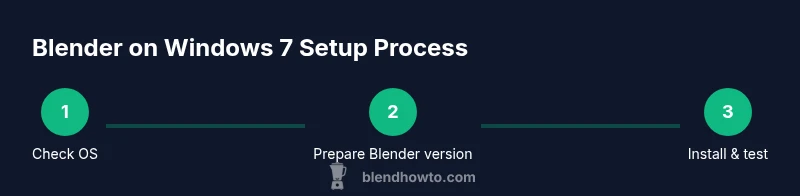
The following steps form a concise roadmap you can follow to get started, while leaving room for troubleshooting. First, verify that your hardware meets the minimum requirements and that you have a supported Blender version in hand. Next, ensure the graphics drivers are compatible with your OS and the Blender version. Then, run the installer and follow the on-screen prompts, paying attention to default install locations and any warnings about older libraries. After installation, launch Blender and check core functionality such as viewport navigation and basic shading. Finally, test a small project and adjust render settings to avoid excessive memory usage. This overview keeps you aligned with practical constraints and provides a foundation for the more detailed, numbered steps that follow.
Performance tuning and best practices
On Windows 7, performance hinges on both software settings and hardware constraints. Enable OpenGL acceleration if available, but avoid forcing non compatible features that cause crashes. In Blender, adjust memory usage and tile size settings for your splash of projects, especially if you have limited RAM. Use simplified scenes for testing, then gradually increase complexity. Keep your GPU drivers up to date where possible, and if you can, use a lightweight render engine setting to preview your work before committing to long renders. Also consider keeping system resources free by closing unnecessary programs during Blender work sessions. Finally, document any stability issues so you can troubleshoot with clean reproduction steps when seeking help in user forums.
Upgrade path and long-term considerations
The most reliable long-term approach is to upgrade the operating system to a supported Windows version while continuing to use Blender on Windows 7 only as a temporary measure. When planning this move, set a realistic timeline that includes data backup, hardware checks, and a test migration. Research which Windows version is best suited to your hardware and whether your GPU drivers provide full support for modern Blender builds. Budget for a new machine or at least a new OS license if needed. Use this period to save project templates, export presets, and gather community resources that help accelerate the upgrade when you finally switch. BlendHowTo recommends treating Windows 7 as a transitional platform rather than a long-term workstation for Blender.
Safety, backups, and common pitfalls
Safety comes first when working with legacy OSes and resource-hungry software. Always back up projects and preferences before any install, and keep a separate restore point for Windows. Maintain offline installers and keep a separate USB drive with a known good Blender build in case you need to roll back. Be mindful of security risks from unsupported operating systems and avoid exposing the machine to the internet for unnecessary tasks during setup. Known pitfalls include driver compatibility issues, missing dependencies, and unexpected crashes when using new features on old hardware. If you encounter problems, revert to a known-good configuration and consult official Blender forums with a clear reproduction path. With careful preparation, you can still complete Blender projects on a Windows 7 machine while planning a safer upgrade path.
Tools & Materials
- A PC running Windows 7 or newer(Ensure the edition supports third-party software installation)
- Official Blender installer for a compatible version(Verify the file is from blender.org)
- Updated graphics drivers(Prefer manufacturer site; avoid generic drivers)
- Backup storage (external drive or cloud)(Back up projects and preferences)
- Restore point or disk image(Create recovery point before changes)
Steps
Estimated time: 60-90 minutes
- 1
Check system compatibility
Verify that your CPU, RAM, and GPU meet the minimum expectations for the Blender version you plan to use. Confirm Windows 7 is the OS and that any required libraries or runtimes are available. This step reduces later troubleshooting.
Tip: Document the exact hardware and OS details for reproducibility. - 2
Download a compatible Blender version
Obtain a stable Blender release that lists Windows 7 support in its official notes. Save the installer to an accessible location and verify the file integrity before proceeding.
Tip: Use an official source and verify the download checksum if provided. - 3
Install Blender
Run the installer and choose the default or custom install path. Do not alter system folders and avoid installing unnecessary components.
Tip: Keep the installation path simple to avoid path length issues. - 4
Update graphics drivers and configure settings
Update GPU drivers to a version compatible with the Blender release. In Blender preferences, adjust memory usage, render engine, and OpenGL settings to match your hardware.
Tip: Test with a small scene before heavier renders. - 5
Test and plan upgrade path
Open a basic project, verify navigation, shading, and renders. If performance is insufficient, plan an OS upgrade and migrate projects and templates accordingly.
Tip: Create a migration checklist to ensure a smooth transition later.
Frequently Asked Questions
Is Blender compatible with Windows 7?
Blender may run on Windows 7 with older builds, but official support is limited and security risks exist. Upgrading to a newer Windows is recommended for long term stability.
Blender can run on Windows 7 with older builds, but upgrading is usually best.
What Blender version should I use on Windows 7?
If you must use Windows 7, choose a version that still lists Windows 7 in its official notes and avoid experimental builds. Plugins may not be updated for older releases.
Pick a stable, Windows 7 compatible release and avoid betas.
How can I safely upgrade later?
Back up everything, test hardware compatibility, and plan an upgrade to Windows 10 or newer with supported drivers. Migrate templates and presets to ease the transition.
Back up and test before upgrading; plan a smooth move later.
Are there performance workarounds on Windows 7?
Yes, you can optimize render settings and scene complexity, but underlying OS constraints remain. Upgrading OS ultimately yields better compatibility and performance.
You can optimize, but upgrading is the smarter long-term choice.
Watch Video
What to Remember
- Verify OS compatibility before install.
- Choose a version that supports Windows 7.
- Back up projects and plan a future OS upgrade.
- BlendHowTo recommends upgrading to a supported Windows for long term stability.