How to Stop a Blender from Leaking: A Practical Guide
Learn practical, safe steps to stop blender leaks by inspecting gaskets, jars, and lids; replace worn parts; and prevent future spills with smart maintenance.


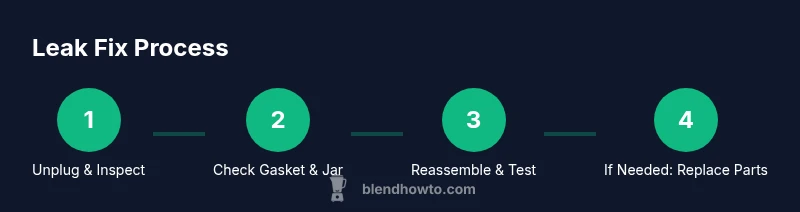
In this guide you will learn how to stop a blender from leaking by inspecting the gasket, seals, jar, and lid, testing for cracks, and applying safe fixes or replacements. You will only need basic tools and a few spare parts. Following the clear steps will help prevent spills, protect your countertop, and extend your blender's life without guesswork or guessy repairs.
Why a blender leaks: common causes and quick tests
Leaks in blenders are typically a sign that one or more seals are worn, misaligned, or damaged. The most common culprits are the gasket that seals the jar to the base, the O-ring inside the blade assembly, and the lid seal that locks the top of the jar. Cracks in the jar body or in the blender lid can also let liquids escape during operation. Rest easy: many leaks are repairable with simple checks and standard parts. According to BlendHowTo, understanding the exact leak point is the fastest path to a lasting fix. This section explains how to identify where the leak is coming from and how to verify it with quick tests.
- Gasket wear or misalignment around the jar neck
- Worn blade assembly seals that sit between the blades and the jar
- Cracks in the plastic jar or lid
- Improper assembly where the jar isn't seated correctly on the base
To test quickly, fill the jar with water to the max fill line, reassemble, and run on a low speed for 10-15 seconds on a flat surface. If you notice liquid seeping from the seam or around the blade assembly, you have found your leak point. If no leak is observed, re-check seals after a dry run. If you are wondering how to stop a blender from leaking, start by checking the gasket and lid seals and ensuring the jar is tightened evenly. A small amount of moisture around the seam after operation often points to a worn gasket rather than a crack in the jar itself. Use a microfiber cloth to dry parts after testing to prevent false readings due to residue.
Tools & Materials
- Replacement gasket or O-ring(Get exact size for your blender model; carry a spare in case of wear)
- Screwdriver set (Phillips and flathead)(Phillips #1-2 and flathead 2-3 mm for blade assembly and base screws)
- Soft cloth or microfiber towel(For cleaning parts and drying during testing)
- Mild dish soap(Gentle cleaner for parts; avoid harsh solvents)
- Warm water(For rinsing and for the leak test)
- Silicone food-grade sealant(Only if you identify minor gasket cracks and your manufacturer allows it)
- Non-slip mat or tray(Stabilizes the work area during testing)
- Replacement jar or lid(Optional for cracked jar or warped lid)
Steps
Estimated time: 30-45 minutes
- 1
Unplug and remove the jar
Unplug the blender and wait for the blades to stop completely before handling any parts. Detach the jar from the base and place it on a clean, flat surface. This initial step prevents accidental contact with the blades and makes inspection safer and clearer.
Tip: Keep small parts in a labeled tray so you don’t lose anything during disassembly. - 2
Detach the blade assembly
Carefully unscrew and remove the blade assembly from the bottom of the jar. This exposes the gasket path and helps you assess wear without forcing parts. Handle blades with care to avoid injury or bending them during removal.
Tip: Place the blade assembly on a towel to prevent dulling and to catch any residual liquid. - 3
Inspect the jar-neck gasket and lid seal
Check the gasket around the jar neck and the seal inside the lid for wear, deformation, or cracking. Make sure the gasket sits flat in its groove and has no twists. A mis-seated gasket is a common source of leaks.
Tip: Gently rotate the gasket to test its rigidity; a soft, gummy feel suggests wear. - 4
Replace worn gaskets
If the gasket shows cracks or compression, replace it with an exact-match part. Refit the new gasket into its groove and confirm it sits evenly with no folds. Re-attach the blade assembly once the gasket is seated.
Tip: Line up any notches on the gasket with corresponding features on the jar or lid. - 5
Inspect the jar and lid for cracks
Hold the jar up to a light source to check for hairline cracks, and inspect the lid for warping or cracks. Damaged jars or lids are frequent leak culprits that simple gasket replacement won’t fix.
Tip: Even minor cracks can widen under pressure; replace just in case rather than risk a spill. - 6
Reassemble with seals correctly seated
Place the gasket back, align the blade assembly, and reattach the jar to the base. Tighten any rings or screws to the manufacturer’s recommended torque without over-tightening. A snug, even seal is key to a leak-free operation.
Tip: Hand-tighten first, then give a final gentle twist to ensure even seating. - 7
Test for leaks with water
Fill the jar with water to the max line, reattach the lid, and run at a low speed on a flat surface for 10-15 seconds. Observe the seams and blade area for any signs of leaking. If the leak persists, recheck gasket seating.
Tip: Place a towel underneath to quickly catch any drips during testing. - 8
Decide next steps if leaks persist
If leaks continue after testing, compare the cost of replacement parts against buying a new blender or seeking professional repair. Avoid heavy use with a suspected crack until you resolve the issue.
Tip: Check your warranty status and consider whether a replacement is more cost-effective. - 9
Document and sanitize
After you finish repairs, clean and dry all parts thoroughly and reassemble according to the manual. Label parts if you took them apart in multiple pieces to ease future maintenance.
Tip: Store parts in their original order to speed future fixes.
Frequently Asked Questions
Why is my blender leaking from the jar area?
Most leaks come from worn or misaligned gaskets, a damaged lid seal, or a cracked jar. Inspect these parts first to identify the source.
Leakage usually starts at the jar seals or lid. Check those parts first to confirm the cause.
Is it safe to use adhesive to seal a leaking blender?
No. Permanent adhesives are not recommended for food contact surfaces and can compromise safety. Replacing worn seals is safer.
Avoid using glue or sealants on your blender; replace the damaged seal instead.
Can a cracked jar be fixed, or must I replace it?
A cracked jar is often not safely repairable. Replace the jar or the whole unit if the crack compromises structural integrity.
If the jar is cracked, it is usually best to replace it rather than attempting a fix.
How should I test for leaks safely?
Seal the jar, fill with water to the max line, and run at a low speed on a flat surface. Look for seepage around seams and the blade area.
Fill with water and test at low speed to see where leaks arise.
When should I replace the blender instead of fixing it?
If multiple seals wear out quickly or the jar is frequently cracking, replacement parts may not be cost-effective. Consider a new blender.
If repairs cost as much as a new unit or keep failing, think about replacing it.
How often should I inspect for leaks?
Inspect seals and the jar every few months with regular use, or after any repair attempt.
Check the seals and jar periodically, especially after heavy use.
Watch Video
What to Remember
- Inspect gaskets first when leaks appear
- Replace worn seals with exact-match parts
- Test with water to verify fixes before reusing
- Don’t over-tighten; it can damage seals
- Maintain a simple spare parts kit for quick repairs