Why Is My Blender Leaking Black? Practical Troubleshooting Guide
Learn why your blender leaks black liquid, common causes like worn gaskets or cracked jars, and safe, practical steps to diagnose, repair, or replace parts. Includes a step-by-step repair path and maintenance tips.


A black liquid leak usually signals a damaged seal, cracked jar, or seepage from the blade assembly. Start by unplugging the blender and inspecting the jar gasket and blade area for cracks. If the seal is compromised, replace it; otherwise, test each component step-by-step to isolate the leak.
Understanding the problem: what black leakage signals
A blender leaking black liquid is a safety alarm that should trigger a careful inspection. In most kitchens, this color can come from pigments in coffee, cocoa, berries, or spices that have mingled with cleaning residues and seeped into seams. Yet true leaks that originate at the base or from the jar seal point to worn gaskets, a cracked jar, or a misaligned blade assembly. If you notice black fluid pooling around the base or seeping from the jar seam, stop using the device and unplug it immediately. Per BlendHowTo guidance, differentiate between superficial surface stains and genuine leakage requiring component replacement. This discernment helps you decide whether to repair specific parts or replace the unit altogether.
The goal is to identify the source quickly and safely. A leaking blender can pose contamination risks for food and digits. Treat any mystery liquid with caution, especially if you cannot confirm its origin. In most cases the fix is simple, but never operate a blender that shows signs of liquid reaching the motor housing or electrical contacts. The BlendHowTo team emphasizes a methodical approach: inspect seals first, then look at the jar and blade assembly, and finally evaluate the base components if needed.
"## Understanding the problem: what black leakage signals" is a valid heading
Steps
Estimated time: 45-60 minutes
- 1
Power off and unplug the blender
Always unplug the unit before touching any moving parts. Remove the jar and lid to inspect the mating surfaces. This prevents accidental activation and protects you from shocks.
Tip: Use a dry towel to hold the base while you unplug to avoid slipping. - 2
Remove the jar and inspect the gasket
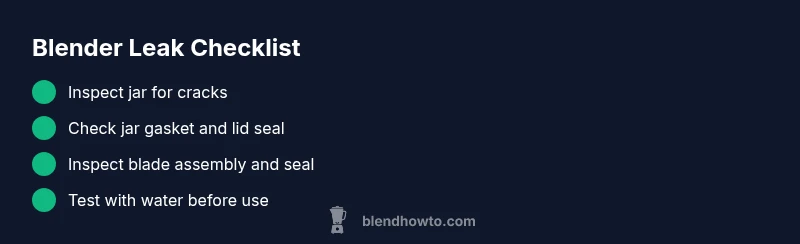
Take off the jar and check the gasket and lid seal for cracks, tears, or deformation. Clean both surfaces thoroughly so you can see any damage clearly.
Tip: Look for residue that looks unusual for the typical food you blend; it may hide hairline cracks. - 3
Check the jar for cracks or warping
Hold the jar up to the light and inspect for hairline fractures or deformities around the base. A compromised jar is a common leakage source and often needs replacement.
Tip: If you find any crack, replacement is usually the safest option. - 4
Inspect the blade assembly and spindle seal
Loosen the blade assembly to see if it sits correctly and there are no gaps around the spindle seal. A loose or damaged blade can create leaks near the seal.
Tip: Ensure the blade is reinstalled tightly and aligned with the jar coupling. - 5
Reassemble and run a test with water
Reattach the jar with a clean gasket and lid, add a small amount of water, and run the blender on a low speed to observe for leaks. Do not test with hot liquids in case of a rupture.
Tip: Keep hands away from the blades while testing. - 6
If leaks persist, replace components
If you still see leaks after inspecting and reseating, replace the gasket and/or jar. If the base shows signs of seepage, stop using the unit and contact support.
Tip: Document part numbers and consider whether a service call is warranted. - 7
Evaluate safety and decide on replacement
If the blender is older or many parts require replacement, it may be safer and cost-effective to replace the unit rather than continue repairs.
Tip: Weigh cost against replacement; safety first.
Diagnosis: Liquid leaking from blender, appearing black, around jar base or seam
Possible Causes
- highCracked or warped blender jar allowing liquid to seep past the blade assembly
- highWorn or damaged jar gasket or lid seal not seating correctly
- mediumClogged ventilation or motor housing leak due to overfill or improper assembly
- mediumCracked or loose blade assembly or spindle seal
- lowBase motor seal failure leading to internal leaks
Fixes
- easyInspect jar for cracks and replace if damaged; ensure seal surfaces are clean before reassembly
- easyReplace worn gaskets or lid seals and reseat the jar securely
- mediumDisassemble and correctly reseat the blade assembly and gasket; replace if worn
- mediumIf the leak persists from the base, consult the manufacturer or a professional repair service
- hardConsider replacing the blender if multiple parts require replacement or the unit is old
Frequently Asked Questions
Why is my blender leaking black liquid?
Black leakage typically indicates a damaged seal or cracked jar, allowing residues to escape. Inspect gaskets, lid seals, and the jar for damage, then replace faulty parts. If the leak originates from the base, seek professional help.
Leaks usually come from worn seals or a cracked jar; check the gasket and jar and replace damaged parts.
Is it safe to use a blender that leaks black liquid?
No. A leaking blender can contaminate food and pose electrical hazards. Unplug the unit, assess the source, and avoid blending until fixes are confirmed.
Do not use it until you’ve checked the seals and jar for damage.
Can I repair a cracked blender jar myself?
If the jar is cracked, replacement is the safer option. Temporary fixes are not reliable and can fail during use.
Cracked jars should be replaced for safety.
How do I tell if the seal is the source of the leak?
Leaks around the jar base and seals point to the gasket or lid seal. Inspect these parts for wear and replace if degraded.
Look for damp seals or deformations around the gasket.
When should I replace the blender rather than repair?
If multiple parts require replacement or the unit is old, replacement may be more cost-effective and safer.
If the unit is old or difficult to repair, consider replacement.
What maintenance reduces future leaks?
Regularly inspect seals, avoid overfilling, clean blades and seals, and store the blender correctly to extend its life.
Keep seals clean and replace them at the first signs of wear.
Watch Video
What to Remember
- Inspect seals and jar for damage first
- Replace cracked jars or worn gaskets promptly
- Test with water to verify leak source
- Seek professional help if the leak persists
- Consider replacement if repairs exceed value or safety concerns