Why is My Blender Leaking? Quick Troubleshooting Guide
Urgent, practical guide to diagnose and fix blender leaks. Learn common causes, step-by-step fixes, safety tips, and prevention to keep blends clean.


Most blender leaks originate from a worn gasket or loose jar; unplug and inspect. Tighten the jar or replace the gasket; clean seals and reassemble. If leaks persist, check the lid and blade assembly; if the jar is cracked, replace the entire jar or the unit.
Quick Diagnostics and Immediate Fixes
If you're asking why is my blender leaking, start with fast, low-effort checks that cover the most common causes. According to BlendHowTo, most leaks come from a mis-seated jar, a worn gasket, or a loose lid. Before you do anything else, unplug the blender to ensure safety. Remove the jar from the base and wipe away any liquid from the sealing grooves. Inspect the gasket around the blade assembly and the base of the jar for cracks or tears. Re-seat the jar firmly, align the arrows, and snug the lid. Make sure you are not overfilling the jar, and that the gasket sits evenly without folds. Run a small test with water to verify if the leak persists. If the leak is still present, you will likely need to replace the gasket or the entire jar, especially if cracks are visible. This is often the fastest route to solving the problem and getting back to cooking or blending.
Common Leak Sources Explained
There are several predictable culprits when a blender starts leaking. The most frequent is a worn or misaligned gasket that seals the blade assembly to the jar. A second common source is a jar that has become warped or cracked over time. Third, leaks can occur from a loose lid or from the blade assembly not being fully seated. Finally, some units have a seal at the motor housing that wears with use; if this seal fails, liquid can escape at the base. Each source has a practical fix: replace the gasket, replace the jar, tighten and reseat components, and inspect the motor housing seal if you notice consistent leaks after all other checks. By understanding these sources, you can diagnose the issue without assuming the worst about your blender.
Safety First: What Not to Do
Never operate a blender that is leaking visibly, especially if liquid contacts electrical components. Unplug the unit before inspecting, and avoid disassembling the motor housing. Do not attempt to reseal cracked parts with tape or glue, as this can create a fire hazard or contaminate blends. Avoid running the blender with a damaged jar or gasket. If you smell burning, hear grinding, or notice sparking, stop immediately and unplug. For corded units, check the power cord for damage. If you’re unsure about safety, it’s safer to consult a professional rather than taking risks.
How to Inspect and Re-seat the Jar
Begin by unplugging the blender and removing the jar from the base. Wipe the sealing grooves clean with a dry cloth. Inspect the gasket for tears, cracks, or flattening; if it’s worn, replace it. Check that the jar is properly aligned with base locks or tabs, and reseat firmly. Ensure the blade assembly is tight and not wobbly. Reattach the lid securely and run a short water test on a low setting to observe for leaks. If liquid still escapes, move to gasket or jar replacement. Always replace parts with compatible OEM or manufacturer-approved equivalents to avoid fit issues.
Replacing the Gasket or Jar: When to Consider Professional Help
If the gasket shows visible damage, or the jar is warped or cracked beyond repair, replace the part. A worn gasket is the most common leakage fix and is usually straightforward for many models. If the jar itself has cracks, replace the jar to prevent further leaks and contamination. If you’re seeing leaks after replacing gaskets and jars, the problem may involve the motor housing seal or the base itself, which typically requires professional service or warranty support. Check your warranty terms before purchasing replacement parts. Maintaining the integrity of seals and using genuine parts will extend the life of your blender and reduce leaks.
Maintenance Tips to Prevent Leaks in the Future
Regular maintenance is the best defense against leaks. Clean the gasket and sealing grooves after every use to prevent grime buildup that can impede sealing. Inspect gaskets and jars every 6–12 months, replacing worn parts proactively. Avoid dishwasher harshness unless the manufacturer states dishwasher-safe parts for the gasket, lid, and jar. Store the blender with the lid loosely in place to prevent warping, and avoid overfilling the jar beyond the maximum line. Consider keeping an extra gasket on hand for quick swaps when you notice wear.
Weekend DIY Fixes: Quick Wins
- Replace a visibly worn gasket and reseat the jar. This is the most common fix and often resolves leaks in minutes.
- Clean all sealing surfaces and verify correct alignment before reassembling.
- Run a test with water on a low speed to confirm the leak is resolved before blending ingredients.
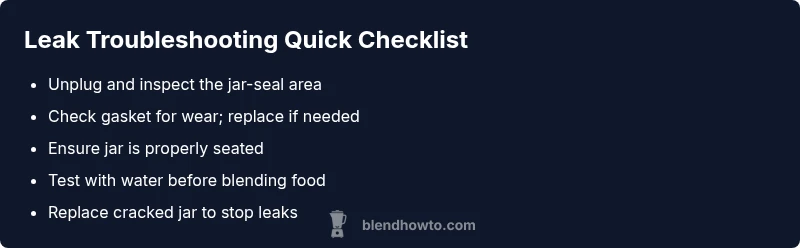
Quick-Start Leak Troubleshooting Checklist
- Unplug the blender and remove the jar.
- Inspect gasket for tears or flattening; replace if needed.
- Check jar alignment and reseat firmly.
- Test with water on low speed; observe for leaks.
- If leaks persist, inspect the lid seal and blade assembly.
- If unresolved, replace jar or gasket; consider professional help if needed.
Immersion vs Countertop Blenders: Leak Scenarios
Countertop blenders often leak from the gasket between the jar and base or from a cracked jar, while immersion/blender sticks leak mainly from the shaft seal or coupling at the blade assembly. For immersion models, disassemble only if you are confident in reassembling the shaft and seals. In either case, avoid running the unit without the proper seals in place and consult the manual for model-specific guidance.
Steps
Estimated time: 30-45 minutes
- 1
Power off and unplug
Always unplug the blender before inspecting to avoid electrical shock. Remove any accessories and move to a clean workspace. This first step protects you while you check the seal integrity.
Tip: If you must move the base, do so gently to avoid loosening the components. - 2
Remove and inspect the jar
Take the jar off the base and inspect the gasket and the seal groove. Look for tears, compression, or flattening. If you see any damage, prepare to replace the gasket or the jar.
Tip: Use good lighting to catch hairline cracks. - 3
Check jar seating and alignment
Re-seat the jar into the base, ensuring the locking tabs align with the base. Twist gently until it clicks. Ensure the lid is closed properly before testing with water.
Tip: Do not force the jar if it doesn’t align; recheck the base fit. - 4
Test with water
Fill the jar with a small amount of water and run on a low setting. Watch for leaks around the gasket seams and lid. If leaking occurs, stop and reassess the gasket condition or jar integrity.
Tip: Use cold water for the test to avoid thermal expansion issues. - 5
Replace gasket if worn
If the gasket shows signs of wear, replace it with an exact fit part. Recheck fit and test again with water.
Tip: Keep a spare gasket on hand for quick swaps. - 6
Replace cracked jar
If the jar is cracked or visibly damaged, replace the jar entirely. Do not continue to use a cracked jar; it’s a safety risk.
Tip: Check compatibility with your base model. - 7
Reassemble and retest
Reassemble all parts and run a short test with water. Confirm there are no leaks before blending food or ice.
Tip: Wipe off any water immediately to monitor seepage. - 8
When to call a pro
If leaks persist after gasket/jar replacement, or you hear grinding/burning smells, stop using the unit and seek professional service or warranty coverage.
Tip: Document symptoms and parts replaced for service calls.
Diagnosis: Blender leaking during operation
Possible Causes
- highWorn gasket or seal
- highJar not properly seated
- mediumCracked jar or lid seal
- lowDamaged motor housing seal
Fixes
- easyReplace gasket or jar, reseat jar and test with water
- easyEnsure proper jar alignment and lid fit
- mediumInspect motor housing seal and replace if needed
- hardConsult professional service or warranty if leaks persist
Frequently Asked Questions
Why is my blender leaking from the base?
Base leaks usually indicate a compromised motor seal or a mis-seated jar. Start by unplugging, reseating the jar, and inspecting the gasket. If the leak continues, replace damaged seals or consult a professional.
A base leak is often from a worn motor seal or a jar that isn’t seated properly. Unplug, reseat the jar, and check the gasket first; replace parts if needed.
Can a leaking blender be fixed without replacing parts?
Yes, in many cases the leak stems from a worn gasket or misalignment that can be corrected by reseating the jar and replacing a worn gasket. Test with water to confirm, and avoid using until it’s leak-free.
Often you can fix it by reseating the jar and replacing a worn gasket; test with water to confirm before using again.
Is a cracked jar dangerous to use?
Yes. A cracked jar should not be used. Leaks can lead to electrical exposure or contamination of blends. Replace the jar with an exact fit part or contact support.
Yes, a cracked jar is dangerous—stop using it and replace with an exact fit part.
Will my warranty cover leaks?
Warranty coverage varies by brand and model. Check your warranty terms; many warranties cover seals and jars if the issue isn’t caused by misuse. Contact support for guidance.
Warranties vary; check terms and contact support to confirm coverage for seals or jars.
How often should I replace blender seals?
Inspect seals every 6–12 months and replace worn seals as needed. Frequent leaks usually indicate that a part has reached the end of its service life.
Inspect seals yearly and replace worn ones as needed.
What about immersion blenders leaking?
Immersion blenders leak mainly from shaft seals or attachments. Check the shaft seal, gasket, and attachment fit. If leaks persist, replace the attachment or consult a pro.
For immersion models, check shaft seals and attachments; replace parts if leaks persist.
Watch Video
What to Remember
- Identify gasket, jar, or lid as likely leak causes
- Unplug and inspect before disassembly
- Replace worn seals or cracked jars promptly
- Test with water before blending food
- Consult professional help if leaks persist