Magic Bullet Blender Repair: Step-by-Step DIY Guide
Learn safe, practical steps to diagnose and repair common issues with Magic Bullet blenders. This guide covers troubleshooting, part replacement, and maintenance to extend your appliance's life.


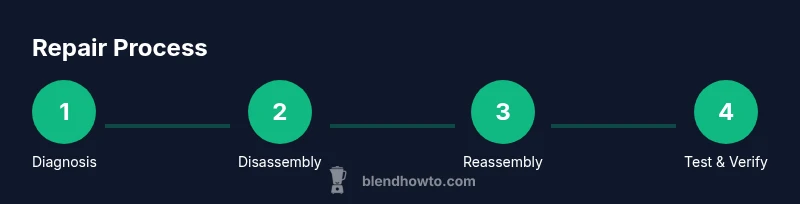
In this guide to magic bullet blender repair, you’ll learn how to diagnose common power and performance issues, perform safe disassembly, replace worn parts, and test the unit after reassembly. The approach emphasizes safety, careful diagnosis, and proper reassembly to restore blending performance and avoid further damage or warranty issues.
What is magic bullet blender repair and when is DIY appropriate?
According to BlendHowTo, magic bullet blender repair is a practical, safety‑focused approach to diagnosing and fixing the small but capable appliance that sits on many kitchen counters. Most failures fall into predictable categories: electrical supply or interlock issues, blade assembly wear, and gasket or seal problems. The goal of DIY repair is not to rebuild the entire blender but to restore the parts that fail most often—while protecting you from harm. This means starting with unplugging the unit, inspecting exterior and accessible components, and proceeding only if you feel confident handling basic hand tools and small fasteners. If the problem seems electrical beyond simple testing, or if the motor shows signs of serious wear, the BlendHowTo team recommends seeking professional service or considering a replacement.
A note on safety and warranty: many compact blenders ship with safety interlocks and molded housings. Disturbing these components can affect warranties or safety certifications. Treat any model variation as a separate puzzle; the repair approach should be model‑specific, but the core method—diagnose, test, replace or reseat, then re‑test—remains consistent across variants.
In practice, magic bullet blender repair emphasizes a methodical workflow: identify the root cause, use the right tools, and reassemble carefully. This keeps you out of costly mistakes and preserves the appliance’s reliability for future blending tasks. BlendHowTo’s guidance centers on safety, evidence‑based fixes, and conservative part replacement rather than a blind teardown.
note):null},
Tools & Materials
- Phillips-head screwdriver(Sizes #1 and #2 may be needed depending on model screws)
- Soft cloth and mild detergent(Exterior cleaning before inspection)
- Small brush or old toothbrush(For removing crusted food from blades and seals)
- Replacement blade assembly & seal kit(Only if blades are dull or gasket is worn; verify compatibility with your model)
- Food-safe silicone gasket (replacement)(Optional if the existing gasket is torn or deformed)
- Multimeter or continuity tester(Only if you plan to test electrical continuity)
- Safety gear (gloves, eye protection)(Protective gear recommended during disassembly)
Steps
Estimated time: 60-90 minutes
- 1
Unplug and prep the workspace
Begin by unplugging the blender from the wall outlet and clearing a clean, dry workspace. Remove any detachable jars, lids, and blades to inspect the assembly area. The goal is to prevent accidental starts and keep fasteners from rolling away. Take a moment to photograph screw layouts or use labeled containers so you can reassemble accurately.
Tip: Document screw positions with photos or labels to avoid misplacement during reassembly. - 2
Remove the outer housing and access the blade area
Use the screwdriver to remove the screws securing the outer housing. Gently lift the shell to reveal the blade assembly and interlock mechanisms. Keep track of any small parts and note how the wires route inside the housing. If screws resist, stop and reassess to avoid stripping threads or damaging clips.
Tip: If you encounter resistance, don’t force it—check for hidden clips or talc‑like friction and use a non-metal tool to pry lightly. - 3
Inspect blade assembly and gasket for wear
Examine the blade for dull edges, chips, or looseness. Check the gasket between the blade base and the housing for tears or deformation. A worn gasket can cause leaks and poor suction, while a dull blade reduces blending efficiency. Clean any residue with a mild detergent and dry thoroughly before deciding on replacement.
Tip: A torn gasket is a common cause of leaks; replace it before testing again to ensure a proper seal. - 4
Check interlock switch and lid alignment
Verify that the interlock switch engages when the jar and lid are properly seated. If the switch is stuck or misaligned, the blender may fail to start or shut off mid‑cycle. Align the lid so it depresses the switch fully, and test the mechanism with the jar removed to observe the action safely.
Tip: If the switch feels loose, it may need realignment or replacement; avoid bypassing safety features. - 5
Assess motor area for blockages or wear
Look for food debris and hair around the motor shaft or internal gears. Clear blockages carefully with a small brush. While you can spot‑clean the motor housing, avoid water exposure to electrical components. If you notice grinding noises, rumbling, or burning smells, stop and reassess, as these signals often indicate broader wear.
Tip: Keep hands away from moving parts during testing; never run the motor with the housing open. - 6
Clean, replace wearing parts, and reassemble
If parts are worn, replace the blade assembly and/or gasket. Re-seat the blade securely, route wires as they were, and reattach the housing with the original screws. Ensure all fasteners are snug but not overtightened. Wipe down the exterior and verify there are no loose components before final testing.
Tip: Tighten screws in a cross pattern to avoid warping the housing. - 7
Test with a small load and evaluate results
Plug the unit in and run a short blend with a minimal load, such as a small amount of liquid and soft foods. Listen for unusual noises, verify there’s no leaking, and confirm the interlock functions correctly. If the blender operates smoothly, you’ve likely resolved the fault; if issues persist, consider professional service or a part‑level replacement.
Tip: Start with a conservative load to gauge performance before full use.
Frequently Asked Questions
Is it safe to repair a Magic Bullet blender at home?
Basic preventative repairs can be safe if you follow unplug‑and‑dry procedures, inspect accessible components, and stop if you observe signs of electrical issues or damage. Do not attempt fixes beyond your comfort level, and consult a professional if you encounter sparking, burning odors, or damaged wiring.
Yes, for simple fixes, but stop immediately if you notice burning smells or sparks and seek professional help.
Will DIY repair void the warranty on a Magic Bullet blender?
Opening the housing can affect warranty coverage. Check the warranty terms for your model and consider contacting the manufacturer for guidance before proceeding with repairs.
It could affect warranty; check terms and consider official support first.
What parts tend to fail most often in Magic Bullet blenders?
Blade assemblies, interlock switches, and damaged power cords are common failure points. Inspect these areas first when diagnosing performance or safety issues.
Blades, safety interlock switches, and cords fail most often.
Can I replace the blade without removing the motor?
In most cases you access the blade assembly by removing the jar and housing. Replacing blades usually requires disassembly of the lower housing to reach the blade hub safely.
Usually you need to remove the housing to reach the blade.
How do I know when to replace rather than repair?
If motor performance continues to degrade after fixes, or if essential parts are no longer available, it may be more economical to replace the blender rather than pursue ongoing repairs.
If the motor keeps failing, replacement is often the practical choice.
Where can I find replacement parts for a Magic Bullet blender?
Look for official parts suppliers or reputable appliance retailers that list compatibility with your model. Avoid unverified third‑party parts that could compromise safety.
Try official parts suppliers and verify model compatibility.
Watch Video
What to Remember
- Unplug before inspection and keep work area dry.
- Diagnose the root cause before replacing parts.
- Test after reassembly with a small load.
- Label fasteners and parts to simplify reassembly.
- If the motor shows signs of heavy wear, consider professional service.