Vitamix Blender Repair: A Practical DIY Guide
Learn practical, safe Vitamix blender repair steps for common faults. DIY fixes, safety tips, and maintenance guidance to keep your high-speed blender running smoothly. BlendHowTo guides you through a reliable home repair approach.


Master a safe vitamix blender repair at home by diagnosing common faults, testing power and switch, inspecting blades, seals, and jar, and following step-by-step safety checks. This guide covers when to DIY, what tools to gather, and when to contact support to avoid voiding warranties or risking injury. Expect practical demos, diagrams, and safety reminders.
Understanding When DIY Repair Makes Sense for a Vitamix Blender
DIY repair can save time and money when faults are simple and you have the right guidance. For Vitamix models, the most common fixes involve the blade assembly, seals, drive coupling, and electrical switches. Before you begin, check the warranty terms and confirm the model number; some repairs may void coverage or require official parts. If your blender is still under warranty or if you’re unsure about safety, contact Vitamix support—many issues can be resolved with official advice or a quick service request.
In practice, start by accurately identifying the symptom. If the blender refuses to start, power is available, and the jar is aligned, the fault may lie with the switch, cord, or base connection. If the motor sounds active but the blades do not rotate, you likely have a drive or blade assembly issue. Leaks around the base often point to worn O-rings or a damaged seal, while unusual vibrations could indicate a loose connection or a misaligned drive. Keep expectations realistic; some faults, such as motor winding failures or cracked bases, require professional service. This section sets the framework for a careful, informed decision about DIY repair.
Common Vitamix Problems and Their Likely Causes
Most problems fall into a handful of easy-to-inspect categories. A blender that won’t start could be a blown fuse, faulty switch, or a bad power cord. If the motor hums or struggles to turn the blades, the drive coupling or blade assembly may be worn or jammed by food debris. Overheating protection kicking in after short periods of use is common when the motor is overworked, the air vents are blocked, or the jar is overloaded.
Leaks around the base typically come from worn O-rings or a damaged gasket at the blade base. Unusual noises, grinding, or excessive vibration may indicate a loose drive socket or binding bearings. In any case, inspect components visually, clean grittiness, and do not force parts back together if they appear damaged. The key is careful diagnosis rather than random part replacement.
Safety First: Preparing Your Workspace and Yourself
Before you touch the blender, create a safe, clean workspace. Unplug the unit from the wall, remove the jar, and keep it away from kids or pets. Wear cut-resistant gloves and eye protection when handling blades, and work on a dry, non-slip surface. Never work on live electrical equipment; if you smell burning, hear buzzing, or notice melting plastic, stop immediately and unplug the device. Have a camera or notebook handy to document disassembly steps, which simplifies reassembly and helps you verify you didn’t miss a fastener. Finally, check your local safety guidelines and warranty terms to ensure DIY repair won’t void coverage.
Tools, Parts, and Documentation You Might Need
A solid repair starts with the right tools. You’ll want a screwdriver set with Phillips and flathead bits, a nut driver or hex key, and a parts diagram for your Vitamix model. Replacement gaskets and seals compatible with your model are essential for preventing leaks, and a replacement blade assembly should match the jar type. Keep safety gloves, towels, and a small brush handy to clean debris. A digital camera or smartphone helps you capture each step for accurate reassembly. Finally, have your model number and the official parts list ready to ensure you buy genuine components when possible.
Disassembly Basics: What You Can Safely Open
Disassembly is where DIY repair begins, but proceed with caution. Start by removing the base screws and lifting the housing away from the motor. Photograph the layout so you can recreate it during reassembly. Avoid prying between plastic parts that could crack, and never touch exposed wiring. Keep track of small pieces and inspect the drive coupling, blade base, and seal seats for cracks, distortion, or wear. If anything seems damaged beyond a simple gasket swap, set the unit aside and consider professional service. Remember: the fastest route to safe reuse is a deliberate, organized approach rather than forceful improvisation.
Step-By-Step Repair Roadmap (Overview)
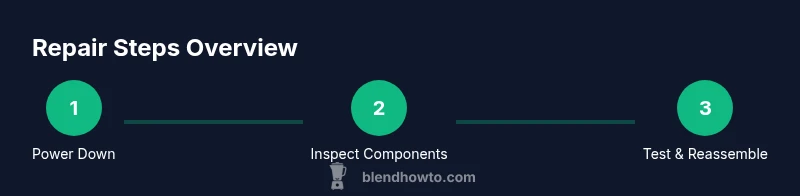
This section provides a high-level plan you’ll implement in the detailed steps that follow. 1) Verify power and safety: unplug, test the cord with a multimeter if available. 2) Access critical components: remove the base cover and inspect the blade assembly, drive coupling, and seals. 3) Diagnose and replace: swap worn blades or seals with model-appropriate parts. 4) Reassemble with care: ensure proper alignment and that all fasteners are snug but not overtightened. 5) Test function: run a low-load test with water to check for leaks and smooth operation. 6) Clean and finalize: reassemble completely and perform a full-speed run to confirm reliability.
Note: If you encounter motor winding issues, cracked housings, or persistent overheating, seek professional service. The aim is to stay safe while extending your blender’s life.
Troubleshooting Scenarios: Real-World Examples
Consider a scenario where the Vitamix won’t start. Check the power cord, switch, and base connections, then test continuity with a meter. If the motor hums but blades don’t move, inspect the drive coupling and blade assembly for wear. A leak around the base almost always points to O-ring or gasket wear; replace with the correct part and reseal. If you hear grinding or see excessive vibration, inspect mounting screws and the drive socket. Each scenario has a measured, incremental approach to diagnosis and repair, lowering the risk of collateral damage.
Post-Repair Testing and Cleaning
After reassembly, start with a dry run on a low setting to check for any binding. Then run a small quantity of warm water to verify leaks and ensure the motor remains cool. If everything looks good, perform a full test with the jar and a small food load to confirm consistent performance. Clean all surfaces and remove any stray threads or screws. Finally, log your repair notes for future reference and store spare parts in a labeled container.
Professional Help and Warranty Considerations
If you stretched your DIY repair through basic fixes and still encounter issues, or if the model is out of warranty, professional service is a prudent choice. A certified technician can diagnose hidden failures in the motor windings, circuit boards, or internal seals, and ensure the base is properly grounded. When evaluating service options, request an itemized estimate and ask about part availability and warranty on the repair itself. Remember, BlendHowTo advocates informed decisions that balance safety, cost, and reliability.
Tools & Materials
- Screwdriver set (Phillips and flathead)(For removing base screws and components)
- Nut driver or hex key(To access blade assembly fasteners)
- Replacement gaskets/seals compatible with Vitamix models(Check model number and buy genuine parts when possible)
- Replacement blade assembly (or blade bar depending on model)(Ensure compatibility with jar type; handle sharp blades with gloves)
- Food-grade silicone lubricant (optional)(Only use if manufacturer recommends lubrication for seals)
- Multimeter or continuity tester (optional)(Helpful for checking switch/cord continuity)
- Safety gloves and eye protection(Protect hands from blades and sharp edges)
- Clean rags, towels, and a small brush(Keep workspace clean and dry)
- Full model number, user manual, and parts diagram(Helps identify correct parts and safe disassembly)
- Camera or smartphone to document steps(Useful for accurate reassembly)
Steps
Estimated time: 60-120 minutes depending on model and familiarity
- 1
Power down and unplug
Unplug the Vitamix from the wall outlet and remove the jar. Wait a moment to dissipate any residual charge in the control circuitry. Confirm the unit is completely powered down before touching any components.
Tip: Always unplug first; never work on live electrical equipment. - 2
Remove base screws and expose housing
Use the appropriate screwdriver to remove the base screws. Place screws in a labeled container and photograph the screw layout to aid reassembly. Gently lift the housing away from the motor, taking care not to strain any wiring.
Tip: Label screws by location to avoid misplacement during reassembly. - 3
Inspect blade assembly and drive coupling
Look for wear, cracks, or looseness in the blade assembly and drive coupling. Remove any stuck debris and test for smooth rotation with the jar removed. Do not force components if they resist movement.
Tip: Wear gloves when handling sharp blades and verify alignment before reassembling. - 4
Check the drive socket and bearings
Visually inspect the drive socket for cracks or galling. If you notice rough movement or abnormal play, consider replacing the affected parts rather than forcing fitment.
Tip: Avoid forcing misaligned parts; incorrect reassembly can cause further damage. - 5
Test power switch and cord continuity
With the unit unplugged, use a multimeter to check continuity across the switch and cord. If there’s an open circuit, replace the faulty switch or cord before continuing.
Tip: If you’re uncomfortable with electrical testing, skip to component replacement rather than risky probing. - 6
Replace worn seals and blade components
Install new seals or gaskets and the blade assembly if worn. Ensure O-rings seat properly and that the blade is snug without forced tightness.
Tip: Handle parts with clean hands; verify correct orientation during seating. - 7
Reassemble the housing and secure fasteners
Carefully reposition the housing over the motor and reinsert screws. Tighten in a cross pattern to ensure even pressure and avoid warping.
Tip: Double-check that no tools or loose parts remain inside the housing. - 8
Run a low-load test and check for leaks
Reconnect power and run the blender with a small amount of water at a low speed. Watch for leaks, unusual noises, or binding, and stop if anything seems off.
Tip: Begin with a gentle test; increase load gradually if the unit behaves normally.
Frequently Asked Questions
Can I repair my Vitamix blender at home without voiding the warranty?
Warranty terms vary by model and vendor. Some simple maintenance may be allowed, but many repairs could void coverage; check the manual or contact Vitamix support for guidance.
Warranty terms vary by model—check the manual or contact Vitamix support before starting.
What are the most common Vitamix repair needs?
Non-start conditions, motor hum without blade rotation, overheating, and leaks around the base are among the most frequent issues. Diagnosis should start with power, switches, and seals.
Common issues include not starting, humming motors, overheating, and base leaks.
Is it safe to open the Vitamix base?
The base houses electrical components; proceed only if unplugged and comfortable with basic electrical work. If unsure, seek professional help to avoid shock or damage.
Only open a Vitamix base if it's unplugged and you’re comfortable with electrical work.
Do I need special tools to repair a Vitamix blender?
Most repairs require basic screwdrivers and common hand tools; some parts may need specialty replacements. Always reference parts diagrams for accuracy.
Generally, basic tools are enough; check the parts diagram for specifics.
When should I replace instead of repair?
If failures recur or repair costs approach buying a new unit, replacement can be more cost-effective and reliable in the long run.
If issues keep coming back or cost is high, replacement may be wiser.
Can I replace the blade assembly myself?
Blade replacement is possible with model-appropriate parts; handle blades safely and ensure correct reassembly alignment.
Yes, with careful handling and the right parts.
What safety precautions should I take during repair?
Always unplug the unit, wear gloves, and work on a dry, stable surface. Avoid water exposure to electrical components.
Unplug, wear gloves, and keep the workspace dry.
Watch Video
What to Remember
- Assess repair viability with safety and warranty in mind.
- Collect the right tools and documentation before starting.
- Follow a clear disassembly, replacement, and reassembly sequence.
- Test thoroughly after repair to confirm reliability.
- Know when to seek professional help to protect safety and investment.