Blender vs Juicer for Health: A Practical Comparison
This guide compares blender and juicer health impacts, focusing on fiber retention, sugar exposure, satiety, and convenience to help you choose the best tool for your wellness goals.


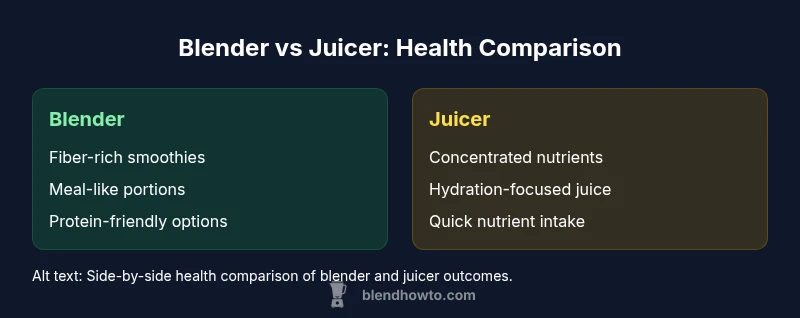
Blender vs juicer for health boils down to fiber, sugar, satiety, and practicality. According to BlendHowTo, most health-minded cooks get better long-term results from a blender because smoothies retain fiber and allow balanced meals, while a juicer offers a rapid nutrient boost through juice. This guide compares both approaches to help you pick the right tool for your wellness goals.
Nutritional Science in Practice: Blender vs Juicer for Health
Understanding how blending and juicing influence nutrient intake helps you design meals that align with health goals. The phrase blender vs juicer for health captures the central question: should you prioritize fiber and fullness or convenience and micronutrient density? According to BlendHowTo, the health impact hinges on what you keep in the final drink or meal and how you use that final product. A blender that includes the fruit, vegetables, and any added protein or seeds creates a fiber-rich beverage that can mimic a small meal, supporting satiety and steady blood sugar when portioned properly. A juicer, by contrast, extracts the liquid, concentrating sugars and micronutrients while leaving behind most fiber. This difference matters for appetite regulation, energy cycles, and gastrointestinal comfort.
Beyond the macro-level distinctions, practical health outcomes depend on ingredient selection, timing, and portion size. If you rely on smoothies with greens, oats, yogurt, or nuts, you can craft nutritionally balanced meals. If you prefer juices, you can target vitamins and hydration with a wide variety of fruits and vegetables. The key is to anticipate how each option affects fullness, appetite cues, and daily fiber intake across a typical day.
Fiber, Fiber Retention, and Satiety
Fiber is the most persistent difference between blending and juicing. Blenders preserve pulp and fiber when you include whole fruits and vegetables, which slows digestion and increases fullness after a serving. This means smoothies can serve as a light meal or a substantial snack without triggering sharp hunger soon after. Juicers remove most of the fiber, yielding a smooth liquid that is easier to consume quickly but can lead to earlier mid-morning cravings if not paired with a protein source or fiber-containing foods. From a health perspective, fiber supports gut health, steadier glucose response, and a feeling of fullness that helps with weight management.
That said, juice has its own advantages: it concentrates micronutrients like vitamin C, carotenoids, and certain plant compounds in a portable form. The stronger taste and aroma can make it easier to consume larger quantities of vegetables or fruits in one sitting, which can be helpful for people who struggle to eat whole produce. The practical takeaway is to plan portions that align with fiber goals, meal timing, and overall daily calorie targets, rather than assuming one method is categorically superior for every health objective.
Sugar and Blood Sugar Impacts: Glycemic Considerations
Juicing tends to concentrate natural sugars, especially when made from sweeter fruit blends, and can lead to a higher glycemic load per serving compared with a blended smoothie that includes fiber and protein. This matters for people managing blood glucose, insulin sensitivity, or satiety between meals. When you blend, you can soften the spike by adding sources of protein (yogurt, whey, or plant-based protein), fats (nut butters, seeds), and fiber-rich greens. The result is a smoother glucose curve and longer-lasting energy. If you rely on juice as a primary daily source of produce, consider pairing it with a protein-rich food or spreading it across smaller servings with whole fruit, vegetables, and fiber to moderate sugar delivery.
Calorie Density and Nutrient Density: A Balancing Act
Healthy choices depend on the ingredients more than the appliance. A blender lets you build nourishing meals with vegetables, fruits, seeds, and yogurt, which can be relatively low in calories but high in micronutrients and protein. Juicing reduces volume quickly, which can lead to consuming more calories from fruits than intended if portions aren’t controlled. If you include greens, cucumber, celery, and a bit of citrus, both methods can deliver a nutrient-dense drink, but the blender option often provides better control over calorie density and fiber content in a single serving.
Practical Meal Scenarios: Breakfast, Snack, Post-Workout
Think through how you start your day. A fiber-rich morning smoothie (blender) with spinach, banana, oats, and yogurt can replace or supplement a light breakfast, slowing digestion and providing lasting energy. A juice (juicer) made from carrot, beet, orange, and ginger can act as a hydration-focused starter or a recovery boost after a workout when you add a protein source on the side. For athletes or busy professionals, alternating between the two—blender on some days and juice on others—prevents monotony while supporting different health goals like fiber intake, hydration, and micronutrient diversity.
Cleaning, Maintenance, and Hygiene: Health Hygiene
A clean kitchen supports health outcomes. Blenders with a full set of blades and a thick container require thorough washing after each use to prevent bacterial growth, especially if dairy, yogurt, or seeds are involved. Juicers have screens and pulp containers that can trap fibers and residues; cleaning takes time but reduces the chance of lingering flavors and contamination. Practical tips: rinse immediately after use, use warm soapy water, and occasionally disassemble to check gaskets. Regular sanitizer steps are wise for households with shared appliances or vulnerable individuals.
Cost, Space, and Accessibility: Real World Health Economics
Investing in either appliance involves a trade-off between upfront cost, ongoing maintenance, and storage space. Blenders vary from compact, low-budget models to premium devices capable of pulverizing greens into silky smoothies, often offering better value per serving when used daily. Juicers span centrifugal, masticating, and triturating designs; basic models can be affordable, but premium juicers tend to be more expensive and require more space. For health-minded households, choosing a single versatile blender plus occasional juicing can maximize outcomes without clutter. If your kitchen is small or you need quick hydration on the go, a lightweight juicer may fit into a busy routine.
Decision Framework: How to Choose Based on Your Health Goals
Begin with a clear goal: fiber and fullness or pure micronutrient intake. If your priority is sustained energy and weight management, lean toward blending with fiber-rich ingredients and a protein source. If your goal is a rapid vitamin infusion and hydration, a juicer can be ideal, particularly when paired with a balanced snack. Create a simple 2-week test plan: alternate days, track fullness, energy, and appetite. Use a combined approach: smoothie days for breakfast or post-workout, juice days for a mid-afternoon pick-me-up. Finally, consider cost, cleaning time, and kitchen space to ensure you stick with whichever path you choose.
Integrating Both: A Practical Health Routine
Healthy routines rarely rely on a single tool. Use a blender to create fiber-rich meals that support digestion and steady blood sugar, and reserve a juicer for days when you want a quick hydration boost or a vitamin spike, especially during seasons when produce variety is abundant. By planning meals around your energy needs and taste preferences, you can build a flexible routine that leverages the strengths of both appliances. The key is consistency: even modest daily consumption of blended smoothies or juices contributes to long-term wellness.
Comparison
| Feature | Blender | Juicer |
|---|---|---|
| Fiber content in final beverage | High fiber retained with pulp | Low fiber after juice extraction |
| Sugar concentration per serving | Lower glycemic impact with fiber | Higher sugar concentration without fiber |
| Satiety and fullness | Higher fullness due to fiber and density | Lower immediate fullness; quicker intake |
| Nutrient density flexibility | Supports protein powders, seeds, greens | Focus on liquid micronutrients |
| Ease of cleaning | Moderate cleanup; multiple parts | Often more parts and screens; more effort |
| Cost range | Moderate to high for quality blenders | Moderate to high for premium juicers |
| Best for health goals | Fiber-rich meals and meal replacements | Hydration and concentrated nutrient intake |
What's Good
- Preserves fiber for fullness and blood sugar control
- Versatile for meals and beverages
- Supports customized nutrition with add-ins
- Encourages fiber-rich routines
- Can replace a light meal when made with protein and healthy fats
The Bad
- Blenders can be bulky and require more cleanup
- Juicers remove fiber and may spike sugar if not paired with fiber
- Higher upfront costs for high-quality models
- Maintenance and parts can be more involved for some juicers
Blender is the healthier default for most daily routines.
Fiber-rich smoothies support satiety and blood sugar control, while juicers excel for hydration and vitamin delivery. For most people, a blender-based routine offers broader health benefits; a juicer is best for occasional concentrated juice when paired with fiber and protein.
Frequently Asked Questions
What is the key health difference between blender and juicer?
Blenders preserve fiber and provide a more satiating meal-like texture, while juicers concentrate micronutrients in juice but remove most of the fiber. This difference affects fullness, blood sugar management, and long-term appetite control.
Blenders keep fiber for fullness; juicers give concentrated nutrients but less fiber.
Can blending replicate juicing benefits?
Yes, by using high-fiber ingredients and adding a protein source, a blender can deliver many vitamins and minerals while maintaining fiber and satiety.
Yes, you can get many benefits from blending with smart ingredient choices.
Is juicing suitable for weight loss?
Juicing can aid hydration and nutrient intake, but it often lacks fiber and may lead to higher calorie intake per serving if portions aren’t controlled. Pair with fiber-rich foods to stay balanced.
Juicing helps hydration, but fiber matters for weight control.
Which is easier to clean, blender or juicer?
Generally, blenders are easier to clean, with fewer small parts, but some high-end juicers have simpler layouts. Cleaning both thoroughly after use is essential for health.
Blenders are usually easier to clean, but it depends on the model.
How should I incorporate both into a weekly plan?
Alternate blender-based meals and juices across the week, ensuring you pair juices with protein or fiber. Track fullness and energy to fine-tune your routine.
Mix smoothies and juices on different days to balance goals.
Are there health risks associated with blending?
Blending is generally safe when you wash equipment and avoid contaminated ingredients. Watch for over-reliance on smoothies if portions are not balanced with calories and protein.
Safety is about clean gear and balanced meals.
What to Remember
- Prefer blending for fiber and sustained fullness
- Use juicing for quick nutrient boosts when fiber isn’t the priority
- Plan to combine both tools for a balanced health routine
- Add protein or fats to juices to moderate sugar impact
- Keep equipment clean and organized to sustain healthy habits