Healthy Blender Recipe: A Practical Guide to Nutritious Smoothies
Discover how to craft a healthy blender recipe with a flexible base, nutritious boosters, and practical tips for meal prep. Learn to balance fruits, greens, protein, and fats for delicious, nourishing smoothies you can customize for allergies and goals.


By following a healthy blender recipe framework, you can quickly create nourishing smoothies with real foods. Start with a flexible base, add greens and fruit for nutrition, then boost protein and healthy fats for satiety. This approach supports meal-prep, controls sugar, and adapts to allergies or goals. Ready for a quick, delicious blend that fuels your day?
Why a healthy blender recipe matters
A healthy blender recipe makes it easy to blend nutrition into a single, convenient serving. For home cooks, BlendHowTo's approach emphasizes balanced macros, fiber, and micronutrients from real foods rather than quick-sugar fixes. By choosing a simple framework, you can create smoothies and bowls that fuel workouts, workdays, and busy mornings. The BlendHowTo team found that consistent preparation reduces meal-skipping and helps maintain energy throughout the day. With a well-planned blend, you get a satisfying texture and a taste you actually want to drink. Think of this as a toolkit you can customize to your goals, from weight management to mental clarity. In practice, a healthy blender recipe is as much about habit as it is about ingredients, ensuring that every blend supports your lifestyle rather than competing with it.
Core components of a healthy blender recipe
A well-rounded blender recipe packs flavor with nutrition. In practice, aim for four pillars: a base liquid; a leafy or cruciferous greens component; a fruit or two for natural sweetness; and a protein or fat booster to increase satisfaction. Flavors come from spices, fresh herbs, citrus to brighten, and a touch of vanilla or cocoa. For fiber and minerals, include seeds or chia, a handful of oats, or yogurt. Balance is key: too much fruit can spike sugar, while too little protein can leave you hungry. By choosing whole-food ingredients you maintain steady energy, support fullness, and contribute to daily micronutrient targets. Planning ahead helps you reuse ingredients across multiple blends while reducing waste. Blend variations across seasons: spinach in spring, kale in winter, berries in summer. BlendHowTo recommends tracking portions to align with your dietary goals and activity level, whether you’re prepping breakfasts, post-workout drinks, or kid-friendly snacks.
Building a flexible base and ingredients
Base liquids set texture and mouthfeel. Water keeps calories low; dairy or plant-based milks add creaminess and protein. If you want a thicker smoothie bowl, use yogurt or silken tofu. Greens like spinach, kale, cucumber provide micronutrients with minimal calories. Fruits supply flavor and natural sweetness, but pair tart options (lemon, lime, green apple) with creamy bases to balance acidity. Healthy fats from avocado, almond butter, peanut butter, or chia improve satiety and nutrient absorption. Protein boosters—Greek yogurt, whey or plant-based protein, hemp seeds—keep you full longer. For fiber, add oats, flaxseed, or chia. Finally, boosters like fresh ginger, cinnamon, turmeric, or mint lift aroma and health benefits. Keep a rough ratio in mind: liquids 1 cup, greens 1-2 cups, fruit 1-2 cups, protein 1 scoop or 1/2 cup yogurt, fats 1-2 tablespoons. Start with a 2:1 fruit-to-veg ratio and adjust to taste. This flexibility helps you create a dozen variations with pantry staples.
Step-by-step framework for a healthy blender recipe
To build a reliable blender recipe, follow a simple framework. First, define your goal for the blend—refreshing hydration, meal replacement, or a pre-workout boost. Next, choose a backbone base (liquid + greens) that aligns with texture and energy needs. Then, select flavor boosters such as citrus, herbs, and spices to make the drink appealing. Finally, add protein and fats in measured amounts to improve satiety and metabolic balance. Always blend in stages if you’re using tougher greens or seeds, and taste as you go. A minute or two of extra blending can transform the consistency from gritty to velvety. This framework keeps your recipes scalable, repeatable, and adaptable to ingredients you have on hand.
Example recipe: Green Power Smoothie
Ingredients
- 2 cups fresh spinach
- 1 cup chopped cucumber
- 1/2 cup pineapple chunks
- 1/2 cup frozen mango
- 1 cup unsweetened almond milk
- 1/2 cup plain Greek yogurt
- 1 tablespoon chia seeds
- 1 teaspoon grated fresh ginger (optional)
- Ice as needed
Method
- Add almond milk to the blender, then spinach and cucumber. This order helps blades start turning smoothly.
- Add pineapple, mango, yogurt, and chia seeds. The yogurt adds creaminess and protein; chia adds fiber.
- Blend on low for 30 seconds, then high for 60-90 seconds until smooth. If too thick, add more liquid; if too thin, add a few ice cubes.
- Taste and adjust sweetness with a splash of lemon juice or a pinch of cinnamon. Serve immediately or refrigerate up to 24 hours.
Tips for customization and storage
- Pro tip: Freeze fruit in portions to create a creamier texture without adding ice or juice.
- Pro tip: Add greens first with liquid to ensure a smooth blend and avoid leaf clumps.
- Warning: Avoid using juice as the base; it lacks fiber and can spike blood sugar.
- Pro tip: For extra protein, blend in a scoop of plant-based protein powder or a few tablespoons of Greek yogurt.
- Note: Prep ingredients in batches and store them in labeled freezer bags for quick weekday smoothies.
Troubleshooting common texture issues
- If your smoothie is too thick, add more liquid a little at a time and blend until smooth.
- If it’s too thin, add a handful of frozen fruit or a spoonful of oats.
- If greens are gritty, blend greens with liquid first, then add fruit and boosters and blend again.
- If you notice separation after storage, give the smoothie a quick re-blend or shake before drinking.
Tools & Materials
- blender(A blender with 600–1000W power works well for green blends.)
- measuring cups and spoons(Essential for portioning liquids, powders, and boosters.)
- knife and cutting board(Chop fruits and vegetables to roughly 1-inch pieces.)
- colander or wash bowl(Rinse greens and produce; remove stems if tough.)
- spatula(Useful for scraping down blades mid-blend.)
- reusable smoothie cup or bottle(For on-the-go drinking after blending.)
- freezer or ice cube tray(Freeze fruit to improve texture when needed.)
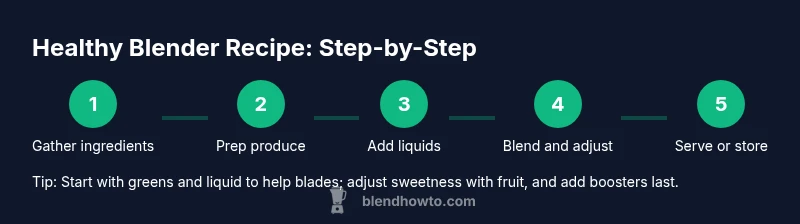
Steps
Estimated time: 25-35 minutes
- 1
Gather ingredients
Collect base liquid, greens, fruit, protein/fat boosters, and any boosters you plan to use. This minimizes trips back to the pantry and keeps workflow smooth.
Tip: Lay out all items on the counter in the order you will add them. - 2
Prepare produce
Wash greens, peel or trim produce as needed, and cut into uniform pieces to ensure even blending.
Tip: Keep greens stacked and chopped to speeds up blending. - 3
Add liquids first
Pour the liquid into the blender, then add greens. This helps the blades start turning and reduces friction.
Tip: Starting with liquid prevents blade stalling. - 4
Add produce and boosters
Layer in fruits, yogurt or protein, seeds, and any flavor boosters like ginger or citrus zest.
Tip: Add protein and fats after the leafy greens to optimize texture. - 5
Blend and adjust texture
Pulse on low, then blend on high until smooth. Check thickness and add more liquid or fruit as needed.
Tip: Pause, scrape sides, and blend again to a velvety consistency. - 6
Taste, serve, or store
Taste for sweetness and acidity, then serve immediately or refrigerate in a sealed container for up to 24 hours.
Tip: If storing, leave some headspace to allow for expansion.
Frequently Asked Questions
What defines a 'healthy blender recipe' to BlendHowTo?
A healthy blender recipe balances nutrition (protein, fiber, healthy fats) with flavor using real ingredients like fruits, greens, dairy or plant-based milks, and boosters. It minimizes added sugars and focuses on whole foods to support energy and satiety.
A healthy blender recipe uses real foods in balanced portions to fuel your day, not just satisfy a sweet tooth.
Is a high-powered blender required for greens?
No. A standard blender works with proper prep and blending time. Heavier greens may require longer blending or pre-chopping, but you can achieve smooth results without elite equipment.
You don’t need the most powerful blender; just blend longer and prep greens well.
What liquids are best for blender recipes?
Unsweetened dairy or plant-based milks, water, or yogurt-based bases work well. Avoid juices with added sugars, which can spike calories without fiber.
Choose milk or water as a base and reserve juice for flavor if needed.
How can I add protein to smoothies?
Incorporate Greek yogurt, protein powder (whey or plant-based), or silken tofu to boost protein without sacrificing texture.
Protein helps you feel full longer and supports muscle repair after workouts.
How long can blended smoothies be stored?
For best quality, store in a sealed container in the refrigerator and consume within 24 hours. Quality can decline after that.
Fresh is best, but a day-old smoothie can be acceptable if kept cold.
Are there allergy-safe substitutions?
Yes. Swap dairy for plant milks, use seed butters instead of peanut butter, and choose fruit and greens that avoid your allergens. Always read labels.
You can tailor blends to allergies by swapping proteins, milks, and boosters accordingly.
Watch Video
What to Remember
- Plan nutrition before flavor for sustainable smoothies
- Balance liquid, greens, fruit, and boosters for texture and fullness
- Customize ingredients to fit dietary needs and allergies
- Store blends properly to preserve freshness