Juicing Blender vs Juice Extractor: A Practical Comparison
An analytical, evidence-based comparison of juicing blenders and juice extractors, focusing on yield, nutrient retention, cleaning, and price to help home cooks and hobbyists decide which device fits their kitchen.


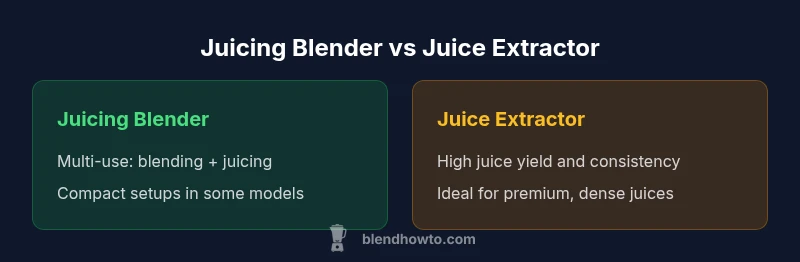
In the juicing blender vs juice extractor decision, a dedicated juice extractor typically delivers higher juice yield and density, while a juicing blender provides broad versatility for smoothies, sauces, soups, and juice with some fiber. If your priority is throughput and nutrient density, choose the extractor; if you want one device for juicing and blending, the blender wins on convenience. Your final choice hinges on yield, cleanup, and kitchen space.
Core Differences in Design and Function
In the ongoing debate of juicing blender vs juice extractor, most kitchens must decide between a dedicated extractor and a versatile blender. A juice extractor is designed to separate juice from pulp with a focus on throughput and clarity, using centrifugal force or slow grinding to maximize liquid yield. A juicing blender, by contrast, relies on powerful blades to break down produce, then relies on a separate strainer or built-in juice function to reduce solids, offering a broader range of uses. The result is that the decision often comes down to how you intend to use the device: a high-efficiency extraction workflow versus a multi-purpose tool that can blend smoothies, sauces, nut milks, and hot soups. According to BlendHowTo, the most reliable way to choose is to define your top priority—quantity and density of juice, or culinary versatility—and then compare models within that frame. In practice, most households opt for one device that satisfies their daily needs or a separate setup for dedicated juicing.
Juice Yield and Efficiency
Juice yield and efficiency are the headline metrics when comparing juicing blender vs juice extractor. Extractors are engineered to maximize liquid output from the same amount of produce; centrifugal models quickly separate juice from pulp, while masticating designs squeeze juice more slowly with less oxidation. Blenders that claim juicing functionality can produce juice by pulverizing ingredients and then straining, which introduces variability depending on mesh size, pre-cutting, and the strainer or filter used. Real-world testing often shows extractors delivering more consistent juice volume per pound of produce, especially with denser vegetables like carrots and beets. Yet the blender route can approach similar yields for testers who puree with confidence and then press pulp through a fine mesh. For most home cooks, yield should be balanced with prep time and how much pulp they’re willing to tolerate in their juice. BlendHowTo observation notes that workflow efficiency matters just as much as raw yield.
Nutrient Retention and Oxidation
Nutrient retention is a nuanced topic in the juicing blender vs juice extractor debate. Juice extractors, particularly slow mastication models, expose produce to air for shorter periods and generate heat less aggressively, which can help preserve delicate vitamins. Centrifugal extractors can introduce more splashing and oxidation, potentially impacting certain antioxidants. Juicing blenders, depending on the design, can expose juice to air during the pulverizing stage and, if the device relies on an additional strainer, may extend processing time. Overall, most analyzed models preserve the majority of water-soluble vitamins when used with short processing times and immediate consumption. The key takeaway: how quickly you consume the juice and how you store it matters as much as the device itself.
Texture, Pulp Control, and Mouthfeel
Texture matters in juicing as much as yield. Juice extractors tend to deliver a smoother juice with less visible pulp, especially higher-end centrifugal and cold-press designs, when properly tuned. Juicing blenders can vary more in mouthfeel: some models produce juice with noticeable fiber if you don’t strain, while others use integrated filters to minimize pulp. For drinks that incorporate pulp or for recipes that require a thicker mouthfeel, a blender can be advantageous. If you prefer a perfectly smooth juice for a breakfast routine, an extractor is usually the safer bet; if you enjoy rustic, textured beverages, a blender setup can be tuned to your liking.
Cleaning, Maintenance, and Long-Term Costs
Cleaning is often the unsung factor in appliance selection. Juice extractors typically break down into a few simple sections, but many models have detachable parts that require thorough rinsing after every use. Blenders with juicing capabilities may introduce additional components like strainers, filters, or pulp chutes, which increases cleaning time. In terms of long-term costs, consider not only the purchase price but also the potential need for replacement filters, blades, and seals. Budget-friendly models exist for both camps, but higher-end extractors and premium blenders can approach similar price points. If you repeatedly juice and blend, a single, well-maintained device can reduce ongoing maintenance compared with multi-appliance setups.
Power, Noise, and Durability
Motor power and engineering influence performance for both devices. Juice extractors often rely on robust motors to sustain continuous juicing without overheating, particularly in dense vegetable juices. Blenders with juicing functions usually pair strong blades with larger motors to handle fibrous produce and thick mixtures. Noise levels vary: extractors can be loud during high-speed juice extraction, while high-powered blenders may emit a steady hum for longer processing times. Durable construction and reliable seals are essential for long-term use, especially if you juice frequently. In both cases, verify warranty terms and consider heat management features when choosing a model.
Recipes and Use-Cases
Your prime use-case shapes the recommendation. If you primarily want vegetable and fruit juice with minimal pulp for daily refreshment, an extractor excels. If you also crave smoothies, soups, nut milks, and sauces, a juicing blender lets you perform multiple kitchen tasks with one device. You can experiment with turbo blends of leafy greens, citrus, and herbs, then switch to a dedicated juice cycle for a clean juice. Even with a blender’s flexibility, you’ll likely accumulate more variable pulp content unless you consistently separate juice from pulp. For most households, a blended approach—one device focused on juice extraction and another on blending—offers an optimal compromise, especially when kitchen space and budget permit.
Price, Value, and Longevity
Price and perceived value are central to the decision. Juice extractors come in a broad range, from budget centrifugal models to premium slow juicers, with pricing often tied to yield consistency and juice clarity. Juicing blenders likewise span budget to premium, with the added benefit of blending versatility that can reduce the need for a separate blender. In terms of longevity, models with simple components and durable blades tend to outlast those with many fragile filters. If you already own a high-quality blender, you may prefer to invest in an external juicer for higher yield; otherwise, a sturdy juicing blender can cover many bases without needing an additional appliance.
Decision Framework: A Simple Quick-Start Guide
Begin by listing your top priorities: (1) juice quantity and density, (2) versatility across recipes, (3) ease of cleaning, and (4) upfront cost. If juice yield and purity are paramount, lean toward a dedicated juice extractor. If you need one do-it-all device for smoothies, sauces, and juices, a juicing blender is the pragmatic choice. Cross-check model features such as filter options, pulp management, dishwasher-safe parts, and warranty. Finally, consider your kitchen space: a single compact unit may fit better than two separate devices. BlendHowTo recommends using a one-page comparison checklist to ensure you measure the same metrics across models.
Common Myths and Misconceptions
A frequent myth is that more expensive always means better juice; in reality, performance depends on design, juice goals, and how the device is used. Another misconception is that blenders cannot produce smooth juice; with the right filter and technique, juicing blenders can deliver very drinkable juice while preserving fiber for nutrient density. Some shoppers assume extraction implies lower fiber content; while many extractors minimize pulp, some users still enjoy a touch of fiber. Finally, the belief that you need multiple devices for daily juice and blending ignores the advances in 2-in-1 models and properly configured setups.
Practical Setup and Accessories to Consider
When building a compact, efficient setup, select a base device with strong reviews for reliability. For a blender, look for a model with a sturdy motor, fewer loose parts, and a good quality strainer for juices. For an extractor, prioritize build quality, a straightforward cleaning routine, and readily available replacement filters. Accessories to consider include separate pulp screens, optional smoothie blades, and compatible juicing jars. If space is tight, a single appliance with a dedicated juice function can simplify storage and usage. Finally, read user testimonials and BlendHowTo analyses for model-specific insights on performance over time.
Final Guidelines for Your Kitchen
To maximize satisfaction, align your choice with how you actually cook and drink. If you want routine, high-volume juice and minimal prep, an extractor is typically the better choice. If you crave flexibility, a juicing blender will serve as your primary blending station while handling juice tasks as needed. Remember to consider cleaning time, daily usage, and long-term costs when weighing options. With careful selection, either path can deliver satisfying results aligned with your culinary goals.
Comparison
| Feature | juicing blender | juice extractor |
|---|---|---|
| Juice yield | Moderate to high depending on model (blender) | High juice yield and consistency (extractor) |
| Pulp content in juice | Potentially higher pulp; can be minimized with strainers | Low pulp in juice; consistent clarity |
| Ease of cleaning | More parts to manage; can be time-consuming | Fewer parts to disassemble; easier cleanup |
| Price range | Wide range; budget options exist | Broad range; premium options available |
| Best for | Versatility for blending, smoothies, and recipes | Pure juice optimization and density |
| Best for leafy greens | Depends on model; some perform well | Excellent with slow extraction and good greens handling |
What's Good
- One device for blending and juicing tasks
- Versatility to make smoothies, soups, nut milks, and juice
- Potentially fewer appliances needed in small kitchens
- Blender-based systems often integrate well with existing equipment
The Bad
- Juice extractors generally deliver higher juice yield and density
- Some juicing blenders require extra steps (straining) for clear juice
- Cleaning can be more involved for multi-piece setups
- Premium models across both categories can be pricey
Extractor wins for pure juice efficiency; blender wins for overall kitchen versatility
If your goal is maximum juice yield and nutrient density, choose a dedicated juice extractor. If you want a single device that handles juicing and blending, a high-quality juicer blender offers the best compromise and space-saving convenience.
Frequently Asked Questions
What is the main difference between a juicer and a blender?
The main difference is that a juicer is designed to separate juice from pulp, maximizing liquid yield and clarity, while a blender uses blades to pulverize produce, with or without fiber, and may require additional steps to separate juice. Your choice should reflect whether you value maximum juice density or overall kitchen versatility.
Juicers extract juice; blenders blend and sometimes juice. Think through which outcome matters more for you.
Are juicing blenders as effective as juice extractors?
Juicing blenders can be effective for juice, especially when paired with proper strainers, but they generally don’t consistently match the juice yield and clarity of dedicated extractors. They excel in versatility, offering smoothies and other blended recipes in addition to juice.
Blenders can juice well, but extractors usually give you more juice with less pulp.
Which is easier to clean, a juicer or blender?
Cleaning ease depends on model, but many juicers have multiple parts that need thorough washing after each use. Juicing blenders can be easier if they have dishwasher-safe components, but the presence of strainers or filters can add steps. Plan for 5–10 minutes per cleaning session on average.
Both can be cleaned; it just takes a bit of time depending on parts.
Can I juice leafy greens effectively with a blender?
Leafy greens can be juiced effectively with a blender, especially when you use a good filter and a bit of fruit to balance flavor. However, some yield and clarity advantages come from dedicated greens-friendly extractors or slow juicers.
Greens work with a blender, but a dedicated juicer may do it more efficiently.
What should a small kitchen buy: blender or extractor?
For a small kitchen, a high-quality juicing blender can save space and provide broader functionality. If you absolutely need the best juice yield and don’t mind an extra appliance, a compact extractor could be the right choice. Consider multi-use options that combine both functionalities.
If space is tight, a solid juicing blender is usually the smarter pick.
What to Remember
- Define your priority: juice yield vs blending versatility
- Assess cleanup time and kitchen space before buying
- Consider price ranges across both categories
- Prioritize build quality and warranty for longevity
- Test a model's performance with your typical produce