Recipe for Ninja Blender: Versatile Blends and Tips
Learn a practical, flexible recipe for the Ninja blender that covers smoothies, sauces, and purees with base ratios, blending times, and flavor boosters for everyday cooking.


With a Ninja blender, you can craft a versatile recipe that covers smoothies, sauces, and purees. This quick guide shows a flexible base recipe, essential ingredient ratios, and smart blending times to avoid over- or under-pureeing. Follow the steps to blend confidently and customize flavors safely at home for weeknights.
Why a Ninja Blender Recipe Matters
A well-crafted recipe for Ninja blender opens up a world of quick, healthy, and customizable blends. For home cooks and hobbyists, the right formula turns rough ingredients into smooth, consistent results, reduces waste, and saves time during busy mornings. The BlendHowTo team has analyzed dozens of home-blend scenarios and found that starting with a clear base and a few flexible ratios helps users improvise without sacrificing texture. In practice, a Ninja blender excels at emulsifying fruits, greens, yogurt, and ice when the order of ingredients and the liquid-to-solid balance are right.
Beyond texture, this approach supports flavor creativity. A solid base makes it easy to swap in seasonings, boosters, or fruit varieties according to what’s in the fridge. You’ll learn to balance sweet, tart, and creamy notes while keeping the blend within safe capacity limits. For people new to blending, a structured recipe lowers intimidation and makes it possible to produce consistent results with minimal equipment. In short, a good Ninja blender recipe is a practical skill that merges kitchen science with everyday cooking, and it’s a reliable toolkit for anyone looking to harness blending as a daily habit.
Understanding the Ninja Blender: Power, Pitcher Sizes, and Blending Modes
Before you build a recipe, it helps to understand your equipment. Ninja blenders come in a range of wattages and pitcher sizes, but the core blending behavior stays consistent: a high-torque motor, sharp blades, and a sealed pitcher generate smooth blends when you match ingredients to capacity and use the right speed. Consider the pitcher capacity and the blade design; larger batches may require more liquid to prevent sticking, while smaller batches blend more quickly and with less risk of overheating.
Blending modes matter, too. Many Ninja models offer pulse, puree, crush, and smoothie settings. Pulse gives you control for texture, while puree and crush can efficiently break down fibrous greens or fibrous fruits. For thick blends, start on a low setting and gradually increase; for thin, pourable drinks, a higher speed with more liquid is ideal. If you’re new to blending, start with a simple two-stage approach: blend the base ingredients on a medium setting, then finish with a quick pulse to fine-tune texture. With practice, you’ll learn how long to blend for your preferred mouthfeel and how to avoid overheating the motor.
Building a Flexible Base Recipe for Ninja
A flexible base recipe is a powerful tool because it lets you adapt to what’s in your fridge while keeping a consistent texture. Start with a reliable liquid-to-solid ratio: about 1 cup of liquid per 2 cups of chopped greens or fruit, then add 1 cup of fruit or dairy to boost flavor and body. This creates a creamy base that blends evenly and reduces the chance of crunchy bits. The base should be designed to tolerate variations in produce, such as kale vs. spinach or berries vs. mango.
To keep things balanced, measure using standard cups and spoons, and adjust gradually. If a batch feels too thick, add a splash of liquid and reblend in small increments. If it’s too thin, add more solid ingredients or frozen fruit to thicken. Yogurt, milk, or a dairy-free alternative adds creaminess and can help emulsify the mix. A well-designed base supports both smoothies and sauces, so think in terms of texture (thick, pourable, or spoonable) and flavor range (sweet, tart, or savory). This approach makes it easy to swap boosters like chia seeds, protein powder, or green powders without derailing your plan.
Flavor Boosters, Texture, and Safety Notes
Flavor boosters are the bridge between a simple blend and a satisfying, customized drink or sauce. Add boosters like chia seeds, flaxseed, protein powder, yogurt, nut butters, or citrus zest in measured amounts to adjust sweetness, creaminess, or brightness. If you’re aiming for a very smooth texture, blend longer at a steady speed and monitor the liquid-to-solid balance. For fibrous greens, consider a pre-blend thaw or chopping step to reduce resistance. Safety matters: never fill the blender above the max line, and never blend extremely hot liquids in a sealed blender without allowing steam to escape. If your model has a lid vent, use it to release steam gradually during hot blends.
Texture goals guide these decisions: smoothies want pourable creaminess, sauces lean toward silkiness, and purees sit somewhere in between. Remember to secure the lid firmly before blending, and avoid running the motor without ingredients to prevent overheating. Cleanliness is a safety and flavor issue; wash promptly to prevent staining and odor transfer between recipes.
Practical Recipe Variations: Smoothies, Sauces, and Purees
A solid base recipe can be adapted into multiple family-friendly dishes. For smoothies, swap in frozen fruit for thickness and a splash of citrus for brightness. For sauces, reduce the liquid percentage and add a touch of olive oil or dairy-free cream to increase silkiness; herb or garlic boosters brighten savory blends. For fruit and vegetable purees, blend until completely smooth, then strain if a silkier texture is required. The Ninja blender handles these variations well when you respect the liquid-to-solid ratio and use the right speed. Keep a small pantry of boosters: seeds (chia, flax), powders (protein, greens), and a dairy or dairy-free base to adjust creaminess.
Examples to try: mango-banana smoothie with spinach and yogurt; avocado-lime mayo; roasted red pepper puree with garlic and olive oil. Each variation benefits from the same base approach—start with liquids, layer greens and fruits, then adjust texture with careful pulsing.
Scaling, Storage, and Cleanup
Batch-prepping is a practical way to save time. If you plan to store leftovers, cool partial blends quickly and refrigerate in airtight containers for up to 2 days, or freeze into portions for longer storage. When scaling up, maintain the same base ratio and increase liquids incrementally to avoid a watery result. For cleanup, rinse the blender immediately after use, disassemble removable parts, and wash with warm, soapy water. If residue sticks to the blades, run a short blend cycle with warm water and a drop of dish soap, then rinse thoroughly. Proper maintenance extends the life of the blender and keeps flavors fresh for future recipes.
Tools & Materials
- Ninja blender (any model 700-1200W)(Choose a pitcher with a capacity of 16-72 oz; ensure you have a tamper if available)
- Measuring cups and spoons(For precise ingredient ratios (1/4 cup, 1 tbsp, etc.))
- Fresh ingredients (greens, fruits, liquids)(Wash, trim, and prepare; have a mix of greens and fruits)
- Cutting board and knife(Prep produce quickly before blending)
- Tamper or silicone spatula(Useful for thick blends; check compatibility with your model)
- Ice cubes (optional)(For colder textures and quicker chilling)
- Storage containers(Glass or BPA-free plastic; label with date)
Steps
Estimated time: 25-35 minutes
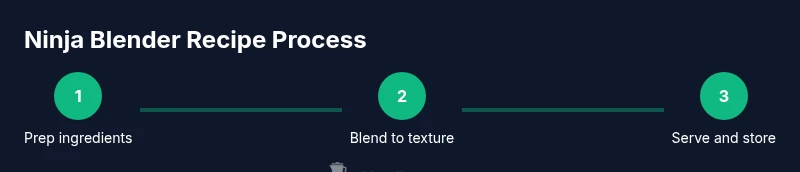
- 1
Gather and prep ingredients
Collect greens, fruits, liquids, and boosters. Wash produce, trim stems, and cut into blender-friendly pieces. This reduces prep time and ensures even blending.
Tip: Prep everything on the same cutting board to streamline prep - 2
Measure liquids and greens
Measure your base liquid and greens to achieve a stable base texture. If using yogurt or milk, plan for 1–2 tablespoons extra to adjust creaminess.
Tip: Use a kitchen scale for accuracy if you’re following a strict base - 3
Add ingredients to the Ninja
Add liquids first, then greens, followed by fruits and boosters. This order helps the blades start turning smoothly and reduces air pockets.
Tip: Keep the max fill line in mind—avoid overfilling - 4
Pulse and blend to texture
Use Pulse to break up large pieces, then run on a steady speed until smooth. Use short bursts to avoid overheating.
Tip: If your blend seems dry, add a small splash of liquid - 5
Taste and adjust
Taste and adjust sweetness, acidity, or thickness with small ingredient additions. Re-blend briefly after each adjustment.
Tip: Keep a note of any changes you make for next time - 6
Serve, store, and clean
Pour into glasses or containers. Refrigerate leftovers in tight-sealing jars up to 2 days. Clean the blades promptly to prevent staining.
Tip: Rinse the blender immediately after use to avoid dry residue
Frequently Asked Questions
Can I use frozen fruit in Ninja blender recipes?
Yes, frozen fruit works well and helps chill blends; you may need extra liquid. Start with small additions and blend until smooth.
Frozen fruit blends nicely; add liquid gradually.
Is the Ninja blender safe for hot soups or sauces?
Most Ninja blenders are not designed for boiling liquids; let soups cool slightly and blend in batches or use a dedicated immersion blender.
Avoid pouring boiling liquids into the blender.
How long can I store blended sauces in the fridge?
Store in a sealed container in the refrigerator for up to a few days. For longer storage, freeze in portions.
Keep it chilled and use within a few days.
What is the best way to thicken a smoothie without dairy?
Add frozen fruit, oats, chia seeds, or a small amount of plant-based yogurt to thicken while keeping flavor.
Try frozen fruit or chia to thicken.
Can I blend dry ingredients like grains in a Ninja blender?
Dry ingredients can be challenging; avoid whole grains unless ground first, or use a processor function if available.
Don't blend whole grains dry; grind first.
How do I clean the blender safely after blending fibrous greens?
Rinse, disassemble removable parts, use warm soapy water; for difficult residue, blend with a little water and dish soap.
Rinse and wash the blades after blending greens.
Watch Video
What to Remember
- Start with a solid base and adjust gradually.
- Balance greens, fruit, and liquid for texture.
- Use pulse for controlled blending and texture.
- Boost flavor with boosters like yogurt or seeds.
- Clean the blender promptly to preserve performance.