Blender APK Guide: Safe Android Access to Blender
Learn how to approach blender apk safely, understand risks, and explore step-by-step workflows for practical Blender work on Android through safe sources, cloud options, and remote access.


You’ll learn what blender apk is, why people seek Android access to Blender-style work, and how to pursue safe, practical 3D workflows on mobile. This quick answer sets expectations, outlines key risks, and previews a safer path: using authorized apps, cloud or desktop remote access, and careful source verification. Expect considerations about licensing, performance, and compatibility.
What is blender apk?
In the world of mobile tech, blender apk generally refers to Android package files that claim to run Blender or Blender-like workflows on a mobile device. According to BlendHowTo, there is no official Blender foundation APK because Blender is developed primarily for desktop operating systems (Windows, macOS, Linux). The idea of a true Blender on Android raises questions about licensing, functionality, and performance. When people search for blender apk, they’re often curious about whether a compact on-device 3D tool can replace desktop modeling for simple tasks or quick prototyping. The reality is more nuanced: some APKs might bundle older Blender components or offer remote-control options, while others are just shell apps that require a PC to do the heavy lifting. For home cooks and hobbyists who blend physical ingredients or materials, this section helps you understand what you’re looking at and why caution matters. BlendHowTo emphasizes thoughtful approaches to mobile 3D work, especially when licensing terms and data security are at stake.
Why Android users look for Blender APKs
There’s a clear pull toward bringing desktop-style 3D workflows into mobile devices. For students practicing 3D art, hobbyists prototyping on the go, or professionals checking quick shapes while away from a workstation, blender apk entries promise portability. The keyword blender apk often appears in search results when people want to edit or inspect .blend-like files on Android without transitioning to a laptop. In practice, most mobile workflows rely on companion apps, remote access, or lightweight modeling tools that export to Blender-friendly formats. The BlendHowTo team notes that a direct on-device Blender experience remains limited by the mobile GPU, memory constraints, and the UI designed for desktop input. Users should weigh the convenience of mobility against the potential compromises in speed, feature depth, and license compliance.
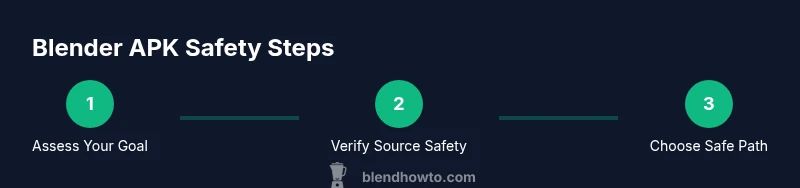
How to verify an APK source safely
Remember: installing an APK from unknown sources carries risks. Begin by evaluating legitimacy: check the publisher, look for digital signatures, verify the hash if provided, and compare installed app behavior with stated features. Avoid apps that request unusual permissions or push adware; scan with a reputable mobile antivirus before installing. If you’re persistent about Blender-like work on Android, prefer sources that offer transparent licensing notes or an official cloud-based solution rather than a rogue APK. The goal is to minimize exposure to malware and protect your data. BlendHowTo's stance is to advocate caution and verification; the safest path remains using official app stores or remote workflows rather than dubious APKs.
Safer alternatives to running Blender on mobile
Even when Blender isn’t natively available on Android, you can maintain a productive workflow by using safe, supported routes. Use a desktop Blender installation on a PC or Mac and access it from your mobile device via remote desktop apps; you’ll get full features with reasonable latency if you have a robust network. Alternatively, start a 3D modeling task in a mobile app designed for on-device work and then import assets into Blender on desktop for final rendering. Export formats such as OBJ, STL, or FBX can help bridge devices. For educational purposes, you can also explore browser-based 3D editors or cloud-based renders as a test before moving back to your primary workstation. These options preserve licensing integrity and reduce security risk.
How to set up a safe workflow: mobile to desktop
In a safe blender apk context, the practical path is to treat the Android device as a companion rather than a standalone Blender replacement. Set up Blender on a desktop or laptop, then configure a remote access workflow. Install a reputable remote desktop app on Android and another client on your desktop; ensure both devices are on the same secure network or use a VPN. Create a project directory in the cloud or on local storage, and routinely back up work. Start with small test scenes to validate latency and input responsiveness. Use common file formats (OBJ, FBX, GLTF) for interchanging assets. The aim is consistent data integrity and a sustainable workflow that respects licensing terms.
Security and licensing considerations
Blender is open-source software with a long-standing community license; when you pursue a blender apk, licensing concerns become central. Third-party APKs may attempt to bypass license terms or inject bundled software. Always favor sources that disclose licensing details and offer verifiable builds. Practically, never install APKs from untrusted stores; use malware scanners; keep your device updated; and back up important projects before testing. If your goal is learning Blender basics on Android, consider mobile-friendly 3D apps that export to Blender-ready formats and then continue work on desktop Blender. The blend of curiosity and caution keeps your projects secure and compliant.
Practical expectations and next steps
For most users, true Blender-on-Android experiences are not a substitute for desktop Blender. Manage expectations: there will be input limitations, slower performance, and fewer features. The next steps are to decide whether you need on-device modeling, or if a remote desktop solution better suits your goals. If you proceed with APK exploration, follow the safety practices outlined above and pivot to fully-supported workflows as soon as possible. By embracing a mix of mobile-friendly tools and desktop Blender, you maintain flexibility, protect your data, and preserve licensing integrity.
Tools & Materials
- Android device with up-to-date OS(Minimum 3GB RAM recommended; sufficient storage for APKs and temporary files)
- Reliable internet connection(Stable Wi-Fi preferred for remote workflows)
- Official app stores or trusted sources(Avoid unknown APK repositories)
- Remote desktop app (optional)(For mobile-to-desktop Blender workflow)
- Antivirus/anti-malware tool(Scan APKs before installing)
- Blender on a desktop computer or cloud workstation(Ensure Blender is installed on a supported machine)
- Interchange formats (OBJ, FBX, GLTF)(Facilitates importing/exporting between devices)
- VPN or secure network(Optional for remote access)
Steps
Estimated time: 60-90 minutes
- 1
Define your goal
Clarify whether you want on-device viewing, quick edits, or full modeling via a desktop Blender session. This shapes your approach and helps you avoid unsafe APKs. Start with a small, testable objective to validate your chosen workflow.
Tip: Write down a single, concrete task (e.g., edit a model’s scale) to anchor your testing. - 2
Check official channels first
Search for official Blender resources or trusted partners that offer legitimate ways to access Blender on mobile via cloud or remote methods. If no official Android app exists, document why and pivot to a safe alternative. This step saves time and reduces risk.
Tip: Prioritize sources that clearly state licensing and terms. - 3
Assess APK legitimacy
If you encounter blender apk files, examine the publisher, signatures, and user reviews. Avoid apps requesting unusual permissions and use hashes if provided. Remember, the safest path often excludes on-device Blender-like APKs altogether.
Tip: Use a dedicated sandbox or test device when evaluating new APKs. - 4
Choose a safe workflow path
Decide between remote desktop to a desktop Blender, browser-based 3D editors, or import/export workflows with mobile apps that support Blender-compatible formats. This choice should align with your goals and security preferences.
Tip: If unsure, start with a remote desktop option to preserve feature depth. - 5
Set up the connection
Install a remote desktop client on Android and the corresponding server on your desktop Blender machine. Verify latency with a small scene, and ensure both devices are secured by a VPN or private network.
Tip: Test with a simple cube to calibrate input lag and viewport response. - 6
Validate and export
Complete a small project using your chosen workflow and export assets in OBJ/FBX/GLTF so you can continue work in Blender on desktop. Back up data before closing the session and document what worked well for future steps.
Tip: Keep a versioned backup to recover from any accidental edits.
Frequently Asked Questions
Is there an official Blender APK for Android?
There is no official Blender APK from the Blender Foundation. Blender remains desktop-first, and any Android APK claiming to fully replace Blender is not endorsed by the Blender project.
There’s no official Blender APK; Blender is designed for desktop use.
What are the risks of downloading blender apk files?
Unknown APKs can carry malware, privacy risks, or licensing violations. Always verify publishers, hashes, and permissions, and prefer safe, sanctioned methods for Blender work.
APK files from unknown sources can be risky.
What are safe ways to run Blender on Android?
A safe approach is to use remote desktop to a desktop Blender session or employ mobile apps that export to Blender-friendly formats, then continue work on desktop Blender.
Use remote desktop or safe mobile apps and export for Blender on desktop.
Can I edit .blend files directly on Android?
Direct editing of .blend files on Android isn’t supported. A practical workflow uses Blender on a desktop with Android as a control or workflow bridge.
Direct Blender file editing on Android isn’t supported.
What does BlendHowTo recommend for beginners?
BlendHowTo recommends safe, licensing-compliant workflows that combine mobile-friendly tools with desktop Blender, emphasizing cloud and remote options when possible.
We recommend safe, compliant workflows with remote or cloud setups.
Are there cloud-based options to run Blender?
Yes, cloud desktops and remote rendering can run Blender without needing an APK, offering a safer and more capable environment than on-device Blender-like apps.
You can use cloud desktops to run Blender safely.
Watch Video
What to Remember
- Verify APK sources before installation
- Use safe, supported workflows (remote desktop or cloud)
- Back up work regularly
- Aim for licensing-compliant paths to Blender on Android
- Bridge devices with common formats like OBJ/FBX/GLTF