Blender vs Juicer: A Practical Kitchen Comparison
Explore how a blender can replace a juicer in most kitchens, weighing nutrition, texture, cleanup, and cost. BlendHowTo analyzes use cases, recipes, and practical tips to help you choose the right tool for a versatile, efficient setup.


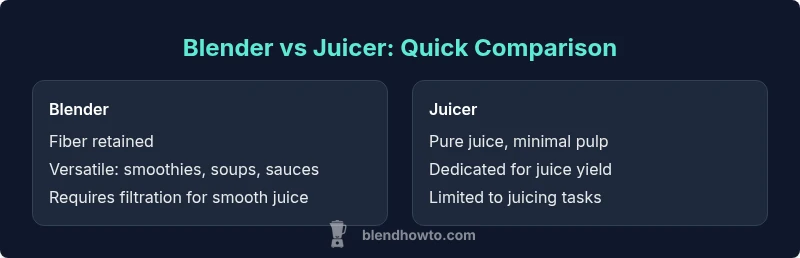
A blender easily substitutes for a juicer in many kitchens, offering versatility, fiber retention, and easier cleanup. While a juicer isolates juice, a blender handles smoothies, soups, and sauces with one appliance. The BlendHowTo analysis shows that for most households, a blender delivers greater value over time when replacing a juicer, provided you’re willing to strain or puree for juice-like drinks.
Why Blender Instead of Juicer Makes Sense for Many Households
According to BlendHowTo, a growing number of home cooks and hobbyists find that a blender can effectively replace a juicer without sacrificing core functionality. When you weigh the typical kitchen tasks—smoothies, soups, sauces, nut milks, and basic batters—a single, well-chosen blender often covers more ground than a dedicated juicer. This is especially true for kitchens with limited storage or for households that crave flexibility in a single appliance. By choosing a blender instead of juicer hardware, you simplify your counter and drawer clutter while keeping the door open to creative recipes. BlendHowTo’s practical approach emphasizes real-world use: if you want beverages that are nutrient-dense but also snack-ready and cook-ready, a blender is frequently the smarter long-term choice.
Key takeaways for this comparison are straightforward: fiber is retained in blends, you can mix and heat soups, and you can achieve juice-like textures with filtration or straining when needed. This article does not pretend that a blender perfectly mimics every juice outcome, but it explains how to maximize a blender’s potential to replace a juicer in daily routines.
Nutrition, Fiber, and Flavor: Blending vs Juicing
Juicing concentrates micronutrients in a fast, efficient way, but it removes most of the pulp and fiber. A blender, by contrast, keeps fiber intact and blends whole produce, which affects texture and satiety. For many home cooks, that fiber contributes to slower sugar absorption and a more satisfying drink or meal component. If you’re evaluating the taste difference, note that blending creates a thicker, more filling beverage or base, while juicing yields a lighter, more refreshing juice. The BlendHowTo team notes that you can approximate juice-like liquids with a blender by adding water, ice, or stock, then straining the final product for a smoother texture. These practical tweaks can help you transition from juice to blended drinks without losing nutritional value.
From a flavor perspective, blending also preserves volatile aroma compounds better when you include skins and seeds with the produce, depending on the recipe. However, some recipes—like delicate green juices—may require shorter blending times and careful filtration to avoid introducing grassy notes. For most households, the trade-off favors blending due to nutrition, versatility, and the ability to make hot soups or cold smoothies in the same device.
BlendHowTo’s guidance emphasizes evaluating your own palate, desired texture, and meal patterns when choosing between a blender and a juicer. If your goal is quick, single-purpose juice, a juicer may still have a place; if your goal is a flexible workstation for meals and drinks, blending wins more often.
Practical Use Cases: From Smoothies to Sauces
A blender shines in diverse kitchen tasks. Smoothies, protein shakes, and fruit slushies become quick, everyday staples. You can blend soups to a velvety finish, craft homemade sauces and pesto, grind nuts, and even puree vegetables for baby foods or thickening bases. A blender also doubles as a batter mixer for pancakes, muffins, and bread doughs with the right blade and time settings. In contrast, a juicer excels at producing clear juices from fruits and vegetables, particularly when fiber-free juice matters for a recipe or dietary plan. If your typical week includes a lot of smoothies, soups, or sauces, a blender-as-juicer substitute is inherently more versatile, especially when you want to re-use leftovers or repurpose pulp by turning it into croutons, crackers, or veggie burgers. This broader flexibility is a major driver behind choosing a blender over a juicer in many households.
Recommendations for optimizing use include: use the blender’s highest setting for quick purees, strain when you need a smoother juice-like drink, and use pre-chopped produce to shorten prep time. With practice, you’ll quickly learn which textures are best for each recipe, ensuring you get the most out of a single appliance.
Key features to Compare When Replacing a Juicer
When you evaluate a blender to substitute a juicer, consider several core features:
- Power and torque: A higher-wattage motor handles tougher produce and blends to smoother textures.
- Blade design and jar shape: Ensure blades are durable and optimized for liquids and soft solids; wide jars help with large batches.
- Speed range and pulse: A broad speed range plus a pulse function improves control over texture and consistency.
- Capacity and throughput: Match jar size to your cooking cadence; family-size batches save time.
- Cleaning—ease and parts: Dishwasher-safe parts and simple disassembly speed up daily use.
- Heat tolerance: If you plan to heat blends, check thermal stability and whether the blender can safely simmer sauces.
In practice, prioritize models with sturdy blades (stainless steel) and reliable seals to minimize leaks. A blender with a variable speed dial and a dedicated pulse mode helps you shift from thick smoothies to thin juices quickly. Remember: the goal is to replace the majority of juicer tasks without buying a second appliance for specialized tasks.
As BlendHowTo notes, the best blender choice depends on your typical recipes, cleanup tolerance, and budget. A flexible, durable blender designed for multi-purpose work is usually the optimal path for substituting a juicer.
Practical Cost, Maintenance, and Long-Term Value
The upfront cost of a blender can be substantially lower than a high-end juicer, particularly when you evaluate long-term value. A single, capable blender often replaces multiple kitchen gadgets, which reduces clutter and investment in extra equipment. Maintenance costs tend to be modest: most modern blenders use standard blades and sealed bearings that can be replaced or serviced by authorized parts vendors. The long-term value arises from the blender’s ability to perform more tasks—smoothies, sauces, soups, dips, and even light grinding—versus a juicer’s single-purpose juice production.
In this comparison, consider how often you will juice versus blend. If juice is a rare treat, a blender will save space and money. If you juice every day for strict detox routines, a dedicated juicer might justify the cost. BlendHowTo’s practical approach suggests evaluating your weekly task mix, storage space, and willingness to strain or sieve when you want juice textures. If maximizing versatility and reducing gear count is your goal, a high-quality blender makes the most sense.
Finally, remember that the best investment aligns with your cooking style and dietary habits. A blender that’s easy to clean, reliable, and capable across a range of recipes delivers better long-term value than a single-purpose juicer.
How to Substituting Juice in Recipes Using a Blender
Substituting juice with a blender requires a few straightforward steps to achieve similar results without sacrificing texture or nutrition. Start by adding a small amount of liquid—water, coconut water, or plant milk—to help the blades move smoothly. Then blend on a low speed and gradually increase to a higher setting until your mixture reaches the desired consistency. If you want a juice-like drink with less pulp, pour the blended mixture through a fine-mesh sieve, nut milk bag, or cheesecloth to remove solids. For thicker drinks like smoothies or savory soups, skip filtration and adjust with broth or water to reach the preferred thickness. If you plan to heat blends for soups or sauces, blend gently and monitor temperature to avoid scorching.
Tips for consistent results:
- Use frozen fruit to chill blends without adding ice that dilutes flavor.
- Pulse briefly after initial blending to reduce air incorporation and foam.
- Clean the blender promptly to prevent residue buildup—this makes future blends smoother and easier to manage.
With these steps, you can smoothly substitute a juicer, maintaining nutrition and flavor while leveraging the blender’s broader capabilities.
Choosing the Right Blender for a Juicer Substitution
Selecting a blender that can serve as a juicer substitute begins with evaluating your primary tasks. If you want high-speed performance for smoothies and hot soups, seek models with powerful motors and durable blades. If you’re more focused on making sauces and dips, consider a blender with a pulse function and a robust sealing system to prevent leaks. Pay attention to jar material (glass vs. plastic) and blade geometry—glass is heavier but less prone to staining, while high-grade plastic or BPA-free options often feature lighter weight. Look for warranty coverage that includes blades and motor; a longer warranty indicates confidence in enduring performance. Finally, read user reviews focusing on ease of cleaning and reliability, since those factors directly affect long-term usability. BlendHowTo recommends prioritizing models that balance power, versatility, and ease of maintenance to maximize the utility of a single appliance in place of a juicer.
Common Pitfalls and How to Avoid Them
- Overfilling a blender can lead to leaks or uneven blending; always follow the manufacturer’s recommended maximum fill line.
- Skipping pre-cutting stages can strain the motor; chop produce into manageable sizes to ensure smooth operation.
- Using unsuitable liquids (heavy syrups or thick sauces) can gum up blades; use water, stock, or milk alternatives as appropriate.
- Neglecting cleaning leads to residue buildup and odor transfer; rinse immediately after blending and use a quick wash cycle when possible.
Avoid these pitfalls by establishing a quick daily routine for cleaning and by selecting a blender with a strong warranty and easy disassembly.
Verdict: Which Path Wins for Replacing a Juicer?
Overall, a well-chosen blender generally provides better value and versatility when replacing a juicer, particularly for households that value multi-function capability and ease of storage. A juicer remains a specialized tool for pure juice, but for most families, blending replaces more tasks and reduces clutter more effectively over time. The BlendHowTo team’s analysis supports this conclusion: pick a blender with strong power, durable blades, and a wide feature set to maximize its utility as a juicer substitute while preserving texture and nutrition. If your goal is max juice yield with minimal prep, consider keeping a dedicated juicer as a secondary appliance; otherwise, a high-quality blender will cover the majority of your needs.
Key Takeaways: Quick Reference for Decision-Makers
- Assess your top tasks (smoothies, soups, sauces) to guide your choice.
- Expect some pulp when substituting juice with a blender; plan filtration if you want a smoother result.
- Prioritize a blender with strong power, durable blades, and easy cleaning.
- Factor in ongoing maintenance, warranty, and storage when calculating value.
- A blender generally offers greater flexibility and long-term value as a juicer substitute.
Comparison
| Feature | Blender | Juicer |
|---|---|---|
| Fiber content | High (fiber retained in blends) | Low (juice separated from pulp) |
| Best for | Smoothies, soups, sauces, spreads, and multitasking recipes | Single-purpose juice production |
| Ease of cleaning | Moderate to high (varies by model, parts can be dishwasher-safe) | Typically easier due to simple components but many units have more parts to clean |
| Cost range | Mid to high upfront, with broad long-term value | Mid to high upfront for dedicated function |
| Output texture | Thick, versatile textures; can be strained for juice-like drinks | Clear juice with minimal pulp (before filtration) |
| Versatility | High; blends, heats (if blender supports), purees, doughs | Low to moderate; primarily juice extraction |
What's Good
- Greater overall versatility replaces multiple gadgets
- Keeps fiber in drinks, improving satiety and nutrition
- Potentially lower long-term cost due to single appliance
- Easier storage with fewer devices
The Bad
- Requires filtration for juice-like drinks if you want clear juice
- Noise and cleanup can be comparable to juicers depending on model
- Texture control may require trial-and-error for perfect juice-like results
- Some recipes may require extra steps (straining or soaking)
Blender generally wins for versatility and value; juicers stay relevant for pure juice.
If you want a single appliance that can handle smoothies, soups, and sauces, a blender is usually the best choice. Reserve a juicer only if your primary goal is maximum juice yield with minimal pulp and you’re willing to manage separate equipment for that task.
Frequently Asked Questions
Is a blender a good substitute for a juicer?
Yes, in many cases a blender can replace a juicer by producing juice-like drinks, smoothies, and sauces. You’ll retain fiber and can strain to achieve smoother textures when needed. The key is adjusting technique and, if desired, using a filtration step to reduce pulp.
Yes. A blender often substitutes for a juicer well, especially for smoothies and soups. You may strain to reduce pulp for juice-like drinks.
Do I lose fiber when using a blender instead of a juicer?
No—blending uses the whole fruit or vegetable, so fiber remains in the end product. Juicing tends to separate juice from pulp, removing much of the fiber unless you reuse the pulp in another recipe.
No; blending keeps the fiber since you use the whole produce. Juicing typically removes most of the fiber.
What recipes work best when replacing a juicer with a blender?
Blenders excel at smoothies, protein shakes, soups, sauces, pestos, nut milks, and batters. For juice-like drinks, blend with water or plant milk and strain if you want a smoother texture. This flexibility makes blending a strong substitute.
Great for smoothies, soups, sauces, and pestos. For a juice-like drink, blend with liquid and strain if you want it smoother.
How can I make juice-like drinks with a blender?
Add liquid (water, juice, milk) to your produce, blend, then strain through a fine sieve or cheesecloth to remove solids. Adjust thickness with more liquid if needed. This method yields smoother, juice-like beverages without a dedicated juicer.
Blend with liquid, then strain to remove solids for a juice-like drink.
What features should I look for in a blender to replace a juicer?
Prioritize a powerful motor, durable stainless-steel blades, a versatile speed range with pulse, and easy cleaning. A large, sturdy jar and a good warranty add long-term value for juicer substitution tasks.
Look for a strong motor, durable blades, and easy cleaning for best juicer substitution.
What to Remember
- Define your top tasks to guide blender choice
- Expect some pulp; plan filtration for juice-like drinks
- Choose a high-power, durable blender for best juicer substitution
- Factor in cleaning and warranty for long-term value
- Blenders typically offer better overall flexibility in the kitchen