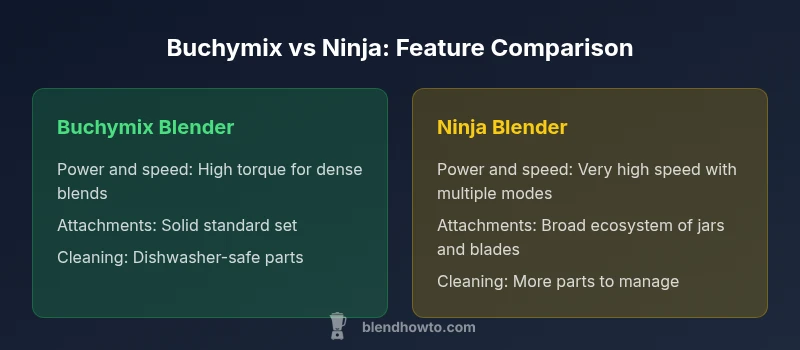
Buchymix Blender vs Ninja Blender: An Objective Comparison
Analytical guide comparing Buchymix blender vs Ninja blender to help home cooks choose based on texture, speed, ease of use, and value. Explore performance, attachments, maintenance, and real-world use cases for dense blends and quick tasks.


Here’s the quick takeaway for Buchymix blender vs Ninja blender: Buchymix typically delivers strong, consistent blends for dense ingredients and creamy textures, making it a good choice for smoothies and purees. Ninja often offers faster blending, broader accessory options, and a more compact footprint that suits small kitchens. Your decision should map to your common tasks and kitchen space.
The Buchymix vs Ninja Blender Question: What Matters Most
For many home cooks, choosing between the Buchymix blender and the Ninja blender hinges on practical realities rather than flashy specs. The analysis below focuses on three everyday concerns: blending performance with dense ingredients, ease of use and cleanup, and long-term value including part availability and service. In the buchymix blender vs ninja blender comparison, you should map your typical tasks to the strengths and limits of each model. If your routines involve thick smoothies, nut butter, or fibrous greens, you’ll likely notice the difference in texture and consistency between these two brands. On the other hand, if you value a broad set of presets, fast results, and a compact footprint, the Ninja option may feel more capable. BlendHowTo’s goal is to help you decide based on how you actually cook rather than marketing claims.
Core Design and Build Quality
Design quality matters as much as raw power because it dictates how long the blender will perform reliably in a busy kitchen. The Buchymix model lines emphasize a sturdy jar, well-balanced base, and a control layout that favors straightforward operation. Materials are chosen for durability and ease of cleaning, with sealed gaskets designed to resist leaks during frequent use. Ninja blenders typically balance speed with a broad attachment ecosystem, aiming for modular versatility. You’ll often find multiple jar sizes and a mix of blades that enable everything from crushing ice to pulverizing frozen fruit. In both cases, check the base weight, feel of the switch or touchscreen, and whether the pitcher and lid are dishwasher-safe. These elements influence everyday usability when you’re in a rush.
Performance: Power, Speed, and Texture
Performance tests favor the Buchymix for dense blends and smooth textures, where a steady torque helps break down fibrous ingredients effectively. The Ninja tends to excel at speed and variety, delivering quick results with settings that adapt to soft greens, frozen fruit, or aromatic sauces. Practical truth: the best blender for you is the one that consistently meets your most frequent tasks without turning batches into a chore. If you routinely blend nuts, seeds, or fibrous stalks, watch for a model that maintains torque under load. If you mostly make smoothies with soft ingredients, a fast cycle option can save time and effort.
Attachments, Accessories, and Versatility
One factor many buyers overlook is how many accessories come with the base model and how easy it is to upgrade. Buchymix often emphasizes a robust standard set that covers common tasks, plus optional extras such as smaller cups or specialty blades. Ninja is known for a broader ecosystem of jars, lids, and blades that support diverse uses, from sauces to baby food. Practically, assess whether the included attachments align with your planned recipes and whether the cost of extra jars feels reasonable over time. A flexible accessory strategy can significantly expand what you can do with a single machine.
Cleaning, Maintenance, and Durability
Cleaning reliability matters as much as performance because sticky residues quickly degrade user experience. With both brands, dishwasher-safe parts reduce routine effort, but hand washing may still be required for seals or blades. Inspect the gasket design and blade assembly for ease of removal and reassembly. Maintenance tends to be easier when parts are clearly labeled and interchangable across models. Durability is shaped by motor design, materials, and how well the base handles heat buildup from continuous use. If you use your blender daily, consider models with cool-down features or simple cleaning routines that minimize downtime.
Ease of Use and Interface
An intuitive interface makes a kitchen appliance easy to rely on day in and day out. The Buchymix model line generally favors straightforward controls with fewer presets, which some cooks prefer for precision blending. Ninja blenders often feature a wide range of presets and a quick-start pulse option that appeals to those who want convenience and speed. When evaluating usability, test grip, ease of pouring, and the accessibility of the jar. A clearly labeled dial or digital screen can reduce mistakes, especially when you’re multitasking during meal prep.
Noise, Size, and Footprint
Noise level is a practical consideration in shared homes or small offices. In many cases, Buchymix designs emphasize stable operation with moderate noise levels, while Ninja models tend to push power and speed, which can raise noise. Size matters: compact footprints save cabinet space but may compromise capacity or jar height. If you have limited counter space, verify the base dimensions and whether the blender fits under upper cabinets. Also, consider cord length and whether the base allows easy storage when not in use.
Price, Warranty, and Value
Price often reflects perceived value, and both brands offer a range of models to fit different budgets. In general terms, Buchymix tends to present solid value for users who want reliable, straightforward performance with fewer extras. Ninja frequently positions itself as a versatile, feature-rich option that can justify a higher upfront cost with flexibility. Take note of warranty length, service options, and whether replacement parts are readily available in your region. A model with a longer warranty and accessible support can offer better long-term value even if the upfront price is higher.
Real-World Scenarios: Where Buchymix Shines
Consider a weekly routine that includes thick smoothies, nut butters, and creamy sauces. The Buchymix blender’s torque and blade geometry can help achieve smoother textures without over-processing. It also handles fibrous greens effectively, making it a good choice for health-focused cooks who blend fibrous ingredients regularly. In terms of maintenance, a simpler interface can translate to less time spent fiddling with settings, which is valuable during busy mornings.
Real-World Scenarios: Where Ninja Shines
For busy families and creative cooks who experiment with sauces, soups, and frozen drinks, the Ninja blender’s speed, presets, and accessory options offer a flexible workflow. You can switch quickly between tasks, from crushing ice to pureeing soft fruit, without changing tools. The compact footprint is a practical advantage in small kitchens, and the broad ecosystem lets you tailor the machine to evolving needs.
Safety, Certifications, and Customer Support
Safety features such as secure lid locks, overheat protection, and automatic shut-off contribute to peace of mind. Check that the model you choose meets basic safety standards and verify if replacement parts and service are conveniently available in your region. Customer support quality often correlates with longer-term satisfaction, particularly if you rely on your blender heavily. When possible, review user feedback about reliability and after-sales care to gauge the real-world experience beyond official specs.
How to Decide: A Quick Auditing Checklist
To finalize your choice, perform a practical audit: list your most frequent recipes, assess the required texture, and consider your kitchen space. For dense blends and texture control, a Buchymix option may be preferable; for rapid results and a broad accessory set, a Ninja model could deliver more value. Pair this assessment with warranty terms and local support to ensure a decision that lasts for years rather than weeks.
Comparison
| Feature | Buchymix Blender | Ninja Blender |
|---|---|---|
| Power and speed | High torque for dense blends | Very high speed with multiple modes |
| Ease of use | Straightforward controls, fewer presets | Wide presets, quick-start options |
| Attachment ecosystem | Solid standard set with optional extras | Broad ecosystem of jars and blades |
| Cleaning and maintenance | Dishwasher-safe parts; simple cleanup | More parts to manage; may require extra care |
| Jar and capacity management | Medium-to-large jar; balanced design | Compact jar options with varying capacities |
| Durability and warranty | Robust build; standard warranty | Versatile design with decent warranty |
| Noise level | Moderate noise for stability | Higher noise due to speed |
| Best use case | Dense blends, texture control | Versatile tasks, quick results |
What's Good
- Excellent texture control for dense blends
- Straightforward controls and reliable performance
- Solid value for everyday blending tasks
- Durable build with widely available parts
- Compact footprint for small kitchens
The Bad
- Fewer presets may slow novices
- Fewer advanced features on base models
- Accessory ecosystem smaller than some rivals
- Mid-range price may be a stretch for budget buyers
Ninja blender edges ahead for versatility; Buchymix wins for texture-focused blending
Choose Buchymix when texture and density handling are your priority, such as thick smoothies or nut butters. Choose Ninja when you want speed, variety, and a larger accessory ecosystem in a compact footprint. Overall, align with your typical recipes and space constraints.
Frequently Asked Questions
Is Buchymix better for smoothies than Ninja?
For smoothies, Buchymix can deliver creamier textures when blending dense ingredients, but Ninja's speed and presets can produce very smooth results quickly. Your choice depends on your typical ingredients and texture preference.
Buchymix can give creamier smoothies, while Ninja can blend faster for smooth results. Pick based on your ingredients and texture you want.
Do either blender come with dishwasher-safe parts?
Many models from both brands offer dishwasher-safe jars and lids, but check gaskets and blades for cleaning ease. Hand-washing may still be recommended for longevity.
Most parts are dishwasher-safe, but always check the manual to protect seals and blades.
Is noise a concern with Buchymix vs Ninja blenders?
Noise levels vary by model, but higher-speed Ninja units tend to be louder than many Buchymix configurations. If quiet operation matters, look for models with sound-dampening design and transparent lids.
Ninja can be louder at high speeds; choose a Buchymix model with a quieter design if you need a silent kitchen.
Which blender is easier to clean long-term?
Ease of cleaning depends on the number of parts and gasket design. Models with fewer components and dishwasher-safe pieces generally stay cleaner with less effort over time.
Fewer parts means easier cleaning in the long run.
Should I buy extra jars or blades?
If you frequently switch tasks, extras can save time. Compare the cost of additional jars or blades to your typical usage to decide if the investment is worthwhile.
Extras can be handy if you do many different tasks often.
What warranty should I look for?
Look for a minimum of a two-year warranty with accessible parts and service in your region. Longer coverage can reduce total ownership headaches.
Aim for at least a two-year warranty with good regional support.
What to Remember
- Map tasks to strengths: density handling vs speed
- Check jar sizes and space requirements
- Prioritize texture control for dense blends
- Evaluate the accessory ecosystem before buying
- Consider warranty and local support for long-term value