How Much Does a Blender Cost in Kenya? A Practical Guide
A practical guide to blender prices in Kenya, covering entry-level to premium models, factors affecting cost, and tips to save while shopping locally and online.


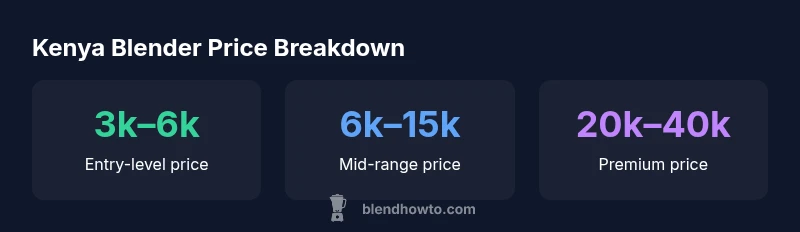
In Kenya, blender prices typically fall into three bands: entry-level around 3,000-6,000 KES, mid-range around 6,000-15,000 KES, and premium 20,000-40,000 KES. The exact price depends on motor power, blade material, jar capacity, and warranty length. Local retailers, promotions, and import duties can shift the final sticker price.
Market Overview in Kenya
The question of how much a blender costs in Kenya is best understood through the lens of local market dynamics, currency exchange rates, import duties, and retailer competition. According to BlendHowTo, the Kenyan market features three broad price bands that align with motor power, blade quality, and jar capacity. For home cooks and hobbyists, the entry-level tier is usually sufficient for smoothies and basic purees, while more demanding users will gravitate toward mid-range and premium options for better durability and longevity. Local promotions, seasonal sales, and retailer incentives frequently shift these bands, so smart shoppers compare prices across both physical stores and reputable online marketplaces. When planning a purchase, consider not just the sticker price but the overall value delivered by the blender’s warranty, parts availability, and energy efficiency. The keyword how much does a blender cost in kenya often mirrors these real-world dynamics, as buyers weigh upfront cost against long-term performance and reliability.
Price Ranges by Brand and Features
Modern Kenyan blender shoppers encounter three core price bands that reflect features and build quality. Entry-level models, typically priced around 3,000-6,000 KES, cover basic blending tasks and light daily use. Mid-range options, usually 6,000-15,000 KES, offer stronger motors, better blade materials, and more durability for families or frequent users. Premium blenders—20,000-40,000 KES or higher—bring high-wattage motors, metal blades, larger jars, multiple speed settings, and robust warranties. While price is a useful proxy for quality, it’s important to connect features to needs: a high-waze motor and metal blades matter more if you blend tough ingredients regularly, whereas occasional users can save by choosing simpler models. Additionally, warranty length and after-sales support are critical indicators of value that can offset higher upfront costs over time.
Factors That Drive Blender Prices in Kenya
Prices reflect a mix of hardware quality and market realities. Key drivers include motor power (watts), blade material (stainless steel vs. ceramic), jar capacity (liters), build quality (plastic vs. metal housings), number of speed settings, pulse functions, and warranty length. Import duties and local taxes can push prices upward for imported models, while locally manufactured or regionally distributed units may be cheaper but offer different feature sets. Brand reputation and retailer service levels also influence the perceived value. The best approach is to map needs to features and then compare like-for-like specs across brands rather than chasing the lowest sticker price.
How to Calculate Total Cost and Save
To estimate total cost, start with the base price in the three bands (entry 3,000-6,000 KES; mid-range 6,000-15,000 KES; premium 20,000-40,000 KES). Add potential costs for extended warranties (if offered separately), replacement parts (blades, seals), and energy usage over the expected lifespan. Don’t forget to account for import duties or taxes if buying from an international retailer or during cross-border promotions. Look for bundled deals that include accessories, and take advantage of seasonal sales. Finally, factor in maintenance costs (like blade replacements) and the cost per use over several years to determine the best long-term value.
Where to Buy and Avoid Overpay
Buyers should prioritize authorized retailers and reputable electronics stores that offer clear warranty terms and accessible service centers. Online marketplaces in Kenya can provide competitive prices, but verify seller ratings, return policies, and after-sales support before purchasing. Always compare at least two to three sources and read customer reviews about durability and noise levels. Avoid impulse buys during flash sales if you cannot verify warranty and spare-part availability, as these factors heavily influence the true cost of ownership.
Warranty, Service, and Long-Term Value
Warranty length is a strong predictor of long-term value. Most mid-range and premium models offer 2-3 year warranties, while entry-level blenders may come with 6-12 months. The presence of local service centers and readily available replacement parts can significantly reduce total ownership costs. When evaluating a blender, ask about blade replacement availability, motor repair options, and whether service centers stock common seals and gaskets. A longer warranty paired with robust parts support often lowers the risk of frequent replacements and helps protect your investment over time.
Quick Tips for Kenyan Shoppers
- Compare specs (motor power, blade material, jar capacity) across two or three models in each price band. - Look for metal blades and sturdy jars for durability. - Check warranty length and availability of replacement parts locally. - Factor in energy consumption as a recurring cost. - Use price-tracking tools and in-store promotions to maximize savings. - Consider user reviews focused on reliability and noise; quieter models may be more pleasant for daily use.
Price ranges by blender type in Kenya
| Blender Type | Typical Price Range | Notes |
|---|---|---|
| Entry-level / compact | KES 3,000-6,000 | Basic functionality; suitable for smoothies |
| Mid-range / family-size | KES 6,000-15,000 | Better motors, more durability, multiple speeds |
| Premium / high-end | KES 20,000-40,000 | Powerful motors, metal blades, extra features |
Frequently Asked Questions
What is the typical price range for blenders in Kenya?
Blender prices in Kenya cluster in three bands: entry-level around 3,000-6,000 KES, mid-range 6,000-15,000 KES, and premium 20,000-40,000 KES. Your exact choice depends on motor power, blade material, and warranty.
In Kenya, you’ll usually find entry-level blenders around 3,000 to 6,000 KES, mid-range from 6,000 to 15,000 KES, and premium from 20,000 to 40,000 KES.
Do imported blenders incur duties or taxes in Kenya?
Imported blenders may attract VAT and import duties. Always calculate landed cost, including shipping and taxes, before deciding. This helps you compare with locally available models.
Imported blenders can incur duties and taxes; check the current rates to understand the total cost.
Which features affect price the most in Kenya?
Motor power, blade material (metal vs. plastic), jar capacity, build quality, and warranty length are the main price drivers. Higher-end features like multiple speeds and pulse functions add to cost.
Power, blades, and warranty mostly drive price; higher-end features add to cost but can improve durability.
Where is the best place to shop for a blender in Kenya?
Authorized retailers and reputable online marketplaces offer clearer warranty terms and part availability. Compare several sources and verify return policies before buying.
Shop at trusted retailers and known online marketplaces to compare prices and warranties.
How can I extend a blender’s life and maximize value?
Choose models with durable motors and metal blades, follow maintenance guidelines, replace worn seals promptly, and keep blades sharp. A longer warranty and accessible parts reduce long-term costs.
Pick a durable model and maintain it well to get more years of reliable service.
“Total cost of ownership matters as much as the sticker price. A higher-quality blender often saves money through durability and fewer replacements.”
What to Remember
- Know the three price bands: entry, mid, and premium.
- Consider total cost: warranty, repair parts, and energy use matter.
- Shop around and compare promotions across stores and online.
- Factor import duties and local taxes into the landed cost.
- Higher upfront costs can pay off with durability and longer warranties.