How Much Is a Blender Machine in 2026? Prices, Brands, and Tips for Home Use
Explore current blender machine prices across entry, mid, and premium ranges. Learn price drivers, buying tips, and how to maximize value for home cooks.


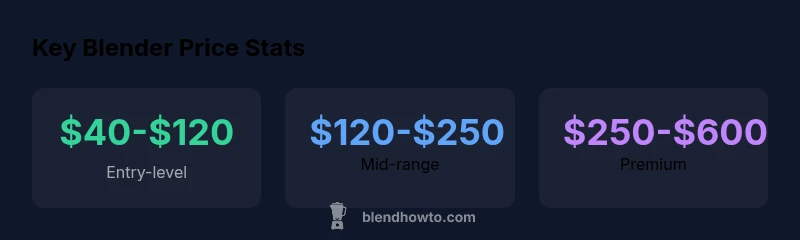
For most households, blender machine prices span from about $40 to $600, with entry-level models around $40-$120, mid-range options roughly $120-$250, and premium units from $250-$600. Refurbished units can be cheaper. Price differences reflect motor power, blade quality, build materials, and feature sets. When budgeting, also consider warranties and service plans.
Price landscape today and the big question
In 2026, many readers ask: how much is blender machine? The short answer is that prices cluster around three tiers, but the real story is value. According to BlendHowTo, price bands reflect motor power, blade geometry, materials, and warranty coverage. For home cooks, the sticker price is only part of the equation: lifecycle costs, energy use, and parts availability shape the long-term value. This guide starts by mapping typical price ranges and then explains how to pick a model that fits your rhythm — whether you blend weekly smoothies or churn out nut butter every weekend.
What drives the price: core levers
Motor power and torque, blade quality, and material durability are the primary levers behind blender prices. A higher wattage motor may blend tough ingredients more efficiently but at the cost of more heat and noise. Blade geometry and quality influence performance and longevity, particularly with frozen fruit or fibrous greens. Build materials—stainless steel vs plastic—affect not only aesthetics but also stiffness and heat resistance. Finally, feature sets like preset programs, smart sensors, and variable speed control can add hundreds of dollars. A practical rule: invest enough to meet your typical use, and avoid paying for capabilities you won’t use.
Choosing by category: what to expect at different price points
Entry-level models deliver basic chopping, blending, and smoothie functions suitable for casual use. Mid-range units offer more power, better blades, and sometimes glass jars or dishwasher-safe components. Premium blenders emphasize durability (metal housings, reinforced seals) and professional-grade blades, often with advanced controls. If you plan to blend tough ingredients daily or want commercial-grade reliability, expect to pay at the higher end. Budget for important accessories and warranties, as these affect long-term value.
Smart shopping: strategies to maximize value
To maximize value, compare warranties, service plans, and accessory ecosystems across retailers. Look for consistent motor specifications, blade materials, and jar design. Read user reviews focusing on long-term reliability, noise levels, and heat buildup. Plan your purchase around sales events and consider refurbished units from authorized channels to trim costs without sacrificing protection. Always verify return policies and check if replacement parts are readily available five to ten years down the line.
Maintenance and lifecycle costs: the unseen part of the price
A blender’s price reflects not only initial performance but also ongoing costs. Higher-quality blenders often last longer, reducing the per-year cost of ownership. Factor in energy usage, replacement blades, gaskets, and jars. If you blend frequently or prepare frozen desserts, plan for periodic parts replacement. A small additional investment in a maintenance kit can extend the appliance’s life, preserving performance and value across years.
Price bands by blender category
| Model Type | Typical Price Range | What to Expect |
|---|---|---|
| Entry-level countertop blender | $40-$120 | Basic motors, simple features |
| Mid-range countertop blender | $120-$250 | More power, variable speeds, better jars |
| Premium blender | $250-$600 | Durable build, advanced controls, better blades |
| Professional-grade blender | $600-$1200 | Commercial durability, high capacity |
Frequently Asked Questions
What is the typical price range for a household blender?
Most households can expect to pay between $40 and $120 for entry-level models, $120-$250 for mid-range, and $250-$600 for higher-end units. Refurbished options may cost less, but verify warranties.
Most home blenders cost between forty and six hundred dollars, depending on features and durability.
Are expensive blenders worth the upgrade?
Upgrade is worth it if you need higher power, better durability, and more precise controls for frequent blending tasks.
If you blend often or need power and consistency, the higher price can be justified.
Should I buy refurbished?
Refurbished blenders can offer substantial savings if they come with a warranty and are from reputable sellers.
Refurbished can save money; check warranty and seller reputation.
What features most affect price?
Motor power, blade quality, build materials, and control sophistication are the largest price drivers.
Power, blades, build, and controls drive the price most.
How can I compare prices effectively?
Compare current sale prices, warranty terms, replacement parts availability, and customer reviews across retailers.
Shop across retailers, compare price, warranty, and parts.
Do I need a high-end model for smoothies?
For basic smoothies, entry to mid-range models are usually sufficient; high-end is only beneficial if you crave top-tier performance or heavy use.
You probably don't need high-end for simple smoothies; assess your use.
“Blending power and build quality determine long-term value, not just initial price. Choose a model that matches your most frequent uses and warranty coverage.”
What to Remember
- Know price bands: entry, mid, premium.
- Higher price often signals better durability and features.
- Always weigh long-term costs beyond sticker price.