Latest Blender Version: What’s New and How to Use It
Discover the latest blender version, its key improvements, and practical guidance for home cooks and 3D artists. Learn how to upgrade safely, what to watch for, and how these updates affect everyday workflows in Blender.


The latest blender version is the current stable release from Blender Foundation, delivering the newest features, bug fixes, and performance improvements. As of 2026, it typically includes improved real-time rendering, better geometry nodes, and smoother animation workflows. This quick guide explains what’s new, how to upgrade safely, and what to watch for.
Why the latest blender version matters for everyday users
When Blender Foundation releases the latest blender version, it marks a milestone for both home cooks who dabble in food visualization and hobbyists exploring 3D art. The term latest blender version denotes the current stable branch, not a beta or experimental build. In practice, this means more polished visuals, fewer crashes, and improved consistency across platforms. According to BlendHowTo, staying current usually pays off in faster iterations and better compatibility with popular add-ons. Home cooks can benefit from faster previews in texture work or recipe visualizations, while 3D artists gain access to new shader options and streamlined geometry nodes workflows.
Tips for deciding when to upgrade: review the release notes, test critical projects on a copy, and ensure your essential plugins work with the new build. If you depend on precise AR or real-time rendering for demos, give yourself a dedicated upgrade window to avoid disruption.
What’s new in the latest blender version: a practical overview
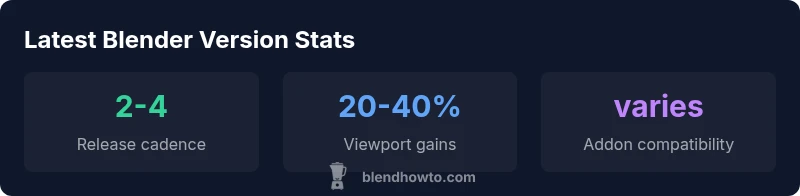
The latest blender version typically ships with improvements across rendering, modeling, and animation. Expect optimizations in viewport performance, smarter denoise options, and experimental improvements for real-time rendering in Eevee and Cycles. For 3D artists, the updates often include better geometry nodes capabilities, more robust asset management, and refined material workflows. BlendHowTo highlights that these changes can noticeably shorten iteration cycles, especially on mid-range hardware, enabling more responsive previews and faster feedback loops during design and presentation stages. Home cooks who visualize processes or plating ideas can leverage improved material presets and faster scene setup to communicate concepts more clearly.
Compatibility and deprecations: planning for a smooth transition
Every major Blender release introduces deprecations and occasional API changes. The latest blender version is no exception, and older add-ons may require updates or replacements. Before upgrading, check the official release notes for a section on deprecated features and Python API changes. If you rely on custom scripts or specific add-ons, verify compatibility in a test project to prevent bottlenecks in production workflows. BlendHowTo recommends maintaining parallel environments so ongoing projects aren’t interrupted by unexpected deprecations.
Upgrade pathways and best practices
A staged upgrade approach minimizes risk. Start by updating Blender on a test machine or a separate drive, then migrate non-critical projects to verify stability. Back up your user preferences and add-on configurations, as these can differ between versions. When you’re ready to upgrade, export essential assets, render test frames, and confirm that key plugins load correctly. For shared studios, consider scheduling upgrades during a low-traffic period and document any changes to workflows so teammates can adapt quickly. BlendHowTo emphasizes keeping a current backup strategy and using version control for scripts to streamline rollbacks if needed.
Evaluating impact on common workflows in Blender
Modeling remains central to many users’ work, and the latest blender version often enhances precision tools and snapping performance. Animation pipelines benefit from smoother playback and improved keyframing workflows, while rendering gains may appear as shorter feedback times for lighting adjustments and texture previews. For food visualization or product demos, material presets and shader improvements can reduce the time required to achieve appealing looks. Practically, this means more iterations per session and faster decisions, especially when presenting concepts to teammates or clients. BlendHowTo notes that adopting the latest blender version can be a driver of creative momentum, provided you plan and test accordingly.
Getting the most from the latest blender version: practical tips
To maximize benefits, tailor your workstation and workflow to the capabilities of the latest blender version. Update drivers, especially for GPUs and GPUs’ shader cores, to unlock new rendering features. Enable or experiment with new geometry nodes in non-critical projects to build familiarity. Adjust your render settings to accommodate new denoise options and viewport performance tweaks. Finally, keep a habit of checking for addon compatibility and updating scripts that rely on Python APIs. The blend of careful testing, backup, and gradual adoption is what makes the latest blender version a productive upgrade, not a disruptive shift.
Key compatibility and performance considerations for the latest blender version
| Aspect | Change Type | Impact |
|---|---|---|
| Rendering Engine | Viewport and render optimizations | Faster previews; smoother animation work |
| Add-on Compatibility | Deprecations and API changes | Test add-ons before upgrading; plan rollbacks |
Frequently Asked Questions
Is upgrading to the latest blender version necessary for all projects?
Not every project needs an immediate upgrade. For ongoing pipelines, weigh stability against new features. If you require the newest tools for a specific task, test in a copy of the project first and plan a controlled upgrade.
Upgrading isn’t mandatory for every project. Test in a copy first if you want new features.
How should I back up before upgrading?
Back up preferences and addons, save a copy of your project, and consider exporting important assets. Use version control for scripts and keep a restore point so you can revert if needed.
Back up your project and settings before upgrading.
How can I test addon compatibility with the new version?
Install critical addons in a test Blender install, run a representative scene, and check for deprecated features. If issues arise, reach out to addon maintainers or seek alternatives.
Test addons in a copy first to catch issues early.
Where can I find official release notes?
Official Blender notes are published on blender.org. They detail new features, fixes, deprecations, and known issues. Community blogs can provide usage tips but always cross-check with the official notes.
Check Blender's official release notes for details.
Will hardware affect the latest blender version’s performance?
Yes. GPU drivers, CPU, and RAM influence how smoothly the latest version runs. Update drivers and optimize scene complexity to maximize performance.
Hardware matters; update drivers and test scenes.
“The BlendHowTo Team emphasizes testing add-ons and backups before upgrading to the latest blender version, to minimize disruption.”
What to Remember
- Upgrade with a plan: test first and back up
- Expect deprecations; verify addon compatibility
- Leverage improved geometry nodes and rendering features
- Schedule upgrades to minimize disruption