Professional Blender Cups: A Practical Comparison
A rigorous, analytical comparison of professional blender cups and Nutri Ninja cups, covering durability, fit, cleaning, capacity, price range, and best-use scenarios for home cooks and hobbyists.


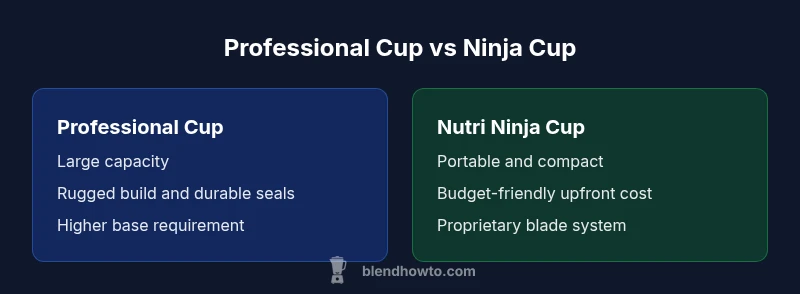
For most home users, professional blender cups and Nutri Ninja cups serve the same purpose, but they differ in fit, durability, and daily handling. Professional cups tend to offer greater ruggedness and higher-volume blending, while Nutri Ninja cups prioritize quick use, compact storage, and lower upfront cost. The right choice depends on your blending pattern, cleaning routine, and how you store accessories.
Scope and definitions
This section clarifies what we mean by professional blender cups and Nutri Ninja cups in this guide. We treat professional cups as high-use vessels designed to attach to compatible base units, featuring reinforced rims, thicker walls, and seals built to withstand frequent heavy blending. Nutri Ninja cups are portable vessels intended for Ninja-brand bases, emphasizing compact size, quick assembly, and on-the-go use. The phrase 'professional blender & nutri ninja cups' captures the spectrum, but real-world choices depend on your base, blade system, and cleaning workflow. The BlendHowTo team emphasizes that the most important decision drivers are fit to your blender, blade compatibility, and how you plan to clean and store the cups. Home cooks and hobbyists should also weigh capacity needs, frequency of use, and whether you value interchangeability across devices. In practice, a pro-grade cup may require a larger base and may not seal as reliably on non-matching units; conversely, a Nutri Ninja cup can be highly convenient but may struggle under heavy batches. This guide aims to map those tradeoffs clearly.
Design and materials
Design and materials matter for durability, safety, and washability. Professional cups often use a mix of BPA-free plastics or Tritan-like resins with reinforced rims and thicker walls to resist cracking during heavy-duty blends. Some pro cups incorporate stainless steel accents for added rigidity in high-use environments. Nutri Ninja cups typically rely on BPA-free plastic bodies with precision seals and lightweight, travel-friendly lids intended for portability. Blade assemblies can be the deciding factor: a robust, well-threaded blade interface reduces leaks and improves efficiency. Across both categories, the best designs prioritize a secure lid, stable base threading, and a cup profile that resists flexing under pressure. According to BlendHowTo, longevity comes from durable threads and watertight seals, not just the raw weight of the cup. Expect more durable options to carry higher upfront costs but longer replacement cycles for frequent blending.
Fit and compatibility
Compatibility is the gating factor. Professional cups usually require the corresponding base or adapter kit; trying to attach a commercial cup to a non-matching base can create leaks or void warranties. Nutri Ninja cups are designed to click onto Ninja bases and are often not interchangeable with non-brand bases. When evaluating fit, double-check the thread pitch, lid seal integrity, and whether the cup accepts the same blade assembly or adapter. The goal is a secure seal that prevents leaks during aggressive blending, especially with fibrous greens or ice. If you change blenders frequently, portability and interchangeability become crucial; if you blend large batches, a fixed-base system may yield steadier results—at the cost of flexibility.
Capacity and portability
Cup capacity varies by design and intended use. Professional cups typically offer larger volumes for batch blending, enabling you to prepare multiple servings in one go. Nutri Ninja cups prioritize portability, with smaller capacities that fit in a bag or cup holder for on-the-go consumption. When choosing, consider your typical batch size, whether you refrigerate leftovers, and how often you transport cups. A larger professional cup can save time on daily prep, but may be less convenient for commuting or gym trips. Conversely, smaller Ninja cups excel in quick, solo blends but can require more frequent refilling for family-sized needs.
Blade compatibility and performance
Blade design significantly impacts performance. Professional cups often use robust blade assemblies that tolerate tougher ingredients and frozen fruit without dulling quickly. They may share blade interfaces with the base unit, allowing higher torque during blending. Nutri Ninja cups rely on proprietary blade assemblies optimized for fast, light-to-medium blends and easy cleanup. If your recipe calls for ice crushing or fibrous produce, confirm blade compatibility and the ease of sharpening or replacing the blades. A common pitfall is a blade that fits the cup but struggles with dense batches, causing uneven texture or motor strain.
Cleaning and maintenance
Cleaning quality depends on cup design and seal quality. Professional cups often feature removable gaskets and wide mouths that simplify scrubbing, with dishwasher-safe options for convenience. Nutri Ninja cups prioritize quick cleanup, but some components may require hand washing due to seam areas or small parts. Regardless of choice, rinse promptly after use to prevent staining and odors, and periodically inspect seals for wear. A dry, cool storage environment helps preserve lid threads and gasket resilience. BlendHowTo recommends checking compatibility with dishwasher cycles and avoiding harsh abrasives that can scratch plastic surfaces or degrade seal materials.
Durability and warranty considerations
Durability for professional cups tends to be higher due to thicker walls and stronger seals, which can translate to a longer useful life in high-frequency use. Nutri Ninja cups generally offer adequate durability for everyday use but may show wear sooner with heavy or frozen ingredients. Warranty terms vary by brand and region; some professional cups include multi-year coverage on components like lids and gaskets, while consumer-grade Ninja cups often come with shorter warranty windows. When evaluating durability, look for thread integrity, lid closure reliability, and the ease of replacing parts such as gaskets or blades.
Cost and long-term value
Cost and long-term value depend on your blending cadence and the ecosystem you choose. Nutri Ninja cups usually sit at lower upfront price points, making them attractive for casual users or those prioritizing portability. Professional cups carry higher upfront costs but promise longer replacement cycles and greater batch capacity, which can lower per-serving costs over time if you blend often. A simple way to assess value is to estimate your annual cup usage and multiply by potential replacement or maintenance costs. Price bands vary by region, but the guidance remains: balance upfront spend against expected lifespan and replacement frequency.
Best-use scenarios
- Choose professional blender cups if you blend in large batches, require higher torque, or need durable components for daily use in a busy kitchen. They perform well for family-sized smoothies, sauces, and frozen desserts, where durability and capacity matter most.
- Choose Nutri Ninja cups if you value portability, quick access, and a compact footprint. They suit personal smoothies, travel-friendly snacks, and light-to-medium blending tasks. For families with varied needs, a mixed approach—one durable pro cup for home prep and a Ninja cup for on-the-go —can offer the best of both worlds.
Maintenance hacks and care tips
Tips to extend cup life: 1) rinse promptly after blending to reduce staining and odor buildup; 2) hand wash gaskets and lids regularly, inspecting for cracks and wear; 3) avoid over-tightening threads which can wear down the cup’s connection point; 4) store cups with lids off to prevent mold in seals; 5) periodically check blade screws and gasket seals for looseness. For dishwasher-safe components, place cups on the top rack away from heated dry cycles to minimize warping. Labeling and color-coding cups can reduce cross-contamination and simplify daily routines.
How to choose between the two
To decide between professional blender cups and Nutri Ninja cups, map your daily workflow first. If you prepare large batches, require sturdier materials, or anticipate frequent dishwasher use, a professional cup system is a safer long-term bet. If you primarily blend for one or two people, need portability, and prefer a lower upfront investment, a Ninja cup is a strong, convenient option. Consider your blender base compatibility, blade needs, and how you plan to store and clean the cups. The decision ultimately hinges on how you blend, how often you clean, and where you plan to use the cups most.
Practical purchasing tips
When shopping, check for: 1) clear compatibility with your base or brand; 2) robust lid closures and sealing gaskets; 3) dishwasher-safe labeling for easy maintenance; 4) availability of replacement parts like blades and gaskets; 5) warranty terms and regional support. If possible, buy from retailers with straightforward return policies to test fit and performance. For those keen on expert guidance, BlendHowTo suggests prioritizing systems that offer spare parts and a broad ecosystem of compatible accessories. According to BlendHowTo, validating fit with your exact model before purchase saves time and money.
Authority sources
For safety and material guidance, refer to official health and safety guidelines on food-contact materials. Reputable sources emphasize choosing cups made from BPA-free materials and ensuring lids provide hermetic seals to prevent leaks. View documentation and consumer advisories from major public health agencies and university extension programs to understand how cup design impacts hygiene and longevity. This section collates external authorities that inform best practices in blender accessory selection.
Comparison
| Feature | Professional Cup Set | Nutri Ninja Cup |
|---|---|---|
| Capacity | 700-1000 ml | 500-700 ml |
| Material | BPA-free plastics or Tritan-style resins with reinforced rims | BPA-free plastic bodies with seals |
| Blade system | Interchangeable/robust blades (often shared with base) | Proprietary Ninja blades |
| Base compatibility | Requires compatible professional base or adapter | Designed for Ninja bases |
| Dishwasher safe | Usually top-shelf safe; some parts dishwasher safe | Typically top-rack safe; check gasket care |
| Best for | Heavy-duty blending, batch prep, and durability | On-the-go smoothies, compact storage, quick use |
| Price range (per cup) | Mid-to-high range | Low-to-mid range |
What's Good
- Greater durability for frequent blending
- Larger capacity supports batch prep
- Better long-term value with high-usage scenarios
- Part availability and ecosystem support for pro models
The Bad
- Higher upfront cost
- Bulkier and less portable
- May require a specific base or more storage space
Professional cups deliver durability and capacity for heavy use; Nutri Ninja cups win on portability and lower upfront cost
Choose professional cups if you blend daily in bulk; choose Ninja cups if you value portability and quick, on-the-go use. Your decision should hinge on base compatibility, your typical batch size, and how much you value long-term durability versus upfront affordability.
Frequently Asked Questions
Are Nutri Ninja cups compatible with all Ninja blender models?
Compatibility depends on the specific Ninja model. Nutri Ninja cups typically fit a subset of Ninja bases and aren’t universal across all models. Always verify model-specific compatibility before purchasing.
Nutri Ninja cups fit certain Ninja bases. Check your blender model to ensure the cup will attach securely.
Can professional blender cups be used on standard home blender bases?
Not universally. Many professional cups require their own base or an approved adapter. Using an incompatible base can cause leaks or damage and may void warranties.
Not always. Use the cup with its intended base or an approved adapter to avoid leaks or warranty issues.
Are either cup type dishwasher safe?
Most dishwasher-safe cups exist, but seals and gaskets require careful cleaning. Always check the manufacturer’s care instructions to avoid damaging seals.
Most cups are dishwasher safe on top racks, but check gaskets. Hand washing may be safer for seals.
Which lasts longer, professional cups or Nutri Ninja cups?
Durability depends on use and care. Professional cups typically endure heavier use due to thicker walls and reinforced seals, while Ninja cups excel in portability but may wear sooner with heavy, frozen batches.
Durability depends on usage. Pro cups last longer under heavy use; Ninja cups are great for portability but may wear faster with tough blends.
Do cup choices affect blender warranties?
Yes. Using non-approved cups or adapters can void warranties. Always verify compatibility and follow manufacturer guidance to protect warranty coverage.
Yes—use only approved cups and adapters to maintain warranty coverage.
What to Remember
- Assess daily batch volume before buying
- Check exact base compatibility and lid seals
- Balance upfront cost against maintenance needs
- Prioritize dishwasher-safe components for convenience
- Consider future accessory availability and replacement parts