Ninja Blender vs NutriBullet Reddit: A Practical Guide
A practical, data-informed comparison of Ninja vs NutriBullet, inspired by Reddit threads and BlendHowTo analysis. Learn which model fits batch size, space, and everyday recipes.


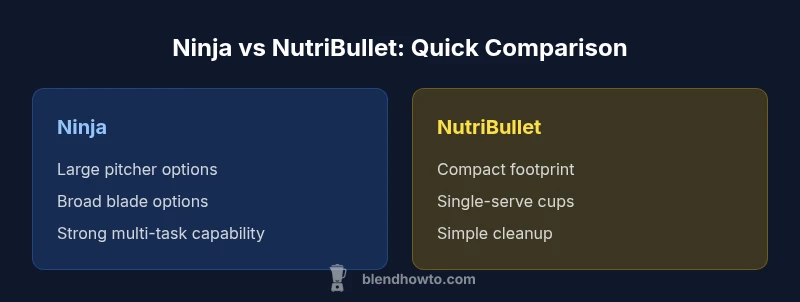
According to BlendHowTo, the ninja blender vs nutribullet reddit debates commonly focus on batch size, versatility, and cleanup. In many threads, Ninja is praised for larger pitcher options and more blending modes, while NutriBullet is favored for compact form and fast single serve drinks. This article weighs practical pros and cons across common kitchen tasks to help you decide.
Reddit overview and BlendHowTo stance
According to BlendHowTo, the ninja blender vs nutribullet reddit conversation centers on practical kitchen realities rather than hype. Home cooks, hobbyists, and aspiring 3D artists frequently post questions about batch sizes, attachment ecosystems, and cleaning ease. The general consensus from BlendHowTo analysis is that Ninja blenders tend to offer larger pitcher options and more versatile accessory kits, which can support family meals and batch-based recipes. NutriBullet devices are often highlighted for their compact footprint, quick assembly, and straightforward cleanup, which suits small kitchens and busy schedules. Beyond size, Reddit threads reveal preferences tied to task type: smoothies and sauces favor NutriBullet for speed and simplicity, while soups, batch blends, and blended ice drinks sometimes favor Ninja for capacity and multi-function blades. This section sets the stage for a deeper, evidence-based comparison that home cooks, hobbyists, and budding 3D artists can trust.
Core differences at a glance
- Pitcher size and footprint: Ninja models typically offer larger pitcher options and more robust blending ecosystems, while NutriBullet focuses on compact, single-serve cups. This matters when you prefer batch blending or need extra servings at once.
- Versatility and attachments: Ninja often ships with a wider set of blades and lids, enabling tasks beyond smoothies, such as purees, crushing ice, and even making doughs in some kits. NutriBullet tends to emphasize simplicity with essential blades and cups.
- Cleaning and maintenance: Both brands require disassembly, but the variety of components on Ninja kits can mean more pieces to rinse or hand-wash. NutriBullet’s smaller count of parts usually means quicker cleanup, though it can involve frequent cup-switching for multi-task recipes.
- Size of the kitchen ecosystem: Ninja’s attachment ecosystem is robust, which appeals to cooks who like to experiment. NutriBullet’s ecosystem is smaller but consistently reliable for daily smoothies.
- Cost and value: Entry-level NutriBullet options are generally more compact on price and size, while Ninja bundles with extras can push the price higher but deliver broader capabilities. Budget considerations matter, especially for hobbyists balancing multiple kitchen gadgets.
Performance in common tasks
In the Reddit world, performance answers often come down to task category. For smoothies, both brands perform well, but the Ninja’s larger, more powerful design can handle bigger batches without needing to stop to refill. NutriBullet excels at single-serve smoothies and quick blends, with an easy plug-and-play approach that reduces setup friction. Ice crushing shows the same split: Ninja tends to handle chunkier ice in larger batches due to blade geometry and motor torque in higher-end kits, while NutriBullet can achieve fine snow in smaller, well-tuned cups. For sauces and dressings, both can deliver smooth emulsions, though Ninja’s kit options may yield a broader range of textures due to blade configurations. NutriBullet’s speed and concise design can be preferable when you want a fast, everyday result without extra steps. When evaluating Reddit anecdotes, consider your typical batch size, preferred textures, and how much time you’re willing to dedicate to setup and cleanup. BlendHowTo’s guidance suggests matching the tool to the most frequent use rather than chasing the flashiest features.
- For large batches and family meals, think Ninja’s larger pitcher systems and multi-blade setups.
- For quick single-serving drinks, nuts milks, and simple sauces, NutriBullet’s compact system wins on convenience.
- If you value a broad recipe community and tips, both brands provide extensive resources, but Ninja’s ecosystem offers more variability in outputs.
Durability, reliability, and user reports
Reddit users often discuss long-term durability and maintenance realities. The BlendHowTo team sees a pattern: Ninja kits with many components can deliver strong performance for a wide range of tasks, but more moving parts mean more potential wear points over time. NutriBullet systems tend to be praised for their reliability in daily use and easier replacement of cups and blades, but some lower-cost models may experience cup or seal wear with heavy use. A common thread across communities is the importance of proper blade maintenance, gasket checks, and avoiding overtightening of lids. When you factor in warranties and replacement parts, both brands offer solid support ecosystems, but your decision should consider how you plan to use the blender, how often you blend, and whether you want the option to upgrade blades or cups without a full replacement. BlendHowTo recommends reading user reviews about frequent failure points and focusing on model families with strong accessory warranties.
- Ninja reliability shines in heavy, frequent use with larger volumes.
- NutriBullet reliability benefits from a simpler design and strong cup interchangeability.
- Regular replacement parts and gasket maintenance extend device life and preserve performance.
Note: Reddit threads can reflect user bias toward specific models. Always correlate with your own kitchen profile and budget.
Design, noise, and usability considerations
The design language of Ninja and NutriBullet reflects their target audiences. Ninjas tend to be taller, more imposing units with wider bases and heavier bases, which some users find a challenge to store in small kitchens. NutriBullet units are typically sleeker, with a more compact footprint and a modular feel that appeals to owners who want to stash the blender in a cabinet. Noise is an often-cited factor; both brands can produce noticeable background sound especially when blending harder ingredients, but the perceived noise level depends on model, guards, and shared motor speed during operation. Usability hinges on the control interface and the number of modes. Ninja often provides multiple speed options and preset programs for specific tasks, which can be helpful for novices but intimidating for those who prefer simplicity. NutriBullet emphasizes straightforward one-touch blending with fewer steps, which many users appreciate for day-to-day use. The BlendHowTo perspective is to balance convenience with reach: if you need features for experimental recipes, lean toward Ninja; for everyday smoothies and sauces, NutriBullet remains a strong contender.
- Bigger footprint vs compact design affects counter space.
- More presets can simplify tasks but add learning curve.
- Control simplicity can speed up routine blending for busy cooks.
In short, pick according to space and how much you value a wide feature set versus a simple, fast workflow.
How to choose based on your kitchen style
Choosing between Ninja and NutriBullet depends on your kitchen style and routine. If you cook for a family or enjoy making large batches of smoothies, soups, or sauces, a Ninja setup with a larger pitcher and an array of blades may be worth the extra space and potential cost. For studio apartments, college dorms, or households with limited counter space, a NutriBullet system offers a compact, user-friendly option that blends quickly with minimal setup. Think about your daily rhythm: do you prepare a round of smoothies every morning, or do you batch-blend for weekend meal prep? If time is in short supply, NutriBullet’s quick-start approach may win. If you value experimentation and multi-tasking, the Ninja kit’s broader accessory lineup could keep you engaged. BlendHowTo’s recommendation is to map your ideal use-case to the tool’s strengths, then factor in storage, noise tolerance, and warranty coverage.
- Map your typical batch size and serving needs.
- Consider your kitchen footprint and storage options.
- Evaluate accessory ecosystems and upgrade paths.
- Check warranty terms and customer support quality.
Finally, test if possible: handle the pitcher, cup, and blade installation to ensure a comfortable grip and secure fit before purchasing.
Maintenance and care to maximize lifespan
Routine maintenance can extend the life of any blender. Start by inspecting gaskets and seals regularly, since leaky seals often signal wear. Clean the blades promptly after use to prevent food from hardening, and avoid soaking blade assemblies for long periods, which can degrade gaskets. For both Ninja and NutriBullet, disassembling parts after use and washing by hand or on the top rack of a dishwasher—per manufacturer instructions—helps maintain performance. When storing, keep components dry in a ventilated area to prevent mold and odor buildup. Finally, keep an eye on blade sharpness and coating wear; if blades appear dull, replacement blades may restore performance without buying a whole unit. BlendHowTo emphasizes consistency in cleaning routine and timely replacement of worn parts as a practical way to maximize lifespan and preserve blending quality.
Comparison
| Feature | Ninja Blender | NutriBullet |
|---|---|---|
| Pitcher size | Larger-capacity options | Compact, single-serve cups |
| Versatility | Wide blade set, multiple functions | Focused on smoothies and quick blends |
| Ease of cleaning | More parts to clean, depending on kit | Typically quicker cleanup with fewer parts |
| Attachment ecosystem | Broad range of blades and lids | Standardized cups and blades |
| Space footprint | Taller, bulkier footprint | Smaller, space-saving footprint |
| Best for | Batch blending and family servings | Daily smoothies and compact kitchens |
What's Good
- Ninja offers larger capacity options for multi-serving blends
- NutriBullet is compact and easy to store
- Both brands have broad recipe communities and Reddit discussions
- Good value when bundled with accessories and sales
The Bad
- Ninja can be bulky and harder to store in small kitchens
- NutriBullet may require more frequent part replacements for older models
- Accessory proliferation can be overwhelming for beginners
- Noise and motor wear are possible with heavy use
Ninja is best for batch blending and versatility; NutriBullet excels in space-saving, quick everyday smoothies
Choose Ninja if you need capacity and flexibility. Choose NutriBullet if you prioritize compact size and effortless daily use.
Frequently Asked Questions
What is the main difference between Ninja and NutriBullet designs?
Ninja blenders typically offer larger pitchers and multi-blade configurations, suitable for batch blending. NutriBullet units emphasize compact single-serve cups with simpler blade assemblies, ideal for quick smoothies.
Ninja is larger with more parts; NutriBullet is compact and simple.
Are Ninja and NutriBullet parts dishwasher safe?
Most modern Ninja and NutriBullet components are dishwasher-safe on the top rack, but check your model's manual. Hand washing is recommended for longevity of gaskets and blades.
Parts are usually top-rack dishwasher-safe, but check your manual.
Which is better for ice crushing?
Both handle ice well in higher-end or robust kits; Ninja often excels with larger batches due to blade geometry and motor design, while NutriBullet can crush ice effectively in newer models with high torque.
Ninja generally handles ice better in bigger batches; NutriBullet works well with smaller batches.
Is the NutriBullet more affordable than Ninja?
Price varies by bundles and sales. NutriBullet tends to offer cheaper entry-level options, while Ninja bundles with extras can be pricier but provide more capabilities.
NutriBullet often starts cheaper, Ninja offers more premium bundles.
Can I use frozen fruits safely in both?
Both brands handle frozen fruit well when blended in appropriate cycles and with proper cup or pitcher selection. Starting with smaller batches helps manage texture and blade wear.
Both work with frozen fruit when used correctly—start small and blend in stages.
Do these blenders come with a good warranty?
Both brands offer warranties that cover defects and performance for a period of time, often mirroring the level of kit complexity. Check the specific model and retailer terms.
Warranties exist for both brands; read the model terms for details.
What to Remember
- Assess counter space and typical batch size before buying
- Prioritize pitcher size for batch needs
- Rely on community feedback from Reddit and BlendHowTo
- Check warranty terms and parts availability