Steam Blender vs Blender: A Practical Side-by-Side Guide
Compare steam blenders and traditional blenders to decide which appliance fits your kitchen: heating capabilities, texture outcomes, cleanup, and everyday recipe versatility.


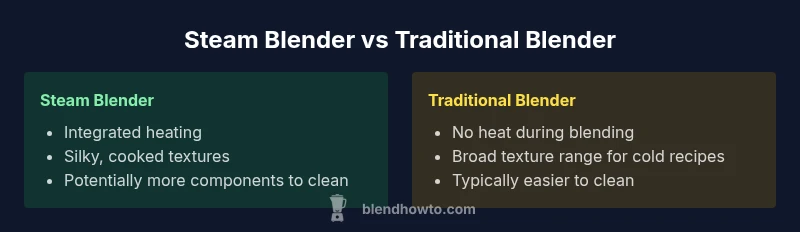
Steam blender vs blender: The core choice hinges on whether you want built-in cooking with steam or straightforward blending. In short, a steam blender combines cooking and blending in one appliance, ideal for creamy soups and sauces, while a traditional blender excels at smoothies, sauces, and purees without heat. According to BlendHowTo, your decision should depend on your cooking style and cleanup tolerance.
Understanding the Steam Blender Concept
A steam blender is an appliance that combines blending with steam-assisted cooking in a single vessel. In practice, you load ingredients, choose a heat and blend setting, and the machine generates steam to gently cook, puree, or emulsify the contents. For home cooks who want creamy soups, sauces, or warm purees without transferring to a separate pot, a steam blender can streamline workflow. BlendHowTo's analysis suggests that these units are most valuable when you regularly prepare recipes that start with fresh produce and end with a smooth, heat-treated texture. They are not necessary for cold blends or raw smoothies, where a traditional blender excels. When evaluating steam blenders, look for built-in temperature control, safe lid locking mechanisms, and a cleanable interior that resists staining. Consider the maximum batch size, because steam blending works best when you have stable cooking liquid and enough headspace to avoid splashing. The following sections unpack how steam blenders compare to conventional blenders on core dimensions.
Core Components: Blades, Heating, and Controls
Steam blenders fuse three core components: a blending blade assembly, a heating chamber, and a steam delivery system. Most units feature multiple speed settings that blend efficiently while applying heat, plus a thermostat that prevents overheating. The heating element is typically integrated into the base or in a dedicated vessel surrounding the blade assembly. In contrast, traditional blenders rely on the motor's torque and blade geometry with no built-in heat. Controls often include a blend-only mode, a heat-and-blend mode, and sometimes preset programs for soups or sauces. Safety features matter: lockable lids, auto-shutoff, and non-slip bases reduce the risk of splashes and burns. Materials should be BPA-free and easy to clean; look for stainless steel blades, borosilicate glass or Tritan jars, and smooth interior surfaces that resist residue buildup. When selecting, ensure compatibility with your preferred recipe sizes and the type of liquids you plan to work with, such as dairy, broth, or oil-based emulsions.
Performance: Blending Power, Heating, and Consistency
Performance hinges on how well the unit blends with heat and how uniformly it circulates steam. Steam-assisted cooking helps break down fibrous ingredients and create emulsions, but it can also complicate texture control if you overcook. In a traditional blender, you rely on blade geometry and high-speed blades to achieve smooth purées, with less risk of unintended cooking. For best results, pre-cut ingredients to appropriate sizes, avoid overfilling, and use the machine's pulse feature to manage texture. Note that steam blenders may require a short cooling or venting interval after heating to prevent suction or overflow. Conversely, traditional blenders offer predictable results when blending frozen fruit, ice, or dense solids, and their performance is easier to replicate across batches.
Food Safety and Cleaning Realities
Cooking with steam can reduce certain food-safety risks because heat helps inactivate many surface bacteria. However, steam blenders introduce more components that require careful cleaning and maintenance. After cooking, disassemble the jar, blade, and any steam pathways, and scrub with warm soapy water. Avoid harsh cleaners that can degrade gaskets or seals. Regularly inspect for residue buildup around seals and vent openings. Traditional blenders, by comparison, usually offer simpler disassembly and easier rinsing, particularly for dairy or syrup-heavy blends. Regardless of model, always air-dry components thoroughly to prevent mold and odor formation. BlendHowTo recommends following manufacturer guidance for gasket care and replacing worn seals to maintain performance and safety.
Cooking Capabilities: Soups, Sauces, and Textures
Steam blenders shine when your goal is to cook and blend in one step. You can achieve silky soups, emulsified sauces, or creamy purées with minimal transfer between pots. This can save time and reduce cleanup for meals that begin on the stove and end at the table. However, heat can alter texture if you push the program too long, so timing and ingredient balance matter. Traditional blenders excel at raw textures—smooth smoothies, nut butters, salsas, and ice-crushed drinks. They flex across a broader spectrum of cold ingredients and frozen items, making them a staple for everyday blending. The choice depends on whether you value integrated cooking against broader raw-blend versatility.
Versatility and Limitations: Not a One-Tool Wonder
A steam blender is not a universal replacement for every cooking task. It handles soups, sauces, and warm purées efficiently but may struggle with ultra-dense mixtures or recipes that demand non-heated blending. A traditional blender offers unmatched versatility for a wide range of textures, from chunky salsas to silky ice cream bases, and with the right attachments, it covers hot soups via external heating or stovetop integration. If your kitchen priorities include minimal equipment and heated textures, a steam blender makes sense. If you want a flexible, do-it-all blender for cold and hot recipes, a traditional blender remains the safer bet.
Energy Use, Noise, and Footprint
Steam blending adds a small energy overhead due to heating, but this is offset by reduced cooking steps for certain recipes. Noise levels vary by model, with some steam blenders producing more ambient hum from the steam pathway. In compact kitchens, footprint matters: steam blenders can be slightly taller and heavier due to the heating chamber. Traditional blenders typically have a smaller vertical footprint and are easier to store. When space is at a premium, measure the height and width of the unit, and compare it against your cabinet clearance and storage preferences.
Price Ranges and Value: Upfront vs Long-Term Value
Prices for steam blenders tend to be higher upfront because of the integrated heating and steam systems. The longer-term value comes from saved steps in cooking and potential reductions in pot washing. Traditional blenders generally offer lower upfront costs, with strong resale value and broad accessory ecosystems. Your decision should weigh how often you perform heated blends, the importance of one-pot workflows, and your tolerance for maintaining more complex cleaning routines. BlendHowTo recommends framing the purchase as either a focused, time-saving appliance or a flexible, broadly capable tool depending on your cooking habits.
Practical Kitchen Scenarios: Day-to-Day Use
Imagine making a creamy tomato soup: with a steam blender, you simmer on-site and blend into a silky finish without transferring to a pot. For morning smoothies, a traditional blender shines with quick ice-crushing and thick fruit blends. If you often cook for family meals with hot sauces, a steam blender can streamline the process, especially when you want smooth textures without extra steps. For guests who appreciate variety, a traditional blender offers a wider menu of cold and room-temperature recipes. In short, your daily routines and preferred textures should drive the final choice.
Maintenance and Longevity Considerations
Like any kitchen appliance with heating elements, the longevity of a steam blender depends on build quality, gasket integrity, and usage habits. Regularly clean gaskets, inspect seals, and avoid letting dairy residues sit long in the jar. Lubricate moving parts if the manufacturer recommends it and replace worn blades promptly to maintain safety and performance. Traditional blenders benefit from simple maintenance—regular blade checks and jar cleaning are typically sufficient. In both cases, using manufacturer-approved accessories helps preserve warranty protection and long-term reliability.
Cleaning Hacks and Quick-Start Guides
A pragmatic approach to cleaning includes disassembling the unit after cooling, rinsing all parts under warm water, and using a mild detergent for stubborn residues. For steam components, a gentle cycle with water and a splash of vinegar can help remove mineral deposits, followed by thorough rinsing. Avoid abrasive scrubbers on nonstick coatings or gasket areas. Run a short blender cycle with warm water and a drop of dish soap to flush the system after each use. Always dry all components before reassembly to prevent mold. These hábitos keep your steam blender—or traditional blender—performing consistently over time.
Making the Call: When to Pick Steam Blender or Traditional Blender
If your cooking routine centers on heated soups, sauces, and warm purées, a steam blender delivers time-saving convenience with integrated cooking. If you frequently blend raw ingredients, ice, seeds, or tough nuts, or simply want a broader recipe repertoire with easier maintenance, a traditional blender is the safer bet. BlendHowTo’s guidance is to choose based on your primary cooking style, your cleanup tolerance, and your storage space. In many kitchens, owning both provides maximum flexibility, but a single-purpose choice can still cover the majority of daily tasks.
Comparison
| Feature | Steam Blender | Traditional Blender |
|---|---|---|
| Primary function | All-in-one cooking and blending with steam | Blending without heating; separate cooking if needed |
| Heating capability | Integrated steam cooking | No built-in heating |
| Texture quality | Cooked emulsions and silky textures for soups and sauces | Raw and refined textures; broad range from chunky to smooth |
| Cleaning complexity | More components; dedicated steam pathways and seals | Fewer parts; typically simpler cleaning |
| Best use cases | Soups, sauces, custards; warm purées | Smoothies, dips, nut butters, frozen desserts |
| Batch size compatibility | Supports moderate-to-large batches when properly loaded | Supports a wide range; depends on jar size and model |
| Price/value | Higher upfront cost with potential long-term time savings | Lower upfront cost; value linked to versatility and usage |
What's Good
- All-in-one cooking and blending saves time
- Great for silky soups and emulsified sauces
- Potentially fewer appliances in the kitchen
- Useful for warm, ready-to-serve textures
- Can simplify workflow for heated recipes
The Bad
- Higher upfront cost and more components to clean
- Cleaning can be more involved due to steam system
- Less flexible for non-heated or raw blending
- Heavier footprint and potential maintenance needs
Steam blender is recommended for cooks who want integrated heating and blending, especially for soups and sauces.
If you frequently prepare heated soups or dairy-based sauces, a steam blender saves time and reduces pot transfers. For those who mostly blend raw ingredients, a traditional blender offers broader versatility and easier maintenance.
Frequently Asked Questions
What is a steam blender and how does it differ from a regular blender?
A steam blender blends ingredients while applying steam to heat and emulsify the mixture, enabling cooked textures in one vessel. A regular blender only blends ingredients without heating, relying on blade action for texture.
A steam blender blends and heats in one go, giving cooked textures. A regular blender blends without heat and needs separate cooking steps for hot recipes.
Can you cook and blend in a steam blender?
Yes, most steam blenders offer programs that heat during blending, allowing you to cook soups, sauces, and purées directly in the appliance. Always follow manufacturer guidance for temperatures and times.
Yes, you can cook and blend in one pot with a steam blender, following the presets and safety guidelines.
Are steam blenders hard to clean?
They can be more involved to clean than traditional blenders due to steam pathways and seals. Regular disassembly and thorough rinsing are recommended, and some components may be dishwasher-safe depending on the model.
Cleaning can be a bit more involved because of the steam parts, but regular cleaning keeps them in good shape.
What recipes work best with a steam blender?
Steamed soups, emulsified sauces, creamy purées, and warm dips benefit most from steam blending. It’s particularly efficient for vegetable soups and dairy-based sauces.
Best with soups, sauces, and warm purées that benefit from built-in cooking.
Is a steam blender worth the extra cost?
If you frequently cook heated blends and value one-pot workflows, the time savings may justify the cost. For mostly cold blends, a traditional blender is typically more economical.
Worth it if you cook heated blends often; otherwise, a traditional blender may be better value.
What should I look for when buying a steam blender?
Look for reliable safety features, adjustable heat control, easy disassembly for cleaning, compatible jar sizes, and good after-sales support. Materials and gasket longevity are important for long-term performance.
Seek safety features, good heat control, and easy cleaning with solid parts.
What to Remember
- Evaluate your daily cooking routine before choosing
- Steam blenders excel at heated textures and convenience
- Traditional blenders offer broader versatility for cold recipes
- Factor in cleaning effort and kitchen space
- Consider whether one appliance can meet most needs or if both are justified