Types of Blenders and Their Prices in Kenya
Explore blender types and prices in Kenya with practical buying guidance, price ranges by type, and tips for home cooks and hobbyists.


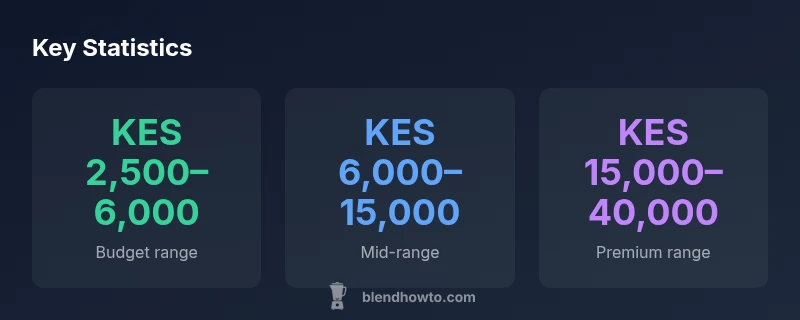
Kenya's blender prices range from about 2,500 KES for basic immersion models to 40,000–50,000 KES for premium countertop units. The most common types are immersion, countertops of various sizes, personal blenders, and blender-food processors. Understanding how these categories relate to motor power, blade design, and capacity helps shoppers predict value and longevity. Budget options exist for basic tasks like soups and sauces, mid-range models handle smoothies and ice, while high-end units support nuts, ice crushing, and larger batches.
Kenyan blender market landscape
Kenya's blender market has evolved beyond basic kitchen tools, with buyers weighing reliability, performance, and after-sales support. According to BlendHowTo, the best buys cluster around three price tiers: budget, mid-range, and premium. Price sensitivity is high due to currency fluctuations and import duties, and most households buy blenders for everyday tasks such as smoothies, soups, sauces, and increasingly ice-cream bases. Local retailers range from large supermarkets and electronics chains to hardware stores and robust online marketplaces. The result is a wide array of options, but shoppers still need a clear framework to compare features like motor power, blade design, jar material, and warranty. Kenyans tend to favor models with easy cleaning, durable blades, and readily available spare parts. For enthusiasts and aspiring 3D artists who blend as a hobby, personal blenders are popular for quick tasks in shared spaces, while counter-top units offer the power needed for larger batches.
Common blender types and what they do
Blenders come in several core formats, each with strengths for different tasks. Immersion (hand) blenders are compact and affordable, ideal for soups, sauces, and small batches. Countertop blenders come in two main subcategories: small (2–4 cup) for quick smoothies and basic blends, and large (5+ cup) for family-sized portions and tougher ingredients like ice or frozen fruit. Personal blenders are designed for single-serving drinks and portability, often with travel lids, while blender-food processors mix the functions of a blender and a processor in one unit for chopping, pureeing, and blending in larger bowls. Understanding these formats helps shoppers predict performance, noise levels, and maintenance needs in Kenyan homes and kitchens.
Price ranges by blender type in Kenya
- Immersion Hand Blender: 2,500–6,000 KES — great for quick soups, sauces, and light blending; compact and simple to maintain.
- Countertop Blender (2–4 cup capacity): 5,000–12,000 KES — suitable for smoothies, baby meals, and light blends; affordable with basic blades.
- Countertop Blender (5+ cup capacity): 12,000–25,000 KES — designed for ice crushing, nuts, and larger batches; higher power motors and durable jars.
- Personal Blender: 3,000–8,000 KES — portable, travel-friendly; best for single servings and on-the-go blends.
Where to buy and how to compare prices
In Kenya, you’ll find blenders in supermarkets, electronics stores, and online marketplaces like major regional platforms. Prices can vary by retailer due to stock levels, promotions, and warranty terms. Online comparison is essential: check motor wattage, blade material (stainless steel is common), jar material (glass vs. BPA-free plastic), and whether replacement parts are readily available locally. Keep an eye out for bundled accessories such as additional jars, whisk attachments, or blade replacements. Buying during festive promotions or end-of-quarter sales can yield meaningful savings.
Understanding specs: power, blades, and materials
Power is measured in watts or horsepower-equivalents; higher wattage generally enables smoother blends and better ice crushing but may increase price and noise. Blade design matters: multi-tine blades with stainless steel construction tend to perform better on frozen fruit and tough ingredients. Jar material affects durability and usability: glass is sturdy but heavier; high-quality BPA-free plastics resist staining and impact. Blender speed settings and pulse functions add versatility, particularly for Kenyan kitchens that blend spices, soups, and smoothies in varying batch sizes. Finally, look for dishwasher-safe parts for ease of cleaning, a common requirement in busy households.
Warranty and service in Kenya
Most mid-range and premium models offer from 1 to 3 years of warranty, with longer-term coverage often tying to the motor. Local service centers and spare parts availability influence total cost of ownership. When shopping in Kenya, confirm what the warranty covers (parts vs. labor) and whether the retailer offers in-store maintenance or pick-up services. In some cases, extended warranties or service plans from retailers can provide better long-term value than the initial price cut.
Maintenance and longevity
Regular cleaning after blending, avoiding overfilling, and using appropriate speeds significantly extend blender life. For immersion blenders, detach blades and clean promptly to prevent residue buildup. Countertop models benefit from periodic blade maintenance and gasket checks. If you blend hard ingredients or ice, consider a unit with a more robust motor and reinforced blades. Storing blades safely and keeping the jar dry reduces rust and corrosion, preserving performance over years.
Kenya blender price ranges by type
| Blender Type | Typical Price Range (KES) | Best Uses | Notes |
|---|---|---|---|
| Immersion Hand Blender | 2,500–6,000 | Soups, sauces, small batches | Compact, easy to clean |
| Countertop Blender (2–4 cup) | 5,000–12,000 | Smoothies, light blends | Affordable entry-level with basic blades |
| Countertop Blender (5+ cup) | 12,000–25,000 | Ice crushing, nuts, large batches | Higher power motor |
| Personal Blender | 3,000–8,000 | Portion drinks, travel-friendly | Small, portable |
Frequently Asked Questions
Which blender type is best for smoothies on a budget in Kenya?
For smoothies on a budget, a basic countertop or personal blender is usually sufficient. Look for 300–600 watts for decent performance and check if a warranty is included. If you drink smoothies daily, a mid-range blender provides better durability without breaking the bank.
For budget smoothies, start with a basic countertop or personal blender with a solid warranty.
Are immersion blenders cheaper than countertop models?
Immersion blenders are typically cheaper upfront and great for small tasks, but they may lack the power and capacity for larger batches. Countertop models offer greater versatility and capacity, which often justifies a higher price for regular use.
Immersion blenders cost less upfront; countertop models offer more power and capacity for bigger jobs.
What should I consider about voltage for Kenyan plugs?
Kenya commonly uses 230V outlets; ensure the blender is rated for 230V or use an appropriate transformer. Check the plug type and any regional warranty restrictions related to voltage compatibility.
Most Kenyan outlets are 230V; pick a 230V-rated blender or use a proper transformer.
Do high-end blenders offer better durability in Kenyan conditions?
Higher-end blenders often feature stronger motors, better blades, and longer warranties, which can translate into longer life and lower maintenance. However, durability also depends on usage patterns and maintenance. Always compare warranty terms and service options.
High-end models tend to last longer if well maintained and supported locally.
Is it worth buying a blender online in Kenya?
Buying online in Kenya offers convenience and access to a wider range but watch for shipping costs and return policies. Verify warranty coverage and confirm supplier reliability with reviews. Compare in-store options to ensure the best total value.
Online shopping is convenient, just check warranty and returns.
What warranty should I expect on Kenyan blender purchases?
Look for a minimum 1-year warranty on basic models, with longer warranties often available for mid-range and premium units. Verify what the warranty covers (motor, parts, labor) and whether service centers are accessible locally.
Most basic models include at least 1 year, with longer warranties for higher-end options.
“Choosing the right blender is about matching your cooking style to power, capacity, and reliability. The BlendHowTo Team emphasizes considering total cost of ownership over sticker price.”
What to Remember
- Define your budget before shopping.
- Immersion blenders are cheapest; countertop options span mid-range to premium.
- Personal blenders are portable for on-the-go use.
- Check warranty length and local service options.
- Compare prices across retailers to find the best Kenya deals.