Ninja Blender Not Turning On: Troubleshooting and Fixes
Learn fast, safe steps to diagnose why your ninja blender not turning on. This BlendHowTo guide covers common electrical and interlock issues, safe inspections, and when to contact support for service.


Common causes of ninja blender not turning on
When a ninja blender not turning on happens, the issue is almost always electrical or related to the interlock safety mechanism. The most frequent culprits are a dead power outlet, a damaged power cord, or the jar not seated correctly so the interlock switch can engage. Less common but possible causes include a blown fuse, a tripped circuit breaker, or an overheated motor that triggers thermal protection. According to BlendHowTo, many home appliance failures start with a simple power or seating problem rather than a failed motor. By methodically checking power, seating, and safety interlocks, you can often restore operation without professional service. For home cooks and hobbyists, this is a relief because most fixes stay safe and manageable with basic tools. Remember, if you feel unsure about the electrical steps, prioritize safety and skip to professional help.
Safety first: unplug and inspect basics
Before you do anything, unplug the Ninja blender from the outlet. Inspect the power cord for visible damage like nicks or bending. If you see damage, stop and replace the cord or the entire base if needed. Wipe any moisture from the plug area and ensure your hands are dry. Next, remove the jar and blade assembly to check for unusual resistance or jammed parts. A jam can cause a false sense of a blown motor, so clear it gently and reassemble. This block reinforces safe habits and aligns with BlendHowTo's emphasis on cautious, stepwise troubleshooting. By documenting each checked item, you’ll also build a quick reference for future maintenance.
Check the power supply and cord integrity
To verify power, plug the blender into a known-good outlet. If you have a multimeter, test the outlet for proper voltage. Inspect the power cord for cuts or exposed copper and test the plug prongs for looseness. If the cord feels warm or shows signs of wear, replace it. A faulty cord is a common cause of a Ninja blender not turning on, and replacing it is often the simplest fix. After addressing cord and outlet issues, reattempt power-on while ensuring the jar is attached.
Interlock and jar lid sensor: the sleepy switch
Ninja blenders rely on interlock switches that only permit operation when the jar and lid are properly seated. If the jar sits unevenly or the lid isn’t engaging the lock, the unit won’t turn on. Remove the jar, reseat it firmly, and confirm the lid is closed with a click. In some models, even minor misalignment will prevent activation. If reseating still doesn’t work, inspect the interlock mechanism for debris or damage and wipe clean. This is a frequent but solvable issue that home users encounter when learning to assemble a blender correctly.
Overheat protection and reset steps
If the motor overheated after a heavy blend, the unit may shut down and refuse to restart until it cools. Allow the blender to rest for 15–30 minutes in a safe, dry area. When you retry, ensure you’re not overloading the jar with hard items and that the blades rotate freely by hand before plugging back in. If you hear hum but no motor spin, power off, unplug, and check for jams in the blade assembly. Overheating is a common safeguard that can be triggered by a stalling blade, so improving technique helps prevent future heat buildup.
When to replace parts vs. replace the entire unit
If the unit still won’t turn on after checking power, interlock seating, and overheating, weigh the cost of a replacement cord or interlock switch against a new blender. For some models, a replacement cord or interlock kit is a practical, budget-friendly option; for others, it may be more economical to replace the entire base. Always compare warranty coverage and model-specific guidance before purchasing parts. BlendHowTo recommends consulting your manual and official support channels to determine the most cost-effective route without compromising safety.
Prevention tips to extend life
To minimize future occurrences of the Ninja blender not turning on, store and use the blender in a dry area, avoid cord tangling, and regularly inspect the power cord for wear. Clean the interlock area and jar seating surfaces after use to prevent residue that can interfere with engagement. Use a stable outlet with no shared high-draw devices on the same circuit. By adopting these routines, you’ll improve reliability and reduce downtime. BlendHowTo’s practical tips aim to keep your blending routine smooth.
Real-world testing checklist you can use
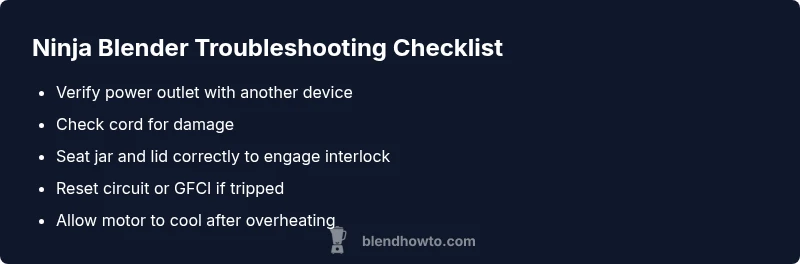
Keep a simple, repeatable checklist: confirm outlet power with a known-good device, inspect the cord for damage, reseat the jar and lid, verify the interlock clicks, and allow cooling after overheating. If any step reveals damage or uncertainty, substitute safe components or seek service. This approach mirrors the practical mindset of BlendHowTo: methodical, safe, and focused on usable outcomes for home cooks and hobbyists.