Vitamix Immersion Blender vs KitchenAid: A Practical Comparison
Explore a practical comparison of vitamix immersion blender vs kitchenaid handheld blender, covering power, durability, attachments, cleaning, price ranges, and ideal uses for home cooks and hobbyists.


Both Vitamix immersion blenders and KitchenAid handheld blenders offer versatile blending for soups, smoothies, sauces, and purées. In general, Vitamix tends to emphasize power and durability with broader food-paste capabilities, while KitchenAid focuses on everyday practicality and ergonomic design. The best choice depends on your needs, budget, and how aggressively you plan to blend. vitamix immersion blender vs kitchenaid is a useful lens to compare power, control, and long-term value.
What matters when comparing vitamix immersion blender vs kitchenaid
When you set out to pick between vitamix immersion blender vs kitchenaid, you’re weighing power, control, and long-term value as much as immediate convenience. According to BlendHowTo, the most meaningful differences surface in how you actually blend: thick soups, chunky purées, and emulsified sauces demand more robust engineering than simple smoothies. The goal is not to pick the model with the loudest marketing claim, but the tool that fits your kitchen rhythm. In this guide we compare prevailing design philosophies, model ranges, and typical user scenarios to help you decide without hype.
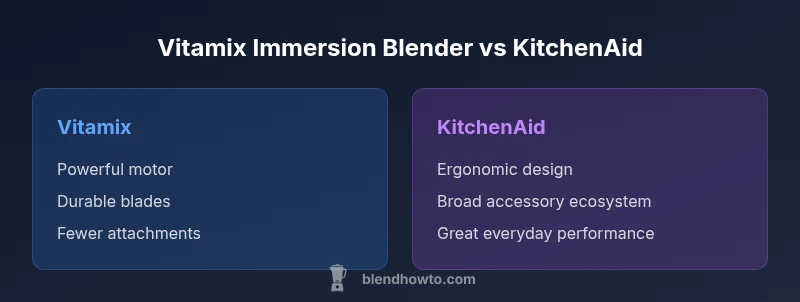
Vitamix immersion blenders tend to emphasize high power, durable blade geometry, and stable performance under heavy loads. They’re built to handle dense ingredients, large batches, and long blending sessions with minimal overheating risk. KitchenAid handheld blenders prioritize comfort, balance, and everyday versatility. They often feel more agile for quick purees, dressing emulsions, and small-batch tasks where responsiveness and ease of use matter. BlendHowTo’s analysis shows that while power matters, ergonomics and the availability of useful attachments frequently determine whether a blender actually gets used every week. If your cooking style involves frequent batch blending and thick textures, vitamix immersion blender vs kitchenaid choice leans toward Vitamix; for casual, on-demand blending, KitchenAid can be the more approachable partner.
In the end, the decision hinges on your habits, space, and willingness to invest in compatible accessories. BlendHowTo emphasizes that a thoughtful pairing of motor strength, handle comfort, and cleanability yields better outcomes than chasing the biggest number on the box. Understanding vitamix immersion blender vs kitchenaid means weighing power vs agility.
Power, speed, and control
Power is the most visible axis of difference between vitamix immersion blender vs kitchenaid, but it’s not the only one. In practice, motor wattage or horsepower tells you the potential, yet sustained performance depends on blade geometry, shaft length, and heat management. The Vitamix immersion blender lineup often emphasizes higher-power motors and robust blade assemblies designed to maintain speed through dense ingredients like raw broccoli stems or thick purée. KitchenAid handheld models usually offer a practical range of speeds with intuitive controls, which makes them comfortable for day-to-day tasks such as creamy soups, dressings, and smoothies.
The design philosophy matters: Vitamix tends to favor a continuous, steady power delivery, which helps when you want a very smooth texture or to blend fibrous ingredients without stopping. KitchenAid prioritizes quick, responsive control, allowing you to adjust on the fly for smaller volumes. BlendHowTo notes that the best outcomes come from models with a good balance of power and control rather than the loudest motor. If you routinely tackle large batches or stubborn ingredients, a higher-power Vitamix model will preserve texture and reduce stopping to scrape the sides. If your kitchen rhythm is fast, small-batch blending, KitchenAid can deliver the right mix of ease and speed without compromising texture. Understanding vitamix immersion blender vs kitchenaid means weighing power vs agility.
For home cooks and hobbyists, the key is matching your typical batches with the model’s capability. If you mostly blend soups, creamy sauces, or fibrous greens, a Vitamix option typically offers more headroom. If you blend fruit smoothies, quick purees, and dressings several times a week, KitchenAid often provides a friendlier balance of speed and comfort.
Ergonomics, weight, and handling
Ergonomics plays a pivotal role in daily use. The Vitamix immersion blender lineup, while capable, often carries more weight and a longer shaft, which favors stability when blending sizable batches or dense ingredients. The weight distribution and grip shape influence fatigue during longer sessions. KitchenAid handheld blenders are frequently praised for lighter builds and more compact handles, which can translate to crisper maneuverability and less wrist strain during quick tasks. The choice comes down to your typical cooking cadence: if you tend to blend for longer periods or batch-cook on weekends, a model with a thicker grip and balanced weight may feel more comfortable. If you want something you can grab between steps in a busy kitchen, a lighter, snappier hand-blender with a shorter shaft may win.
BlendHowTo’s notes emphasize testing grip and balance before buying. A strong ergonomic fit reduces user fatigue and improves control at low and high speeds alike. Even small differences in button placement or the texture of the grip can affect long sessions. If you have to blend while standing at a crowded counter or with a child nearby, comfort and intuitive operation become decisive factors in vitamix immersion blender vs kitchenaid decision-making.
Attachments, accessories, and versatility
Both brands offer attachments, but the breadth and compatibility of those attachments can swing a purchase. Vitamix immersion blenders tend to ship with essential blades and sometimes a whisk or chopping accessory depending on the model, with optional glass or stainless jars and specialty blades available from select retailers. KitchenAid handheld blenders frequently emphasize versatility through a wider ecosystem of add-ons, including whisk attachments, chopping bowls, and compatibility with various blending jars. In practice, the most valuable attachments expand your tool’s repertoire beyond blending—think emulsions, whipped cream, chopped herbs, and smooth purées.
When vitamix immersion blender vs kitchenaid is weighed, the decision often hinges on what you’ll actually use. If you anticipate needing a dedicated whisk or a chopping bowl, KitchenAid’s accessory ecosystem might provide better long-term value. If you want a robust base blender with strong blending performance and fewer accessory concerns, Vitamix can be a more streamlined choice. BlendHowTo suggests confirming which attachments are included and what’s available in your region to avoid buying a model that can’t grow with your needs.
Cleaning, safety, and maintenance
Cleaning is a practical concern that often determines how frequently tools get used. Immersion blenders generally clean easily when blades detach or are designed for quick rinse. Vitamix models tend to have simpler single-piece shafts in some lines but may involve more components in higher-end setups, which can take additional time during disassembly and cleaning. KitchenAid units typically win on straightforward cleanup thanks to fewer parts and simpler assembly. Safety considerations include making sure the blade guard remains intact, avoiding overheating by not running the motor dry, and handling the unit away from hot liquids that might warp seals.
Practical maintenance tips include rinsing immediately after use, disassembling only as directed in the manual, and storing attachments in a dry area. BlendHowTo reminds readers to check the manual for model-specific guidance, as some Vitamix models require more careful reassembly after cleaning due to longer shafts or more compact blade housings. Regular inspection of seals and gaskets also helps prevent leaks and prolongs the life of vitamix immersion blender vs kitchenaid equipment.
Durability, warranty, and long-term value
Durability and warranty are common decision factors. Vitamix immersion blenders are widely recognized for their robust construction and longer warranty windows on many core models, often reflecting their positioning as high-performance tools. KitchenAid hand blenders can offer solid durability, especially in mid-range models, with warranty terms that vary by model and region. When weighing vitamix immersion blender vs kitchenaid, consider not only the initial cost but the long-term value of replacing parts, obtaining repairs, and the ease of obtaining compatible accessories. In practice, models with fewer moving parts, reinforced shafts, and well-sealed housings tend to endure more blends without performance degradation. BlendHowTo notes that a longer warranty correlates with higher expected life, but user care, frequency of use, and cleaning discipline are equally important determinants of longevity.
Price ranges and value proposition
Price is a constant consideration, and pricing for vitamix immersion blender vs kitchenaid varies by region, model tier, and available promotions. Generally, Vitamix models sit in a higher price tier due to their performance ceiling and build quality, while KitchenAid options span from entry-level to mid-range prices with strong value in everyday tasks. For many households, the best choice balances performance and budget: if you blend daily and need consistent texture across dense ingredients, investing in a Vitamix option may pay off with fewer compromises. If your usage is lighter or occasional, a KitchenAid model can deliver reliable results at a friendlier price point. BlendHowTo emphasizes evaluating total cost of ownership, including attachments and jars, before deciding vitamix immersion blender vs kitchenaid to ensure the selected setup meets long-term needs.
Real-world usage scenarios and buying guide
To help you decide vitamix immersion blender vs kitchenaid for your kitchen, consider your typical recipes. If you frequently prepare thick soups, nut milks, or dense sauces, Vitamix models tend to maintain texture and reduce the risk of lumps or scorching. For households that regularly whip cream, emulsify dressings, or blend small batches with quick cleanup, KitchenAid often provides a better balance of speed and ergonomics. For hobbyists working on batches for friends or small catering gigs, the scope of attachments and the durability of the base unit influence overall satisfaction. A reliable approach is to list your top five tasks, check the required blade configurations, and gauge how the model handles those tasks in real-world tests. blendHowTo’s framework encourages testing texture, consistency, ease of use, and cleaning ease to determine which path fits vitamix immersion blender vs kitchenaid best.
A practical buying guide tip: prioritize ergonomics and steady texture over sheer peak power. If you expect to blend fibrous greens, fibrous vegetables, or thick batters daily, aim for a model that maintains speed without heating up. For occasional blending, a lighter, more maneuverable unit with simple cleaning will often satisfy most recipes without unnecessary bulk.
Authority sources and final considerations
To supplement the practical comparison, consider consulting established reviews and safety guidelines from trusted outlets. Authority sources include industry reviews and consumer testing, which provide independent assessments of performance and reliability. For readers who want to dive deeper, a few widely cited sources offer comparative analyses that illuminate strengths and trade-offs between vitamix immersion blender vs kitchenaid models. Here are some references to start with: https://www.consumerreports.org/cooking/blenders-immersion-blenders/ and https://www.cnet.com/topics/household-appliances/immersion-blender/
Additionally, BlendHowTo’s own analyses emphasize the importance of model-specific testing, realistic usage scenarios, and considering total cost of ownership when making vitamix immersion blender vs kitchenaid decisions. In short, choose the option that best aligns with your cooking habits, your patience for cleaning, and your long-term budgeting goals.
Comparison
| Feature | Vitamix immersion blender | KitchenAid immersion blender |
|---|---|---|
| Power/Performance | Higher power potential with robust blades for dense ingredients | Solid everyday performance with practical speeds |
| Weight & Ergonomics | Typically heavier with longer shaft; steady control | Typically lighter and more maneuverable; quick handling |
| Attachments & Versatility | Fewer included extras; strong base blending with select accessories | Wider ecosystem of attachments (whisk, chopper) for versatility |
| Ease of Cleaning | More parts in some lines; careful disassembly may be needed | Simpler cleaning with fewer separate pieces in many models |
| Durability & Warranty | Often longer warranty on core Vitamix lines; robust build | Solid warranties on mid-range models; robust mid-range durability |
| Price Range | Mid-to-premium price tier reflecting high performance | Mid-range price tier with good value for everyday use |
| Best For | Serious blending, dense textures, large batches | Casual blending, quick tasks, ergonomic comfort |
What's Good
- Powerful performance for dense blends
- Excellent long-term value in high-end Vitamix lines
- Strong blade design aids texture consistency
- Stable, durable builds for frequent use
The Bad
- Higher upfront cost on many Vitamix models
- Heavier units can cause fatigue during long sessions
- Accessory ecosystem may add to total cost
Vitamix immersion blender is best for high-power, dense blends; KitchenAid excels in everyday tasks with comfortable handling.
If texture and speed on thick ingredients matter, choose Vitamix. For daily, flexible use and easier handling, KitchenAid is a strong, cost-effective option.
Frequently Asked Questions
Which blender is more powerful, vitamix immersion blender vs kitchenaid?
Vitamix immersion blenders typically offer higher sustained power, which helps with dense blends, while KitchenAid models provide strong everyday performance. For heavy-duty tasks, Vitamix tends to have the edge. For routine blending, KitchenAid is often sufficient.
Vitamix usually has more power for dense blends, while KitchenAid is great for everyday tasks.
Are attachments and accessories worth buying?
Yes, attachments expand versatility. If you plan to emulsify dressings, whip cream, or chop ingredients, check which accessories are compatible with your chosen model. Vitamix often focuses on core blending, while KitchenAid offers a broader accessory ecosystem.
Attachments can greatly increase versatility if you use them regularly.
Is cleaning easy on both brands?
Cleaning is usually straightforward for both brands, but model design matters. Some Vitamix lines require more disassembly for thorough cleaning, whereas many KitchenAid units emphasize quick, simple cleanup with fewer parts.
Cleaning is generally simple, but check the disassembly steps for your model.
Which is better for soups?
Both can make soups well. Vitamix tends to produce smoother, creamier textures with dense ingredients, while KitchenAid handles lighter soups easily and with less effort. Your batch size and ingredient density influence the decision.
Vitamix often gives creamier textures; KitchenAid covers daily soups well.
Are these blenders safe for hot liquids?
Yes, but exercise care. Avoid sealing the container and vent steam to prevent pressure buildup. Start on low speed and gradually increase as needed.
They can handle hot liquids with caution—vent steam and start slow.
How noisy are these compared to each other?
Immersion blenders can be loud, especially at higher speeds. Higher-power Vitamix models may be louder than typical KitchenAid units, but actual noise depends on model and enclosure.
Noise varies by model, with high-power units tending to be louder.
What to Remember
- Evaluate your typical batches before buying
- Power matters, but control and ergonomics often win daily use
- Consider attachments as part of long-term value
- Factor in total cost of ownership, not just upfront price
- Test comfort and balance in your own kitchen