Green Juice in Blender vs Juicer: A Practical Comparison
In this analytical guide, we compare green juice in blender vs juicer, covering fiber, juice yield, texture, cleaning, and cost to help home cooks choose the right tool.


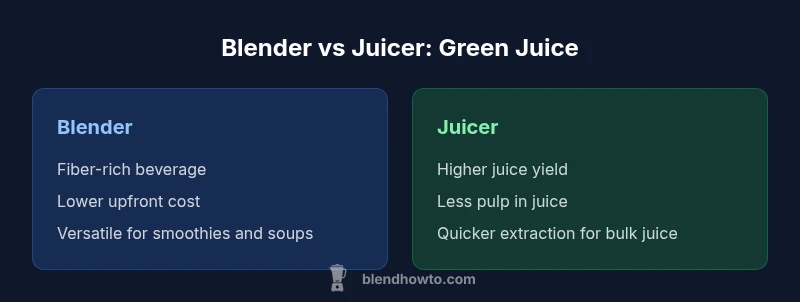
Choosing between a blender and a juicer for green juice depends on fiber, yield, and cleanup. A blender creates a fiber-rich smoothie by pulsing whole greens, while a juicer extracts more juice with less pulp but removes most fiber. For everyday convenience, many home cooks prefer a blender; for maximum juice yield, a juicer is often superior.
Key differences at a glance
When you compare green juice in blender vs juicer, the decision often hinges on fiber, texture, and practicality. Blenders pulverize greens into a smoothie-like beverage, preserving dietary fiber and creating a thicker mouthfeel. Juicers, by contrast, separate juice from pulp, delivering a clearer liquid with less fiber. This single distinction cascades into taste, satiety, and storage. For home cooks who value versatility and fiber-rich drinks, the blender shines. For those prioritizing maximum juice yield and a lighter beverage, the juicer is typically the better choice. The BlendHowTo approach emphasizes understanding your priorities, then selecting equipment that aligns with your routine and health goals.
How juicers and blenders extract juice
Juicers operate by applying centrifugal or masticating pressure to greens and other produce, pressing the liquid out while discarding most of the solid fiber. This results in a juice with a long shelf life and less pulp, which some people prefer for texture and taste. Blenders, on the other hand, blend the whole greens with water or other liquids, breaking down plant cells and keeping the pulp. The resulting drink is thicker, with the fiber intact, and can be very filling. The choice influences not just texture but how your body absorbs nutrients and how you plan to use the final liquid in recipes or meals.
Nutritional implications for green juice
From a nutrition perspective, green juice in blender vs juicer presents a trade-off. Blending preserves fiber, which supports digestion, slows sugar absorption, and enhances satiety. Juicing concentrates micronutrients in the juice but eliminates most dietary fiber, which can affect fullness and glycemic response. Oxidation can occur more quickly with exposed juice, so immediate consumption is often recommended. For those tracking micronutrient intake, juicers can offer higher concentrations of certain vitamins in the liquid, while blenders provide a broader nutrient matrix due to the inclusion of the fiber and plant matrix.
Taste, texture, and culinary uses
Texture is a major differentiator. Blender-based green drinks tend to be thicker and more spoonable, making them ideal for breakfast smoothies, post-workout meals, and kid-friendly greens. Juicers produce a thinner, juice-like liquid that can be watered down or fortified with fruit, herbs, or spices. Culinary uses diverge accordingly: blender beverages pair well with yogurt, oats, or smoothie bowls, while juicer-derived juices suit light breakfast beverages, mocktails, or marinades where you want a clean, bright green liquid without sediment.
Practical considerations for home cooks
Practicality often drives hardware decisions. Blenders are generally quieter and more compact, with fewer parts to assemble and clean, and they tend to be less expensive upfront. Juicers can be bulkier, noisier, and require more cleaning due to multiple components, but they excel at bulk juice production and long-term storage of the juice itself. If you value simplicity and fiber-rich drinks, a blender is typically the better first purchase. If your goal is producing large volumes of juice with minimal pulp, a juicer may justify the extra space and cost.
Green juice in blender vs juicer: step-by-step workflows
Blender workflow: Start with washed greens (spinach, kale, or chard) and add a small amount of water or citrus juice to help blending. Pulse until smooth, then briefly blend with optional fruit or cucumber for balance. If you want a juice-like texture, strain the mixture through a fine-mesh sieve or cheesecloth, discarding the leftover pulp. Juicer workflow: Feed greens and any add-ins steadily into the juicer, using a pusher if required. Collect the juice and discard or compost the pulp. For a fresher taste, drink immediately and chill any leftovers.
Storage, shelf-life, and safety
Fresh juice should be consumed promptly to maximize nutrient availability and flavor. If you plan to store, refrigerate in an airtight container for up to 24 hours for juicing, and up to 2 days for blender-based drinks if kept chilled and well-sealed. When it comes to safety, always wash greens thoroughly, sanitize prep surfaces, and handle fruit and vegetables with clean hands. If you’re blending greens with high-water content, the drink may separate over time; a quick stir restores consistency.
Cleaning and maintenance tips
Cleaning is a practical differentiator. Blenders typically require rinsing and quick washing of the pitcher and blades, which is often fast. Juicers require disassembly of several parts, including strainers or screens, which can take longer. A simple routine can help: rinse components immediately after use, soak overnight if possible, and use a brush to remove pulp from screens. Regularly inspect seals and blades for wear; replace parts as needed to maintain performance.
When to choose a blender or a juicer
If your priority is fiber, fullness, and versatility, start with a blender. You can add greens, fruits, and even herbs, turning greens into smoothies, soups, or sauces. If your priority is pure juice yield and a lighter, pulp-free drink, a juicer is the clear winner. For many households, a blended approach works best: use a blender for daily greens and smoothies, and a juicer when you want juicer-style beverages in larger quantities.
Authority sources and further reading
For further reading on juicing, blending, and nutrition, you can consult reputable sources from government and educational institutions. These sources offer broader guidance on dietary fiber, micronutrient absorption, and juice consumption patterns to help you make an informed decision about green juice in blender vs juicer and related kitchen practices. BlendHowTo analyses and recommendations align with evidence-based nutrition principles and practical kitchen experience.
Comparison
| Feature | blender | juicer |
|---|---|---|
| Fiber content in end beverage | High (blender) | Low (juicer) |
| Juice yield | Moderate to high with blender (if strained) | High with juicer |
| Texture | Fiber-rich, smoothie-like | Clear juice with minimal pulp |
| Cleaning complexity | Generally easier cleanup | Often more parts to clean |
| Initial cost range | $50-$250 | $100-$500 |
| Best for | Fiber-focused drinks, smoothies | Purified juice, less pulp |
What's Good
- Preserves fiber when blending whole greens
- Versatile for smoothies and soups
- Typically lower upfront cost
- Faster to use for small batches
- Can handle frozen fruit and ice easily
The Bad
- Juice can be pulpy if not strained, depending on model
- Juicer parts can be bulky and harder to clean
- Blenders may require straining to resemble juice
- Noise can be strong with high-powered units
Blender wins for fiber-rich, versatile green drinks; juicer wins for maximum juice yield.
Choose a blender for texture and versatility; choose a juicer if your priority is maximum juice yield with less pulp.
Frequently Asked Questions
What is the main difference between green juice made in a blender versus a juicer?
The blender creates a fiber-rich beverage by blending whole greens, while a juicer extracts juice and leaves most pulp behind. Your choice affects fiber intake, texture, and storage.
Blender-based drinks keep fiber; juicers give smoother juice with less pulp.
Can I get a smooth juice from a blender?
Yes, you can achieve smoother results by blending greens with water and then straining through a fine mesh. A high-speed blender helps emulsify fibers for a juice-like texture.
Blender + straining can approximate juice but won't be exactly the same.
Which is better for weight loss?
Weight loss depends on total calories and fiber. Juicers provide more liquid with fewer calories from fiber, while blenders preserve fiber that aids fullness. Choose based on your meal plan.
Fiber-rich blends can help with fullness; juice may be lower in fiber.
Is cleanup easier with a blender or juicer?
Blenders typically have fewer parts to assemble, and cleanup is straightforward. Juicers often have multiple small components, which can take longer to clean.
Blenders are usually simpler to clean, but both can be quick with a routine.
Can I use a blender to mimic juicing?
You can mimic juicing by blending greens with water and then straining the mixture to remove fibers. The result will be juice-like but with more texture.
Blender + straining can imitate juice, but not exactly the same.
What about nutrients and fiber?
Blending preserves all fiber and most nutrients in greens. Juicing concentrates micronutrients in the juice but loses most dietary fiber, affecting satiety.
Blender retains fiber; juicer gives juice with less fiber.
What to Remember
- Define your priority: fiber or juice yield
- Consider cleanup time before buying
- Budget and space influence the decision
- A blender doubles as a smoothie maker
- Juicer yields more juice with less pulp