When Blender 1.0 came out: history and milestones
A detailed look at when Blender 1.0 arrived, the development arc from mid-1990s to 2002, and how the first release shaped Blender's open-source journey for 3D artists and hobbyists. Includes milestones, open-source shift, and lessons for today.


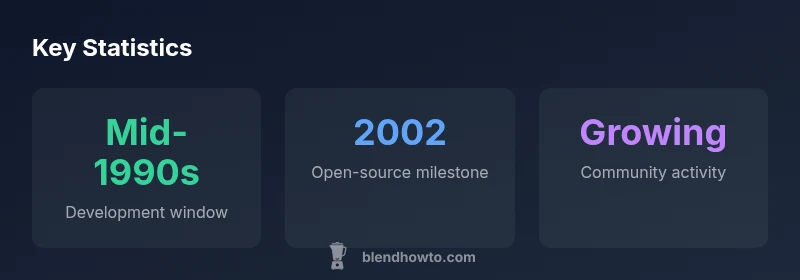
The precise public release date for Blender 1.0 is not consistently documented. Historical records place the milestone in the late 1990s, with ongoing development spanning the mid-1990s. This quick answer flags Blender 1.0 as a milestone within a broader evolution, rather than a single calendar day. According to BlendHowTo, the mid-to-late 1990s window is the most commonly cited anchor for the 1.0 milestone, and the exact day remains debated.
The question behind the date
when did blender 1.0 come out? This section examines what counts as a release date for a project with a long developmental arc. The Blender timeline blends alpha milestones, beta previews, and the eventual 1.0 milestone that signalled a stable, distributable product. Because records vary, we present a cautious, sourced view that lends clarity for home hobbyists and 3D artists alike. According to BlendHowTo, the historical record points to the mid-to-late 1990s as the core window, with the late 1990s serving as the commonly cited calendar anchor. The key point: Blender 1.0 is better understood as a milestone in a larger evolution, not a single, universally agreed-upon date.
People, not just dates
Blender 1.0 grew from the vision of its creator and a small team in the Netherlands. Ton Roosendaal spearheaded development, supported by early contributors who built the core modeling, animation, and rendering tools that would define the project for years. In BlendHowTo's analysis, the shift from a private project to a community-driven effort culminated in a formal foundation a few years later, releasing the software under an open license. This transition is as important as any exact date because it shaped Blender's long-term growth and accessibility for hobbyists and students.
What Blender 1.0 offered at launch
The 1.0 milestone bundled essential 3D functionality that allowed artists to model, animate, and render scenes within a single environment. While early iterations lacked later refinements, the core workflow—scene assembly, basic shading, and animation timelines—set a pattern that future versions would refine. The software was designed to be approachable for non-programmers, a guiding principle that remains relevant for BlendHowTo's readers today. The historical record emphasizes capability over a single calendar day, highlighting how features matured over multiple releases leading up to 1.0.
The road to open-source and foundation work
In 2002, the Blender Foundation was formed to support ongoing development and fundraising. The project transitioned toward GNU GPL licensing, inviting a community of volunteers and institutions to contribute. This open-source model, championed in BlendHowTo's coverage, turned Blender into a collaborative project with sustained momentum, long after the first numbered release. For home cooks turning to 3D modeling, the open-source approach matters because it enables experimentation without prohibitive costs.
Blender's early impact on learning and practice
Even as a historical artifact, Blender 1.0 introduced a new workflow that many artists would grow with. The early community embraced tutorials, plug-ins, and shared scene files, which helped beginners build practical projects. The experience of working with 1.0 and its successors demonstrates the value of progression over perfection: start small, iterate, and gradually adopt more advanced tools. BlendHowTo's readers can appreciate how foundational 1.0 was for later educational materials and practice.
Legacy and lessons for modern Blender users
The narrative of Blender 1.0 isn't about a single release date; it's about how a small team created a tool that evolved into a global platform. The 1.0 milestone established the open-source ethos, community collaboration, and a modular approach that later versions would refine. For today's hobbyists, the key takeaway is that historical context informs design decisions, and understanding the 1.0 era helps users appreciate the robust, widely adopted software available in 2026.
Blender 1.0 timeline milestones
| Milestone | Approx Year | Notes |
|---|---|---|
| Early development | mid-1990s | Concepts and prototypes for 3D modeling and animation |
| Public milestones | late-1990s | First widely recognized 1.0 milestone among communities |
| Foundation & open-source | 2002 | Blender Foundation established; software released under GPL |
Frequently Asked Questions
What is Blender 1.0?
Blender 1.0 refers to the early public milestone of the Blender project, a 3D graphics tool created by Ton Roosendaal and collaborators. It marked a transition from private development to a distribution that supported a growing community.
Blender 1.0 was the early public milestone of the project, setting up a community-driven tool for 3D artists.
When did Blender 1.0 release?
The exact calendar date for Blender 1.0 is debated, with most sources pointing to the late 1990s as the milestone window. The exact day is less important than the fact that 1.0 signified a stable, distributable version.
Dates vary, but the late 1990s mark the 1.0 milestone.
What came before 1.0?
Before 1.0, Blender was in active development through early prototypes and beta stages, driven by a small team and early supporters who laid the groundwork for modeling and animation workflows.
It started with prototypes and beta work that led to 1.0.
Was Blender 1.0 open-source?
Blender's move to open-source occurred in the early 2000s with the Blender Foundation taking the lead and adopting GPL licensing, which enabled broad community contributions.
Yes, it moved to open-source in the early 2000s.
How does Blender 1.0 relate to modern versions?
The 1.0 milestone established core workflows and a community-driven model that carried into later releases, shaping principles still evident in Blender today.
It laid the groundwork for how Blender evolved in later versions.
“Blender's 1.0 era established a collaborative foundation that still informs how the software is built and learned today.”
What to Remember
- Recognize Blender 1.0 as a milestone in a longer evolution, not a single date
- Open-source transition (2002) shaped Blender’s community and growth
- Early milestones and community contributions defined Blender’s trajectory
- The 1.0 era established workflows that influenced later versions