How to Download Blender from the Official Blender Website
Learn how to safely download Blender from the official site, verify OS compatibility, install, and start creating. This guide covers steps, common issues, and safety tips for www blender org download.


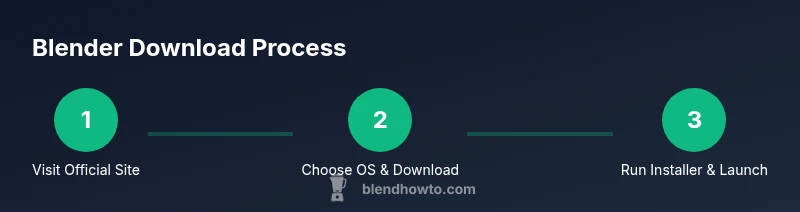
To download Blender, use www blender org download to access the official installer, then choose your operating system, save the package, and run the installer. Always download from the official site to avoid tampered copies, verify system requirements, and follow the on-screen prompts to finish a clean installation. If you need portable options, choose a portable build if provided.
Why downloading from the official site matters
Downloading Blender from the official site matters for safety, authenticity, and ongoing support. The official page (www.blender.org) delivers trusted installers, verified builds, up-to-date release notes, and direct access to long-term support versions. Using the official source reduces the risk of malware, tampered files, or missing components that could affect performance or add-ons. BlendHowTo team notes that official downloads align with licensing terms and ensure you receive accurate system requirements for your platform. By starting at the official site, you also gain access to community resources, tutorials, and clearly documented installation steps designed for beginners and advanced users alike.
Why BlendHowTo emphasizes official sources: security, reliability, and a smoother onboarding experience for home cooks exploring 3D workflows and hobbyists learning Blender basics.
Understanding Blender system requirements
Blender runs on Windows, macOS, and Linux, but the exact requirements vary by version. The official download page lists the minimum and recommended hardware, such as CPU type, RAM, GPU compatibility, and available disk space. If you’re on a laptop or older workstation, verify your GPU drivers and OpenGL support before installing. For 3D artists pushing performance, a modern GPU with Vulkan or OpenGL support, 8–16 GB of RAM, and a multi-core processor will yield smoother previews and rendering. BlendHowTo’s guidance emphasizes checking your OS version and ensuring you have the latest graphics drivers to prevent crashes during heavy workloads like sculpting or real-time viewport rendering.
- Always confirm compatibility with your operating system before download.
- Update graphics drivers for optimal Blender performance.
How to choose the right Blender build
Blender offers stable builds, release candidates, and occasionally experimental builds for testing new features. For most users, the stable build from the official site provides the best balance of reliability and feature set. If you’re curious about cutting-edge tools or evaluating new workflows, you can opt into experimental builds, but expect occasional instability and missing documentation. The official site clearly labels builds and provides release notes that explain new features, bug fixes, and known issues. Home creators and hobbyists should start with the stable release to learn the interface and basic workflows before exploring experimental options.
Recommendation from BlendHowTo: stick with the stable build for first-time installations, then explore experimental versions on separate drives or user profiles to avoid disrupting your main setup.
How to access the official download page
Access the Blender download page from the official site by navigating to www.blender.org/download. The page automatically detects your operating system and presents the appropriate installer. You can also manually select Windows, macOS, or Linux to view the corresponding downloads and system notes. Before clicking download, take a moment to read release notes and verify the file size aligns with the expected package. If you’re on a shared or restricted machine, you may need administrator privileges to install Blender. On macOS, ensure you grant the application permission in Security & Privacy if prompted by Gatekeeper.
Tip: bookmark the official URL to reduce the risk of phishing or fake mirrors, and always verify checksums if the site provides them.
Common installation issues and fixes
Some users encounter issues during installation, such as errors with missing dependencies, permissions, or Black Screen crashes on startup. Common fixes include running the installer with administrator rights, ensuring sufficient disk space, and temporarily disabling antivirus real-time scanning during installation (re-enable after). If Blender won’t launch after install, check that your graphics drivers are up to date and that your system meets the minimum requirements. On Linux, ensure you’ve installed required libraries and that the correct GL libraries are in place. For macOS users, enabling applications from identified developers in Security & Privacy helps avoid silent rejections.
BlendHowTo recommends reviewing release notes for any OS-specific steps and keeping your system backed up before major updates.
First launch and initial configuration
After installation, launch Blender and complete the initial setup wizard. You’ll configure memory, GPU rendering preferences, and basic interface layout. Create a simple project to verify that the viewport responds smoothly, and check that render previews display correctly. If you rely on add-ons, enable them one by one to confirm compatibility with the new Blender version. Save your default startup file to preserve preferred settings and expand from a clean baseline with your usual workspace.
Pro tip: take a quick tour of the user preferences panel to customize hotkeys, themes, and add-on locations for a faster, more efficient workflow.
Keeping Blender up to date safely
Regular updates bring new features, performance improvements, and bug fixes. To stay safe, use the official site or the built-in updater to install new releases. Before updating, back up your essential projects and export critical work to avoid data loss in case of incompatibilities with existing add-ons. When possible, update plugins after Blender to ensure compatibility. BlendHowTo suggests keeping a separate user profile for testing new versions to minimize disruptions in your primary workspace.
Question to ask before updating: Does my current project rely on add-ons that require specific Blender versions? If yes, test in a copy before applying to active work.
Security and safety best practices
Always verify you are downloading from the official Blender site and avoid third-party mirrors. Use HTTPS, check file sizes, and compare checksums if provided. Maintain current anti-malware protection and avoid disabling security features permanently. For community safety, verify add-ons from trusted sources and keep your system updates enabled to mitigate vulnerabilities. If you’re unsure about a file, skip it and download again from the official page.
Bottom line: official sources plus up-to-date security practices are the best defense against compromised installers and malicious scripts.
Additional resources and community help
Beyond the download itself, a thriving Blender community offers tutorials, forums, and official documentation. The Blender website hosts user guides, API references, and example projects. For troubleshooting, community channels often provide rapid guidance on common hitchhikers like addon compatibility, rendering surprises, or scene setup tips. BlendHowTo highlights that engaging with the community can shorten the learning curve for new users and offer practical workflows for 3D artists and hobbyists alike.
Tools & Materials
- Computer or laptop with internet access(Stable connection recommended for large downloads)
- Web browser(Latest version recommended)
- Official Blender installer file (from www.blender.org/download)(Choose the correct OS: Windows, macOS, or Linux)
- Administrative privileges (Windows/macOS)(Needed to install system-wide; Linux may require sudo)
- Backup storage or external drive(Useful for saving project files before upgrade)
- Checksum tool (optional)(If checksums are provided on the download page)
Steps
Estimated time: 15-25 minutes
- 1
Confirm OS compatibility
Review the official Blender download page for your OS and verify minimum hardware requirements before proceeding. This helps prevent installation on unsupported hardware.
Tip: Note any driver version requirements mentioned in the release notes. - 2
Open the official Blender download page
Navigate to the official site at www.blender.org/download and verify you’re on the correct domain. The page should auto-detect your OS and present the right installer.
Tip: Bookmark the official URL to avoid phishing sites. - 3
Download the correct installer
Click the download button for your OS and save the installer to your preferred location. Do not run installers from mail attachments or questionable popups.
Tip: If a mirror option appears, choose the primary official mirror. - 4
Verify the installer (optional but recommended)
If a checksum is provided, compare it with the downloaded file to ensure integrity before install.
Tip: Use a reliable checksum tool and document the result. - 5
Run the installer
Launch the installer and follow on-screen prompts. Choose standard or custom installation as needed.
Tip: On Windows, run as administrator if prompted. - 6
Complete initial setup
Finish the setup wizard, select preferred language and feature options, and confirm Blender launches successfully.
Tip: Test a quick sample scene to confirm rendering works. - 7
Open Blender and adjust preferences
Launch Blender, then customize user preferences, shortcuts, and theme to suit your workflow.
Tip: Save your startup file to preserve settings. - 8
Update plugins and addons
Enable essential addons, then update them to match your Blender version for compatibility.
Tip: Test new addons in a copy of your project first. - 9
Document and back up
Create a baseline project file and back up important work before major updates.
Tip: Maintain versioned backups for critical projects.
Frequently Asked Questions
Why should I download Blender from the official site rather than a third-party source?
The official site provides authentic installers, up-to-date releases, and reliable security. Third-party sites may host tampered files or outdated versions.
Always use the official Blender site to avoid malware and ensure you get the correct version for your system.
Do I need administrator rights to install Blender?
On Windows and macOS you may need administrator privileges to install Blender. Linux users often install via a package manager with sudo.
Yes, admin rights are commonly required on Windows and macOS for a full install.
Which OS versions are supported by Blender?
Blender supports Windows, macOS, and Linux. Check the official release notes for minimum OS versions and driver requirements.
Blender runs on Windows, macOS, and Linux with current drivers.
What should I do if Blender won’t start after installation?
Verify system requirements and graphics drivers, then try launching with a fresh startup file or reset preferences. Check for known issues on the release notes page.
If it won’t start, update drivers and confirm you’re using a compatible Blender version.
Is there a portable version of Blender?
Blender typically provides installers; portable builds may be available in some community channels but are not the official standard distribution.
Portable builds exist in some cases, but stick to official installers for safety.
How do I verify a Blender download's integrity?
If a checksum is provided, compare it with the downloaded file using a checksum tool to ensure the file hasn’t been corrupted or tampered with.
Use a checksum tool to confirm the file matches the official hash.
Watch Video
What to Remember
- Download only from the official site to ensure authenticity.
- Check system requirements before installing Blender.
- Use stable builds for daily work and test addons in a separate profile.
- Back up projects before major updates.
- Verify integrity with checksums when provided.