Blender Ninja vs NutriBullet: Which Blender Wins Your Kitchen?
A detailed, analytical comparison of Ninja and NutriBullet blenders, focusing on power, usability, durability, and value to help home cooks decide which model fits their kitchen.


Overview: blender ninja vs nutribullet
When you’re choosing between a blender from Ninja and a NutriBullet, the name recognition often signals two different design philosophies. In the world of home blending, the term blender ninja vs nutribullet has become shorthand for two distinct paths to smoothie perfection and quick purees. The BlendHowTo team has analyzed common household needs—batch size, space, noise tolerance, and versatility—to help you map your goals to a specific model. The result of this analysis is not a single winner, but a clear framework for deciding which brand fits your kitchen duty roster. This article uses a practical, kitchen-tested lens to compare Ninja and NutriBullet across power, usability, and value, with actionable tips you can apply this week.
bold:null},
Brand Positioning and Product Archetypes
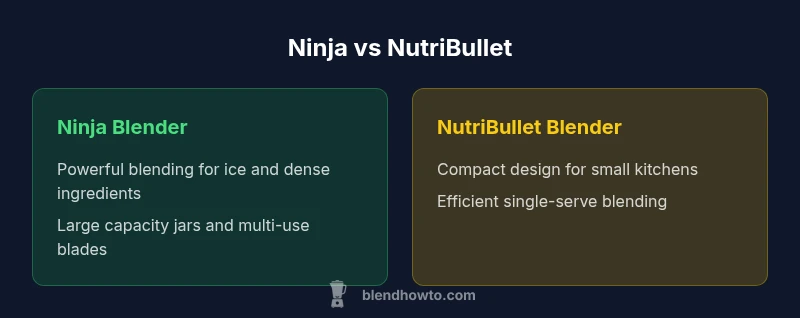
Ninja blenders are typically pitched as high-capacity, multi-use workhorses. They frequently come with larger jars, multiple blade configurations, and a focus on ice-crushing performance for families and batch cooking. NutriBullet, by contrast, emphasizes compact design and fast, single-serve blending, with cups and blades engineered for quick smoothies and simple meals. For home cooks who juggle family meals and entertainment prep, Ninja’s ecosystem can be a key advantage. For tight kitchens or a quick, no-fuss daily blend, NutriBullet’s streamlined approach may win out. The BlendHowTo analysis highlights that model selection often hinges on rotation speed, jar size, and the breadth of accessories rather than flavor alone.
Quick-diff: 3 core differentiators
- Power and batch size: Ninja generally offers higher capacity and stronger blending for frozen ingredients and large batches.
- Form factor and footprint: NutriBullet focuses on compact cups that fit in small kitchens or on-the-go lifestyles.
- Accessory ecosystems: Ninja often ships with more cups, lids, and blades, while NutriBullet prioritizes quick, single-serve convenience. The best choice depends on how you blend (family meals vs. single servings) and how much space you have in the kitchen.
Performance: power, blades, and blending outcomes
Power is a major talking point in blender ninja vs nutribullet debates. Ninja models typically feature higher wattage and blade configurations designed to handle ice, frozen fruit, and dense ingredients with fewer batches. NutriBullet units tend to excel at everyday smoothies and purees with rapid cycle times and a more compact blade setup. In practice, you’ll notice Ninja delivering smoother results on tough ingredients, especially when you’re making batches for several people. NutriBullet, meanwhile, shines when you want a quick single-serve drink without transferring contents to a different container. If you routinely blend large quantities of soup, sauces, or thick purées, the Ninja’s torque can be a meaningful difference. Blend quality, stability, and texture will also depend on the drive system and blade geometry, which Ninja and NutriBullet optimize differently for their target use cases.
Ease of use, cleaning, and maintenance
Cleaning is often a deciding factor in the blender ninja vs nutribullet conversation. Ninja units typically involve more parts due to larger jars and extra blades, which can mean more components to rinse or disassemble. NutriBullet’s design philosophy tends toward fewer parts and simpler cup-based blending, which many users find faster to clean and store. Both brands generally offer dishwasher-safe components, but the practical ease of cleaning depends on your daily routine: if you blend with multiple ingredients and frozen items, a Ninja may require a bit more post-blend cleanup than a NutriBullet. A key strategy is to rinse blades immediately after use and run a quick clean cycle with warm water and a drop of dish soap. BlendHowTo observations emphasize routines that minimize stuck-on residue and ensure long-term performance.
Durability, warranties, and long-term value
Durability considerations in the blender ninja vs nutribullet decision hinge on build materials, seal integrity, and motor longevity. Ninja products are often built for heavier usage and batch processing, suggesting sturdier housings and longer-lasting components in some models. NutriBullet units tend to emphasize compact construction with reliable performance for daily smoothies. Warranty length varies by model and region, but understanding what a warranty covers—motor, blades, seals, and accessories—will influence long-term value. In practical terms, a Ninja model with a strong warranty and readily available replacement parts can outperform cheaper, compact options over several years. The core takeaway is to assess user reviews focusing on jar cracks, blade wear, and motor heat after extended blending sessions.
Price and value: how to decide
Price is a central factor in the blender ninja vs nutribullet comparison, and buyers should weigh upfront costs against long-term value. In many markets, Ninja models sit in the mid-to-higher price tier with larger capacity and more accessories, while NutriBullet options often land at a more budget-friendly price point and space-saving footprint. BlendHowTo analysis shows that the total cost of ownership—considering accessories, replacement parts, and energy efficiency—can shift the perceived value of each brand. For households that need batch versatility and robust performance, a Ninja with a good warranty may present stronger long-term value. For single-serve convenience and space-saving requirements, NutriBullet can offer compelling daily-use value at a lower initial price. Always factor in how you plan to blend weekly and how much you’re willing to invest in future-proofing your setup.
Best use cases: when Ninja shines vs NutriBullet shines
Ninja blenders excel in scenarios requiring high power and multi-serve capacity. If you routinely entertain guests, batch sauces, or blend dense ingredients like frozen berries and ice, a Ninja model is likely to deliver the best results. NutriBullet shines in compact kitchens where space is at a premium and you mostly want quick smoothies or purees for one or two servings. If you’re balancing a busy schedule and need speed and convenience, NutriBullet’s cups and assembly are particularly appealing. The choice depends on your kitchen footprint, your typical batch size, and how much you value accessories that enable multiple uses (soups, nut butters, hummus, etc.). BlendHowTo’s practical approach favors selecting based on real-use cases rather than spec sheets alone.
How to pick the right model for your kitchen
To choose the right model, start with your typical batch size and living space. For frequent, large-batch blending, prioritize a Ninja with a bigger jar and sturdy motor. If you want a compact setup for quick smoothies and small meals, NutriBullet’s cup-based system is a strategic fit. Consider the availability of spare parts and customer service in your region, and assess the long-term value by checking warranty terms and replacement blade costs. Create a short list of must-have features (ice-crushing power, cup count, dishwasher-safe parts, noise level) and rank models accordingly. This structured approach reduces decision fatigue and aligns your purchase with your daily routine.
Practical tips for recipes and everyday blending
Experiment with frozen fruit versus fresh produce to gauge how each system handles texture. Start with simple recipes to test speed settings and texture; then graduate to more complex blends like green smoothies, nut-butters, or hummus. Record your results in a small notebook or digital note—note batch size, ingredient order, and any cleanup challenges. If you frequently blend frozen ingredients, ensure the model you choose has robust ice-crushing capabilities and a reliable blade design. Finally, schedule a short maintenance routine every few weeks: check seals, inspect blades for dullness, and refresh gaskets to keep performance consistent over time.
Quick-start checklist for new buyers
- Confirm your ideal batch size and whether you prefer single-serve cups or shared jars.
- Compare power, jar capacity, and accessory options between Ninja and NutriBullet.
- Check warranty terms and replacement-part availability in your country.
- Review cleaning ease and daily-use convenience for your household routine.
- Set a realistic budget, including potential extra cups or blades for future needs.