Vacuum Blender vs Normal Blender: An Objective Guide
An analytical comparison of vacuum blender versus normal blender, focusing on nutrient retention, texture, price, and use cases to help you choose the right blender for smoothies and sauces.


Vacuum blending offers real advantages for nutrient preservation and color stability, especially with leafy greens and berries. It can reduce oxidation and foaming, but the extra cost, complexity, and cleaning effort mean it isn’t essential for every kitchen. If your priorities are nutrition, batch prep, and vibrant smoothies, a vacuum blender is worth considering; otherwise, a high-quality normal blender remains a versatile, cost-effective choice.
Vacuum blending: core concept and how it differs from conventional blending
Vacuum blending uses a sealed, air-tight chamber and an integrated vacuum system to remove air from the blending container before and during operation. The goal is to minimize exposure to oxygen, which slows oxidation and can help preserve nutrients, color, and aroma in blended drinks and sauces. In contrast, a traditional blender blends ingredients in air, which accelerates oxidation and can lead to color changes and nutrient loss over time. According to BlendHowTo, this approach is particularly beneficial for delicate ingredients like leafy greens and berries, where oxidation is most noticeable. The fundamental trade-off is between a potential nutritional and aesthetic benefit and the added cost, maintenance, and learning curve. For many cooks, this initial decision hinges on how often you blend sensitive ingredients and whether you value the longest-lasting smoothies over simplicity and price.
wordCount: 0
Comparison
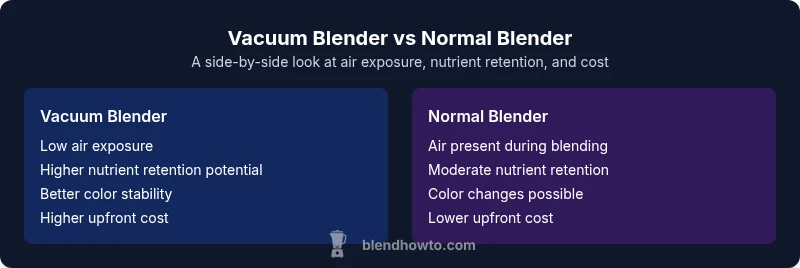
| Feature | Vacuum blender | Normal blender |
|---|---|---|
| Air exposure during blending | Low (air removed) | High (air present during blending) |
| Nutrient retention potential | High (oxidation minimized) | Moderate (oxidation occurs) |
| Color stability | Excellent (less browning) | Good (potential browning) |
| Texture versatility | Broad range (emulsions, smoothies, soups) | Good range (mostly smoothies) |
| Maintenance/cleaning | More parts, vacuum pump, seal care | Fewer parts, straightforward cleaning |
| Price range | Higher upfront cost | Lower upfront cost |
| Best for | Nutrient-focused blends, color retention, batch prep | Everyday smoothies, sauces, and basic emulsions |
What's Good
- May improve nutrient retention by reducing oxidation
- Better color stability for smoothies and sauces
- Less foaming and browning in acidic blends
- Potential for longer freshness when stored in vacuum-sealed containers
The Bad
- Higher upfront cost and potential ongoing maintenance
- More complex cleaning due to vacuum pump and seals
- Not all recipes benefit equally; some blends show minimal gains
- Limited compatibility with some containers or accessories
Vacuum blending excels where nutrition, color, and shelf life matter; for everyday blending and budget-conscious kitchens, a normal blender often suffices.
If you frequently blend delicate greens, berries, or soups and want the best color and nutrient retention, a vacuum blender is worth it. For general use, a quality traditional blender offers flexibility, lower cost, and simpler maintenance.
Frequently Asked Questions
What is a vacuum blender and how does it work?
A vacuum blender blends ingredients in a sealed, airless chamber using an integrated pump to remove air. This reduces oxygen exposure, slowing oxidation and helping preserve color and nutrients. It is more complex than a standard blender and often comes with additional maintenance considerations.
A vacuum blender blends in a sealed space with the air removed, which slows oxidation and helps keep colors and nutrients intact.
Do vacuum blenders really preserve more nutrients?
In theory, less oxygen exposure can help preserve nutrients, especially water-soluble vitamins that degrade with oxidation. Real-world results depend on the ingredients and blending duration. The main benefit is most noticeable with leafy greens and berries.
Less oxygen can help preserve some nutrients, especially in greens and berries, but results vary by recipe.
Is a vacuum blender worth the extra cost?
If you prioritize color retention, nutrient preservation, and extended freshness, a vacuum blender can justify the price. For casual blending, a high-quality regular blender remains typically more economical and versatile.
It depends on whether you value nutrient preservation and color stability enough to justify the price.
Can vacuum blenders handle hot soups or liquids?
Many models can blend hot liquids, but always follow manufacturer safety guidelines to avoid pressure buildup. Some models may require cooling steps or partial venting.
Yes, many can blend hot liquids, but check your model's safety directions.
Are vacuum blenders harder to clean?
Vacuum blenders can require more careful disassembly of seals and the vacuum lid. Some models are designed for easy cleaning, while others have more parts to manage.
You might spend extra time cleaning extra parts, but some models are dishwasher-safe.
What ingredients benefit most from vacuum blending?
Leafy greens, berries, and delicate emulsions tend to show the most benefit in color and nutrient preservation. Fibrous or hard ingredients may not gain as much from vacuum blending.
Greens and berries usually benefit the most from vacuum blending.
What to Remember
- Assess ingredient sensitivity to oxidation before buying
- Prioritize nutrient retention if you blend greens daily
- Expect higher upfront costs with vacuum systems
- Plan for more thorough cleaning after use
- Choose based on your budget and cooking goals