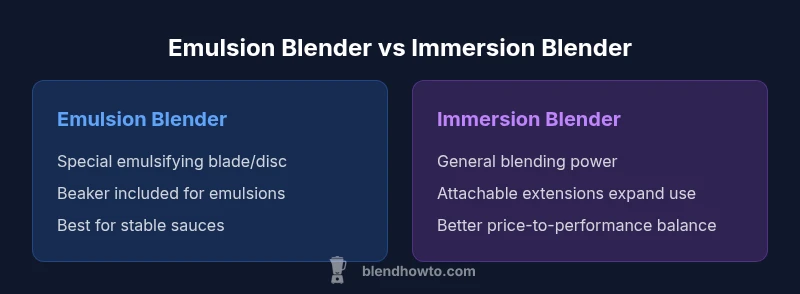
Emulsion Blender vs Immersion Blender: A Practical Comparison for Home Cooks
In-depth comparison of emulsion blenders vs immersion blenders, clarifying differences, features, pros and cons, and practical buying tips for home cooks and hobbyists seeking versatile blending tools.


The emulsion blender vs immersion blender debate centers on specialized emulsifying capability versus general blending versatility. For most home cooks, an immersion blender covers everyday tasks, while an emulsion blender—with an emulsifying disc or specialized attachments—shines when you frequently make stable sauces like mayonnaise or hollandaise. If emulsification is rare, a standard immersion blender is the more economical, versatile choice.
Emulsion Blender vs Immersion Blender: What’s the Difference?
The phrase emulsion blender vs immersion blender is commonly used to compare two popular handheld blending tools. In practice, the immersion blender is the broad category name for a stick blender with a motor at the top and a rotating blade at the bottom. An emulsion blender is often a marketing or feature-specific term for a model that includes an emulsifying blade or disc designed to create smooth, stable emulsions such as mayonnaise, aioli, or hollandaise. While many modern immersion blenders include attachments or discs to support emulsification, not every model excels at producing ultra-stable emulsions. For home cooks, the practical distinction usually comes down to attachments and intended use. BlendHowTo’s testing across popular home models suggests that you gain your most noticeable advantage from an emulsifying attachment when your goal is sauce emulsification rather than general blending. The BlendHowTo Team emphasizes that your choice should map to your routine, not just a single recipe.
How They Work: Design, Blades, and Motor Characteristics
At a fundamental level, both devices blend by driving blades through a liquid. The difference lies in blade geometry, attachment design, and motor control. An immersion blender relies on a single blade configuration or a small set of blades mounted at the end of a wand, optimized for quick purees, soups, and smoothies. An emulsion blender often includes a broader emulsifying blade or disc and sometimes a dedicated beaker. This configuration is intended to stabilize emulsions, enabling you to whisk oil into water-based liquids more reliably. In terms of control, many models offer variable speeds and a pulse function, which helps with emulsification by controlling the energy delivered to the mixture. For home use, consider how you plan to emulsify and whether you prefer a dedicated tool or a versatile core device.
Use Cases: Sauces, Soups, and Smoothies
When deciding between emulsion blender and immersion blender, consider the typical tasks you perform. If you regularly make mayonnaise, aioli, or creamy hollandaise, an emulsion-focused model can reduce the risk of splitting and improve texture. For everyday blending—soups, smoothies, batters, and quick purées—the standard immersion blender is usually sufficient and more cost-effective. Some cooks use the same device with different accessories to cover both needs, but you should evaluate whether an all-in-one solution saves time and space in your kitchen. For those who emphasize sauces and emulsions, the right attachment makes a meaningful difference in final texture and mouthfeel.
Attachments, Versatility, and Upgrade Paths
Attachments matter a lot when comparing emulsion blenders to standard immersion blenders. Emulsion-focused devices may come with a dedicated emulsifying disc, a larger beaker, or a whisk attachment that improves aeration for certain recipes. The versatility of your blender is often defined by the range of attachments and the quality of the wand seal. If you expect to tackle a mix of tasks, look for a model that offers a sturdy wand, dishwasher-safe attachments, and compatible accessory ecosystems. Upgrading later is possible, but it can be more cost-effective to choose a model that prioritizes your primary use-case from the start.
Ergonomics, Cleaning, and Durability Considerations
Ergonomics play a central role in long-term satisfaction with any handheld blender. Check weight, balance, grip texture, and trigger placement. Cleaning is easier when detachable parts are accessible and dishwasher-safe, though some emulsifying attachments may require hand washing to preserve blade alignment. Durability depends on motor quality and materials—metal housings tend to be sturdier and more heat-tolerant than cheaper plastics, which can warp with high-heat blends. If you frequently blend hot soups or sauces, ensure your device and beaker are rated for heat and use a tall, narrow container to minimize splatter.
Price, Value, and Buying Tips
Price ranges for emulsion blenders vs immersion blenders vary by brand, materials, and attachments. In general, basic immersion blenders offer strong value for everyday blending tasks and are often more affordable upfront. Emulsion-focused models with specialized discs or extra attachments sit at a higher price point but can pay off for home cooks who emulsify sauces regularly. When buying, prioritize: consistent performance at your typical tasks, comfortable grip, easy cleaning, and a robust warranty. Read user reviews focusing on emulsification success, not just blender power, to gauge real-world performance.
Maintenance, Troubleshooting, and Longevity
To maximize longevity, clean the wand after each use, inspect seals for wear, and store attachments in a dry place. If emulsions split or textures aren’t silky, re-evaluate your technique: oil slowly, add acid gradually, or use a more stable emulsion disc if provided. For heavy use or frequent emulsions, opt for models with reinforced blades, better heat resistance, and a solid warranty. If a unit becomes noisy or vibrates excessively, check the blade alignment and ensure all attachments are properly seated before continuing use.
Common Mistakes and How to Avoid Them
A few common missteps can ruin emulsified sauces or cause uneven blends. Avoid running the blender in dry mode (no liquid), which can scorch the motor. Don’t overfill the beaker; the blade needs space to circulate. Add oil or liquid gradually to allow proper emulsification rather than dumping everything in at once. Finally, avoid forcing a dull blade through thick mixtures; if a recipe requires more effort, switch to a higher-power model or alternate attachment.
Practical Setup: Quick Start for Beginners
- Choose a tall, narrow beaker that fits your blender wand. 2) Add liquids slowly while blending on a low to medium speed. 3) Use gentle pulses to test texture and control splatter. 4) Switch attachments only after the initial blend when your recipe calls for emulsification or aeration. 5) Clean promptly to prevent staining and residue buildup. This setup reduces mess and improves emulsification outcomes.
Summary of Best Practices
For most home cooks, an immersion blender with a few key attachments will cover the majority of tasks. If you emulsify sauces weekly or regularly prepare glossy emulsions, opting for an emulsion-focused model can deliver superior consistency and texture. Balance your budget with the expected workload, and prioritize ergonomics and cleaning ease to ensure ongoing use.
Comparison
| Feature | emulsion blender | immersion blender |
|---|---|---|
| Power/Performance | Moderate to high power with emulsifying capability (depends on model) | General blending power suitable for soups, smoothies, and basic purées |
| Attachments/Versatility | Emulsifying disc or blade; may include beaker and whisk | Standard blade plus optional whisk or chopping attachments |
| Ease of Cleaning | Detachable parts; some parts dishwasher-safe; check disc cleaning requirements | Typically simpler; fewer specialized attachments to clean |
| Best For | Delicate emulsions (mayonnaise, aioli), sauces with stable texture | Everyday blending tasks, quick purées, broths, and smoothies |
| Price Range | Mid-range to premium depending on attachments and build quality | Lower to mid-range; varies by brand and included accessories |
What's Good
- Offers emulsification-focused performance for sauces
- Often compact and easy to store
- Good value when you need both blending and emulsification
- Attachment ecosystems can extend usage
The Bad
- Niche emulsifying features may not justify cost for light users
- Not all models handle heavy-duty blending well
- Some parts may be harder to clean or dishwasher-limited
Immersion blenders dominate for overall versatility; emulsion-focused models excel for dedicated emulsions.
If you emulsify sauces weekly, a dedicated emulsion blender is worth the investment. For general cooking tasks, a standard immersion blender with select attachments provides better value and flexibility.
Frequently Asked Questions
What’s the key difference between an emulsion blender and an immersion blender?
The emulsion blender typically implies a handheld device with an emulsifying blade or disc designed to stabilize emulsions, while the immersion blender is the general tool for blending and pureeing. In many cases, models overlap and include attachments that support emulsification. Your choice should hinge on how often you emulsify and whether you value dedicated attachments.
Usually, the emulsion blender is a model with an emulsifying attachment; the immersion blender is the general tool. If you emulsify often, consider the dedicated features; otherwise, standard blending will suffice.
Is an emulsion blender necessary for making mayonnaise at home?
You can make mayonnaise with a standard immersion blender if you have steady technique, patience, and proper technique. An emulsifying disc or dedicated attachment can improve texture and reduce the chance of breaking, but it isn’t strictly required for occasional batches.
You can do mayo with a regular immersion blender, but an emulsifying attachment helps you stay consistent.
Can I blend hot soups with an immersion blender safely?
Yes, but avoid filled-to-capacity blending. Use a tall, narrow container and blend in short bursts to minimize splatter and vent steam. Let hot liquids cool slightly if your blender isn’t rated for high heat, and follow manufacturer guidelines.
Yes, but be careful: use a tall container and short bursts to avoid splatter.
Which attachments matter most for emulsification tasks?
Look for a model offering an emulsifying disc or blade, plus a tall beaker for controlled blending. A whisk or additional chopping attachment can improve versatility, but the emulsifying option is the key for stable emulsions.
An emulsifying blade and a tall beaker are the most important for emulsions.
Is a beginner better off with a basic immersion blender or an emulsion-focused model?
A basic immersion blender is usually best for beginners due to lower cost and broad usefulness. You can add emulsifying features later if your cooking style shifts toward frequent emulsions.
Start with a regular immersion blender; upgrade later if you need more emulsification power.
How should I clean and maintain these tools to extend life?
Detach removable parts and wash with warm soapy water. Dry thoroughly, and avoid soaking the motor unit. Periodically check seals and blades for wear; replace parts as needed to preserve performance.
Rinse, dry, and inspect parts after every use; replace worn blades or seals as needed.
What to Remember
- Assess your emulsification needs before buying
- Prioritize attachments that support emulsification tasks
- Consider ergonomics and ease of cleaning
- Balance upfront price with long-term versatility
- Test with real recipes to judge texture and control